DSIP vs Selank: How They Differ
Cognitive & Nootropic Research
DSIP (delta sleep-inducing peptide) is studied for sleep itself, while Selank is studied for anxiety, with an activating rather than sedating profile in its clinical studies. Both come as ready-mixed nasal sprays, but they work through different systems and answer different research questions. Here is how they compare, what the human studies found, and why the Sleep & Calm Spray Stack pairs them.
 View product →
Findings
- DSIP is a nine-amino-acid neuropeptide, characterised by 1977 and named for the deep, delta-wave sleep it produced in the first experiments.
- In a placebo-controlled, double-blind study of 14 adults with severe chronic insomnia, seven nights of DSIP brought night-time sleep efficiency up to the level of normal controls and raised daytime alertness and performance (1987).
- Selank is a seven-amino-acid peptide built on tuftsin. In 62 patients with generalised anxiety disorder or neurasthenia, its anti-anxiety effect matched the benzodiazepine medazepam’s, with added anti-fatigue and stimulant effects (2008).
- Selank’s mechanism research points to enkephalin-degrading enzymes and GABA receptors; DSIP is defined by its effects on sleep, hormones and daily rhythm.
What is DSIP?
DSIP is a nonapeptide, a chain of nine amino acids, isolated and characterised between 1963 and 1977 (Graf and Kastin, Peptides, 1986). It takes its name from its main effect in the first experiments: it induced mostly delta sleep, the deep slow-wave stage, across several species including humans. Early reviews also recorded effects on hormone levels, circadian and activity patterns, psychological performance and drug withdrawal (Graf and Kastin, Neurosci Biobehav Rev, 1984). As of a 2006 review, no DSIP gene or dedicated receptor had been isolated, so the peptide is defined by these effects rather than by a single target (Kovalzon and Strekalova, J Neurochem, 2006). Its structure is covered in Buy DSIP in Canada.
The human sleep studies
Most of this work came from one research group in the 1980s, which gave DSIP intravenously and recorded sleep in the laboratory. The strongest result is a 1987 placebo-controlled, double-blind study of 14 middle-aged adults with severe chronic insomnia. Seven nights of DSIP improved night sleep from the first administration, with further gains on repeats, and the effect held on the next placebo night. Sleep efficiency at night and daytime rest reached the levels of normal controls, and daytime alertness and performance rose significantly (Schneider-Helmert, Eur Neurol, 1987).
A 1986 study gave a week of DSIP to 18 chronic insomniacs aged 29 to 83, then followed them for a week. Middle-aged participants reached normal sleep values by the end of the week and kept them; older participants, whose sleep was twice as disturbed, showed a larger immediate effect and normalised by the end of follow-up (Schneider-Helmert, Eur Neurol, 1986). Earlier work reported longer sleep with fewer interruptions and no daytime sedation in 6 insomniacs (Schneider-Helmert and Schoenenberger, Experientia, 1981), and good tolerability with higher daytime alertness across five double-blind studies (Neuropsychobiology, 1983). Two later double-blind studies from other groups reported smaller effects (Monti et al., 1987; Bes et al., 1992).
The withdrawal research
In 1984, 107 inpatients in alcohol (47) or opiate (60) withdrawal received DSIP intravenously. Among those who could be evaluated, symptoms and signs disappeared or improved markedly and rapidly in 97% of the opiate group and 87% of the alcohol group, with anxiety the slowest symptom to ease (Dick et al., Eur Neurol).
What is Selank?
Selank is a synthetic heptapeptide, Thr-Lys-Pro-Arg-Pro-Gly-Pro, developed from tuftsin, a peptide the body makes (Kolik et al., Bull Exp Biol Med, 2019). It inhibited the enzymes that break down enkephalins, the body’s own opioid-like peptides, in blood plasma (Zozulya et al., Bull Exp Biol Med, 2001), and in early-stage laboratory research it acted as a positive allosteric modulator of GABA receptors, the brain’s main inhibitory system (Vyunova et al., Protein Pept Lett, 2018). It is compared with its sister peptide in Semax vs Selank.
The human anxiety studies
Selank’s human record comes from Russian clinical studies in anxiety disorders. In a 2008 study of 62 patients with generalised anxiety disorder or neurasthenia, Selank (30 patients) produced anti-anxiety effects similar to medazepam (32 patients), with added antiasthenic (anti-fatigue) and stimulant effects; serum enkephalin half-life, shortened in these patients, rose during the Selank course (Zozulia et al., Zh Nevrol Psikhiatr Im S S Korsakova).
A 2014 study of 60 patients with anxiety-phobic and somatoform disorders, comparing Selank with the benzodiazepine phenazepam, reported a pronounced anti-anxiety effect lasting a week after the last administration, a mild nootropic effect and better quality of life (Medvedev et al.). In 2015, adding Selank to phenazepam (40 patients, against 30 on phenazepam alone) brought the effect on sooner and reduced the benzodiazepine’s side effects, including sedation and problems with attention and memory (Medvedev et al.). More detail is in Selank and anxiety: the research.
How do DSIP and Selank compare side by side?
| Question | DSIP | Selank |
|---|---|---|
| What is it? | Nine-amino-acid neuropeptide | Seven-amino-acid tuftsin analogue |
| Research theme | Sleep, especially deep sleep | Anxiety and stress |
| Mechanism focus | Defined by its effects; no receptor isolated | Enkephalin enzymes, GABA receptors |
| Human studies | Insomnia and withdrawal, 1980s | Anxiety disorders, 2008 to 2015 |
| Formats we stock | Vial and nasal spray | Vial and nasal spray |
Which one fits which research question?
- Sleep onset, sleep efficiency and sleep architecture: DSIP. Its human studies recorded sleep in the laboratory and tracked daytime function afterwards.
- Anxiety, stress, and enkephalin or GABA signalling: Selank, including designs where sedation would be a confound, since its studies reported stimulant effects and less benzodiazepine sedation.
- Withdrawal states: DSIP, which has the human withdrawal studies.
Can DSIP and Selank be studied together?
Yes. The two cover different parts of the day and different systems: night-time sleep for DSIP, daytime anxiety and stress for Selank. Because the literatures do not overlap, a study using both keeps two distinguishable variables. That rationale is built from each compound’s own literature.
The Sleep & Calm Spray Stack combines the DSIP Nasal Spray and the Selank Nasal Spray. Other combinations are on the stacks page.
How are DSIP and Selank supplied?
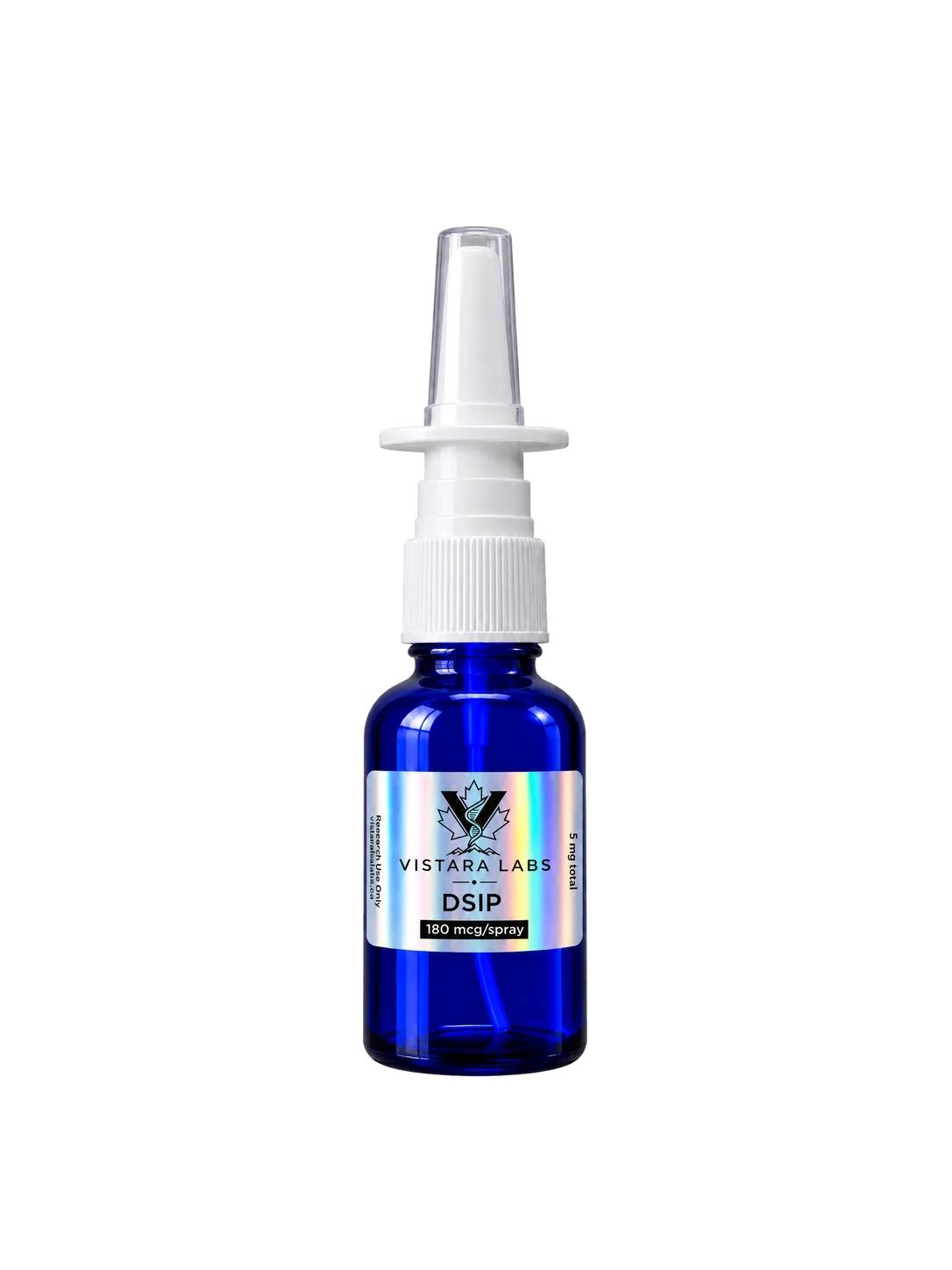
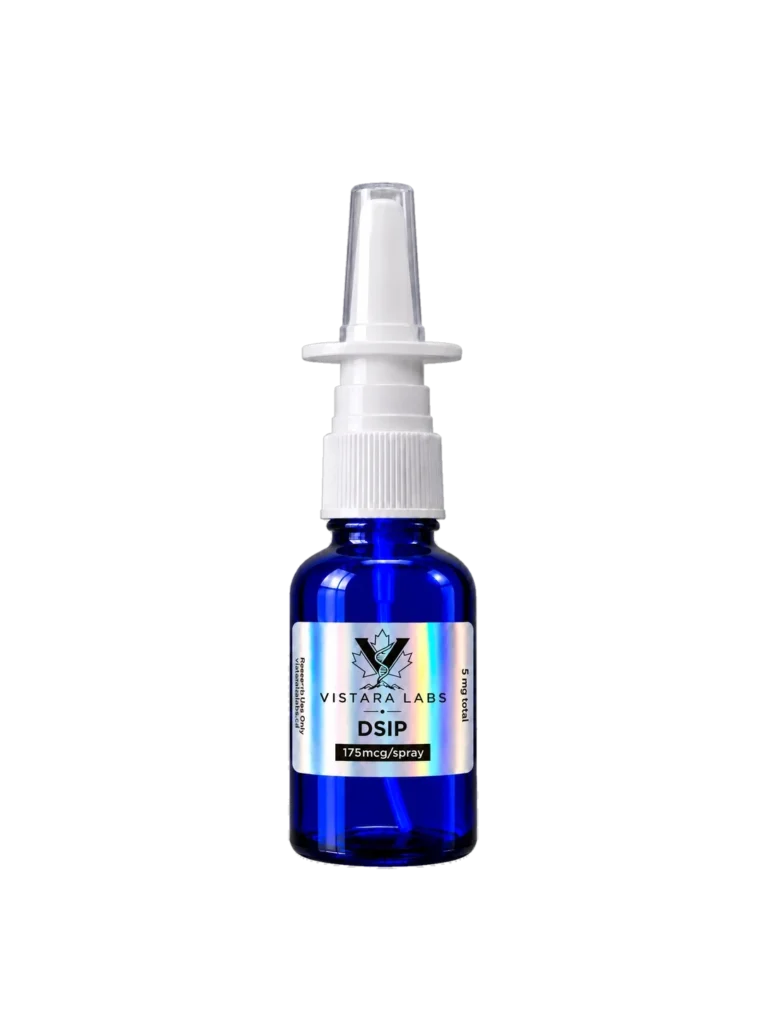
DSIP comes as a 5 mg lyophilised vial and a ready-mixed nasal spray; Selank as a 10 mg vial and a nasal spray in two bottle sizes. Vials are reconstituted with bacteriostatic water (see the DSIP reconstitution guide), and the sprays arrive pre-mixed in sterile saline in a sealed metered pump. The full range is in peptide nasal sprays in Canada, certificates of analysis are on the lab reports page, and every order ships from within Canada.
DSIP and Selank are supplied for laboratory research use only. The studies above were clinical research using pharmaceutical preparations.
Frequently asked questions
What is the difference between DSIP and Selank?
DSIP is a nine-amino-acid neuropeptide studied for sleep, especially deep delta sleep. Selank is a seven-amino-acid synthetic peptide built on tuftsin and studied for anxiety, with research pointing to enkephalin-degrading enzymes and GABA receptors.
What has DSIP research shown?
In a 1987 placebo-controlled, double-blind study of 14 adults with severe chronic insomnia, seven nights of DSIP brought sleep efficiency to the level of normal controls and raised daytime alertness and performance. A 1986 study of 18 insomniacs ended with the whole sample showing normal sleep patterns.
What has Selank research shown?
In a 2008 study of 62 patients with generalised anxiety disorder or neurasthenia, Selank’s anti-anxiety effect matched medazepam’s, with added anti-fatigue and stimulant effects. Later studies reported an effect lasting a week after the last administration and fewer benzodiazepine side effects.
Can DSIP and Selank be studied together?
Yes. DSIP’s research covers night-time sleep and Selank’s covers daytime anxiety and stress, so a study using both keeps two distinguishable variables. The Sleep & Calm Spray Stack combines the DSIP and Selank nasal sprays.
Where can I buy DSIP and Selank in Canada?
Vistara Labs supplies both as lyophilised vials and ready-mixed nasal sprays, plus the Sleep & Calm Spray Stack, shipped from within Canada by Canada Post Xpresspost.
Product details from vistaralabs.ca, October 2026. Sources: Graf MV, Kastin AJ. Delta-sleep-inducing peptide (DSIP): a review. Neurosci Biobehav Rev. 1984. PMID 6145137. Graf MV, Kastin AJ. Delta-sleep-inducing peptide (DSIP): an update. Peptides. 1986. PMID 3550726. Kovalzon VM, Strekalova TV. Delta sleep-inducing peptide (DSIP): a still unresolved riddle. J Neurochem. 2006. PMID 16539679. Schneider-Helmert D. Effects of delta-sleep-inducing peptide on 24-hour sleep-wake behaviour in severe chronic insomnia. Eur Neurol. 1987. PMID 3622582. Schneider-Helmert D. Efficacy of DSIP to normalize sleep in middle-aged and elderly chronic insomniacs. Eur Neurol. 1986. PMID 3792404. Schneider-Helmert D, Schoenenberger GA. The influence of synthetic DSIP (delta-sleep-inducing-peptide) on disturbed human sleep. Experientia. 1981. PMID 7028502. Schneider-Helmert D, Schoenenberger GA. Effects of DSIP in man. Multifunctional psychophysiological properties besides induction of natural sleep. Neuropsychobiology. 1983. PMID 6689058. Monti JM et al. Study of delta sleep-inducing peptide efficacy in improving sleep on short-term administration to chronic insomniacs. Int J Clin Pharmacol Res. 1987. PMID 3583493. Bes F et al. Effects of delta sleep-inducing peptide on sleep of chronic insomniac patients. A double-blind study. Neuropsychobiology. 1992. PMID 1299794. Dick P et al. DSIP in the treatment of withdrawal syndromes from alcohol and opiates. Eur Neurol. 1984. PMID 6548969. Kolik LG et al. Selank, peptide analogue of tuftsin, protects against ethanol-induced memory impairment by regulating of BDNF content in the hippocampus and prefrontal cortex in rats. Bull Exp Biol Med. 2019. PMID 31625062. Zozulya AA et al. The inhibitory effect of Selank on enkephalin-degrading enzymes as a possible mechanism of its anxiolytic activity. Bull Exp Biol Med. 2001. PMID 11550013. Vyunova TV et al. Peptide-based anxiolytics: the molecular aspects of heptapeptide Selank biological activity. Protein Pept Lett. 2018. PMID 30255741. Zozulia AA et al. Efficacy and possible mechanisms of action of a new peptide anxiolytic selank in the therapy of generalized anxiety disorders and neurasthenia. Zh Nevrol Psikhiatr Im S S Korsakova. 2008. PMID 18454096. Medvedev VE et al. A comparison of the anxiolytic effect and tolerability of selank and phenazepam in the treatment of anxiety disorders. Zh Nevrol Psikhiatr Im S S Korsakova. 2014. PMID 25176261. Medvedev VE et al. Optimization of the treatment of anxiety disorders with selank. Zh Nevrol Psikhiatr Im S S Korsakova. 2015. PMID 26356395.
More on this: Peptides for Sleep: What the Research Shows.
All products supplied by Vistara Labs are intended for laboratory research use only. They are not drugs, are not approved for human or veterinary use, and are not intended to diagnose, treat, cure or prevent any condition. Nothing on this page constitutes medical advice or guidance for use in humans.