


MOTS-c: Exercise, Heat and the Mitochondrial Signal
Recherche sur l'énergie cellulaire et les mitochondries
MOTS-c is the peptide your own mitochondria encode — and studies keep finding that the body raises it exactly when energy systems are under productive stress.
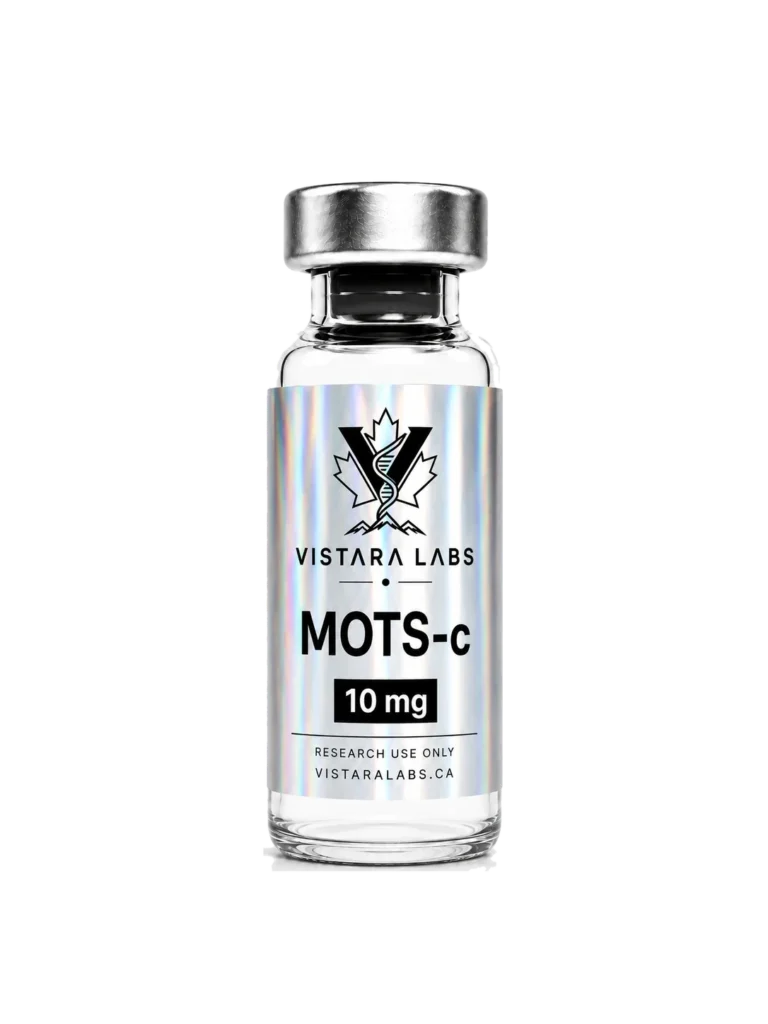 View product →
Findings
- Human studies show circulating MOTS-c rises after endurance exercise (J Appl Physiol, 2021) — the body releases it when energy demand spikes.
- A 2025 randomized study found repeated heat exposure also raises circulating MOTS-c (P=0.033), mimicking part of the exercise response.
- MOTS-c levels have been measured across human health states, including a study in breast-cancer patients, making it one of the better-characterised mitochondrial peptides in people.
- Administration trials of MOTS-c analogues have entered clinical development.
The exercise signal
In the 2021 study, acute endurance exercise raised circulating mitochondrial-derived peptides including MOTS-c, while resistance exercise did not — a specific, repeatable pattern suggesting MOTS-c is part of how mitochondria signal the rest of the body during sustained energy demand.
The heat study (Med Sci Sports Exerc, 2025)
Researchers immobilised one leg of healthy volunteers and applied repeated heat treatment. Heat raised circulating MOTS-c in a pattern comparable to exercise — evidence that the peptide responds to metabolic stress itself, not just movement. The authors flag mitokines like MOTS-c as candidates for protecting muscle during disuse.
Where the research is heading
Because MOTS-c is encoded in the mitochondrial genome — the subject of our MOTS-c explainer — it sits at the centre of the idea that mitochondria actively signal the body. Analogues of the peptide have entered clinical development for metabolic disease, which is where the next round of data will come from.
Frequently asked questions
Is there data on MOTS-c?
Yes. Human studies show circulating MOTS-c rises with endurance exercise and repeated heat exposure, and levels have been characterised across several health states.
What raises MOTS-c naturally?
Endurance exercise and repeated heat stress have both been shown to raise circulating MOTS-c in studies.
Sources: J Appl Physiol 2021 (PMID 34351816); Med Sci Sports Exerc 2025 (PMID 40674654); Aging 2022 (PMID 36490309).
References
Human MOTS-c studies measure the peptide the body already makes; no controlled trial administering native synthetic MOTS-c was identified. (CB4211, which has completed phase 1, is an optimised analogue, not native MOTS-c.)
- The mitochondrial-derived peptide MOTS-c promotes metabolic homeostasis and reduces obesity and insulin resistanceFoundational paper identifying MOTS-c; laboratory studies of insulin sensitivity and diet-induced obesity.
- Acute endurance exercise stimulates circulating levels of mitochondrial-derived peptides in humansHuman study measuring naturally occurring (endogenous) mitochondrial-derived peptides after acute endurance exercise — not administration of synthetic MOTS-c.
Links open the study record on PubMed so the source can be checked directly. Listing a study is not a claim that its findings apply to any other use, product or route of administration. Research use only.