


Acheter du TB-500 au Canada
Recherche sur la récupération après blessure
TB-500 is not thymosin β4, and the difference is the first thing to get straight. Thymosin β4 is a 43 amino acid protein that occurs naturally. TB-500 is a short synthetic peptide corresponding to its active region — a fragment, made in a lab, not the whole protein. Vendors use the two names interchangeably; they are not interchangeable, and knowing which one you are buying is the beginning of reading a listing properly.
What TB-500 actually is
The compound most suppliers sell as TB-500 is a synthetic peptide reproducing the region of thymosin β4 that the research literature is interested in. Working with a short synthetic fragment rather than the full protein is far cheaper and far more consistent, which is why the fragment is what the research market runs on.
The published work around it concerns cell migration, tissue regeneration and new blood vessel formation — which is also why it so often appears beside BPC-157, a peptide studied around adjacent but separate mechanisms.
You will see it written TB-500, TB500 and TB 500. Those are the same thing. “Thymosin beta-4” on a research listing usually is too, but it is worth confirming rather than assuming.
Buying TB-500 in Canada
TB-500 holds no approval for human use in Canada or elsewhere. It is supplied as a research material for laboratory use, which leaves two routes.
From a US or overseas vendor. The parcel crosses the border, where unapproved compounds are exactly the category the CBSA may hold or seize. A seized vial is not replaced.
From a supplier already inside Canada. No border and no customs exposure — an ordinary domestic parcel between two Canadian addresses. This is the reason Canadian research buyers have largely moved to domestic supply.
What to check before ordering
- Fragment or full protein. If a listing says thymosin β4 but prices like a research peptide, it is almost certainly the fragment. Ask, and see whether the vendor knows the difference.
- The milligram figure. 2 mg, 5 mg and 10 mg vials are all sold. “One vial” is not a specification and cannot be price-compared.
- An intact white cake. TB-500 is a white lyophilised powder. Discolouration or a collapsed, sticky puck suggests moisture got in somewhere.
- Verifiable domestic dispatch. Canadian tracking from a Canadian origin — not a Canadian storefront drop-shipping from abroad, which brings back every border risk you were avoiding.
- Research-use framing. A vendor making recovery or healing promises about an unapproved compound is telling you where their standards sit.
On its own, or with BPC-157?
TB-500 is very commonly paired with BPC-157, a combination the research community nicknamed the Wolverine stack. Buying the pair as a blend is usually cheaper than two vials; buying them separately leaves the ratio in your hands. Which makes sense depends on whether the work needs them held independently — that comparison is worth reading before committing either way.
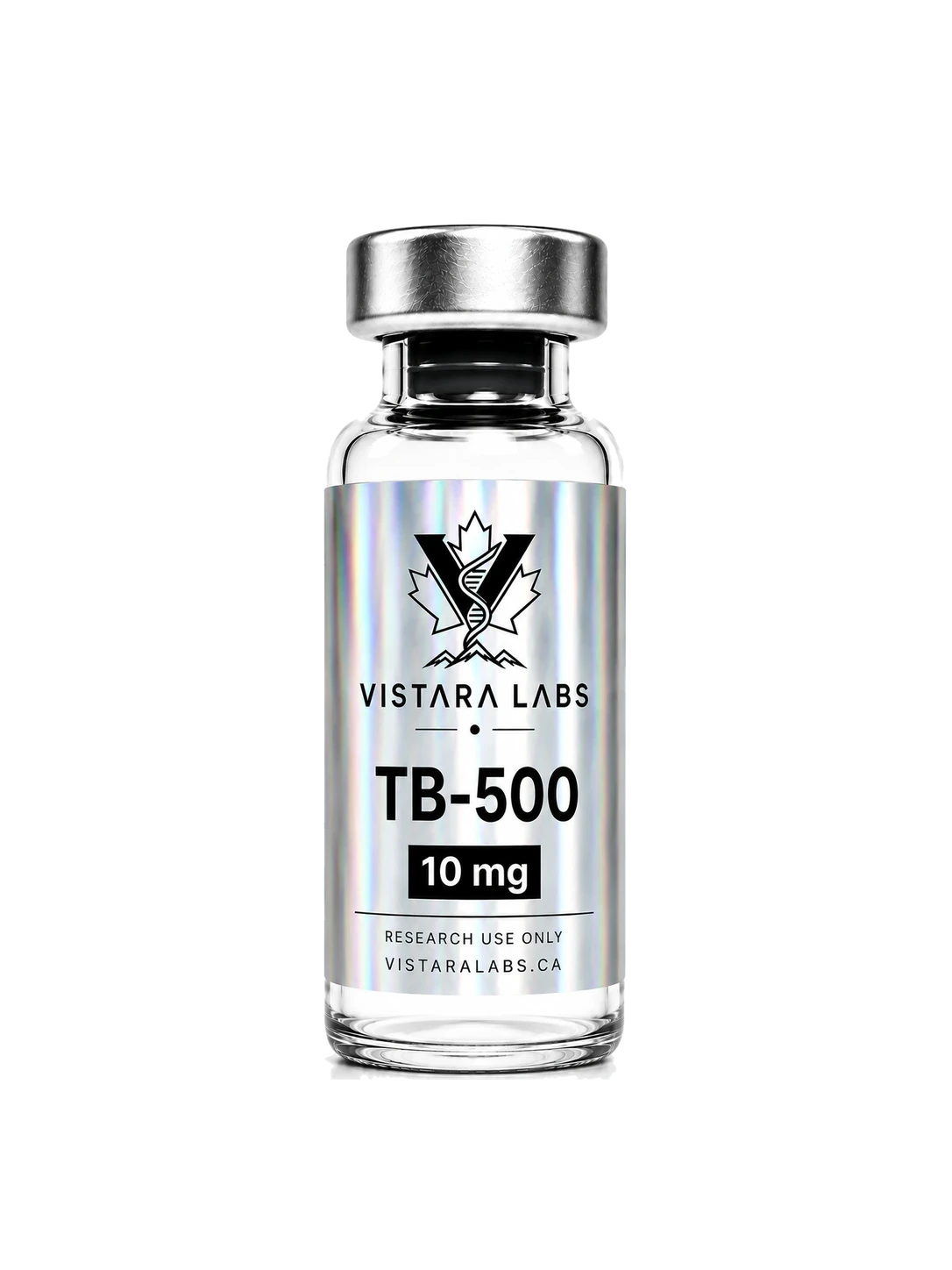
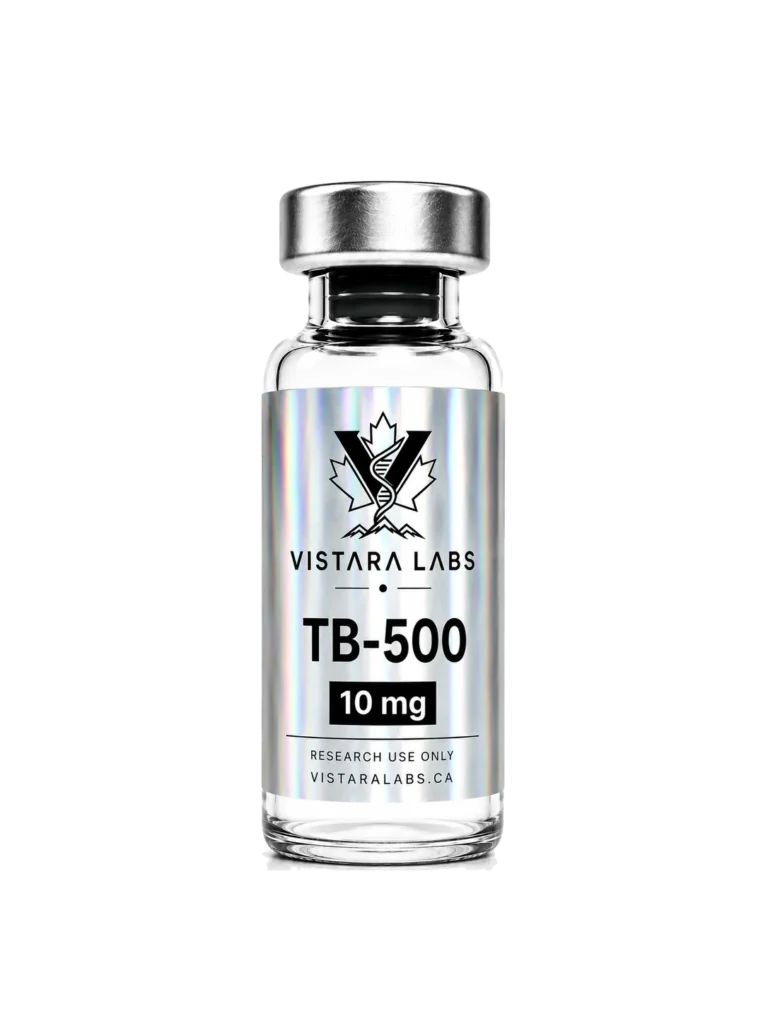
Vistara Labs stocks TB-500 10 mg as a lyophilised powder, and also carries it in the BPC-157 + TB-500 blend. Shipped from within Canada to every province, with a certificate of analysis available on request. Payment is by Interac e-Transfer.
Frequently asked questions
Is TB-500 the same as thymosin beta-4?
Not exactly. Thymosin β4 is a 43 amino acid protein that occurs naturally; TB-500 is a shorter synthetic peptide corresponding to its active region. Most research listings sell the fragment.
Can you buy TB-500 in Canada?
Yes, as a research material from Canadian research suppliers, for laboratory use only. It is not approved as a medicine in Canada.
Is TB-500 the same as TB500 or TB 500?
Yes — the hyphen and the space are only formatting. All three refer to the same peptide.
What vial sizes does TB-500 come in?
Commonly 2 mg, 5 mg and 10 mg. Vistara Labs stocks 10 mg. Sizes differ between suppliers, so the milligram figure has to be compared directly.
Why is TB-500 sold with BPC-157?
Because the two are studied around related but distinct mechanisms, so the pair covers more ground than either alone. That combination is what the community calls the Wolverine stack.
All products supplied by Vistara Labs are intended for laboratory research use only. They are not drugs, are not approved for human or veterinary use, and are not intended to diagnose, treat, cure or prevent any condition. Nothing on this page constitutes medical advice or guidance for use in humans.
References
TB-500 and thymosin β4 are not the same molecule. TB-500 is a thymosin β4-derived fragment (Ac-LKKTETQ); the human trials below studied full-length thymosin β4 and are related research rather than trials of TB-500 itself.
- Synthesis and characterization of the N-terminal acetylated 17-23 fragment of thymosin beta 4 identified in TB-500, a product suspected to possess doping potentialAnalytical chemistry: characterises TB-500 as the N-terminally acetylated 17-23 fragment of thymosin β4 (Ac-LKKTETQ), not the intact 43-amino-acid protein.
- A first-in-human, randomized, double-blind, single- and multiple-dose, phase I study of recombinant human thymosin β4 in healthy Chinese volunteersFirst-in-human randomised, double-blind phase 1; 54 single-dose and 30 multiple-dose subjects; recombinant human thymosin β4.
- The effect of thymosin treatment of venous ulcersRandomised, double-blind, placebo-controlled phase 2 trial; 73 patients, eight European centres; topical full-length thymosin β4.
- Thymosin beta 4 ophthalmic solution for dry eye: a randomized, placebo-controlled, Phase II clinical trial conducted using the controlled adverse environment (CAE™) modelRandomised, double-masked, placebo-controlled phase 2 trial; 72 subjects; thymosin β4 ophthalmic solution.
- Thymosin β4 significantly improves signs and symptoms of severe dry eye in a phase 2 randomized trialRandomised phase 2 trial in severe dry eye; 9 patients.
Links open the study record on PubMed so the source can be checked directly. Listing a study is not a claim that its findings apply to any other use, product or route of administration. Research use only.