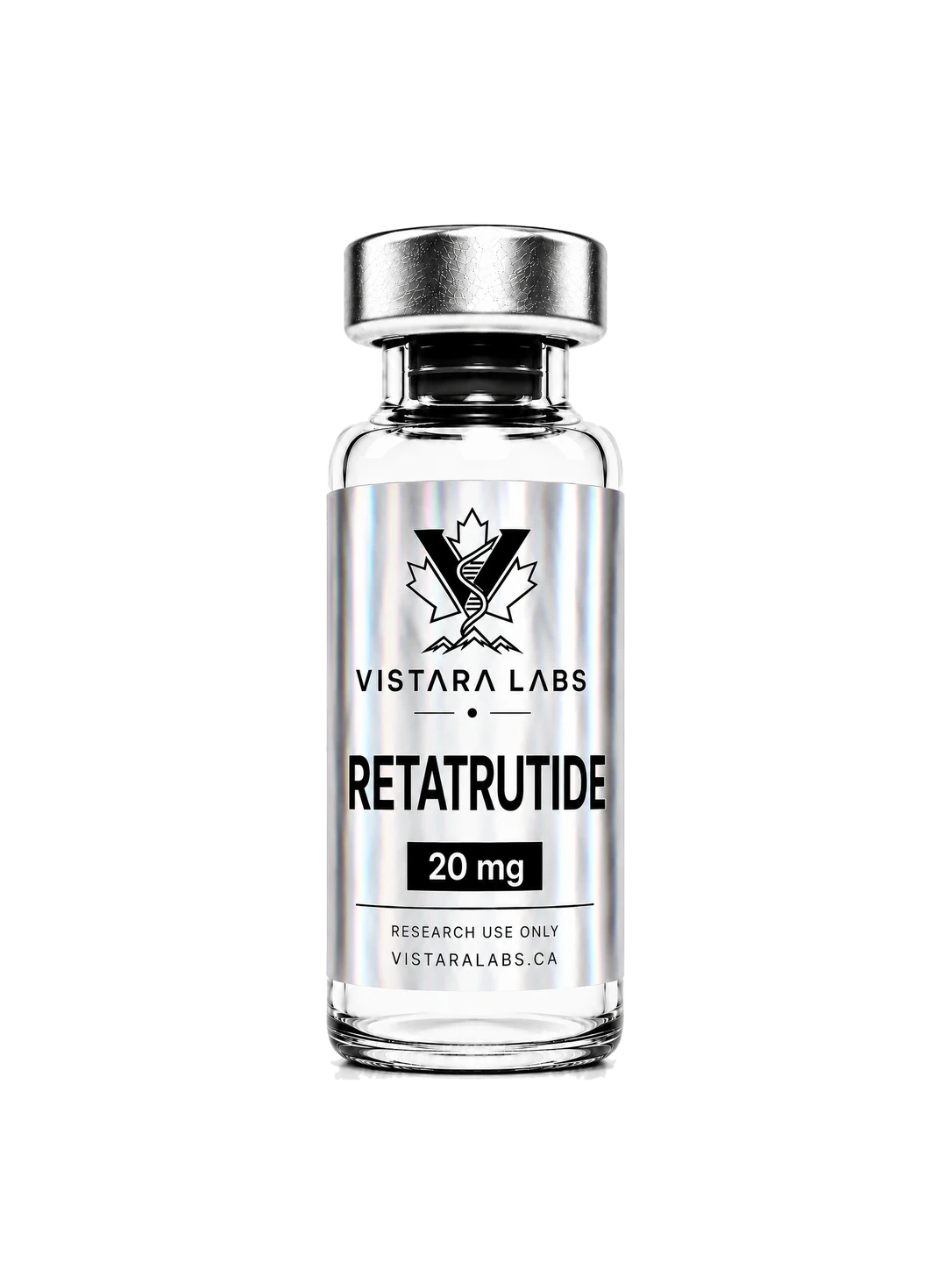
Peptides for Weight Loss: What People Actually Mean
Weight Loss & Metabolism Research
“Peptide” describes a molecule’s structure, not what it does. It means a short chain of amino acids — nothing more. So “peptides for weight loss” is a bit like asking for “tablets for weight loss”: it names the format, not the mechanism. Almost everyone searching that phrase is actually looking for one specific and much narrower family of compounds, and knowing which one saves a great deal of money and confusion.
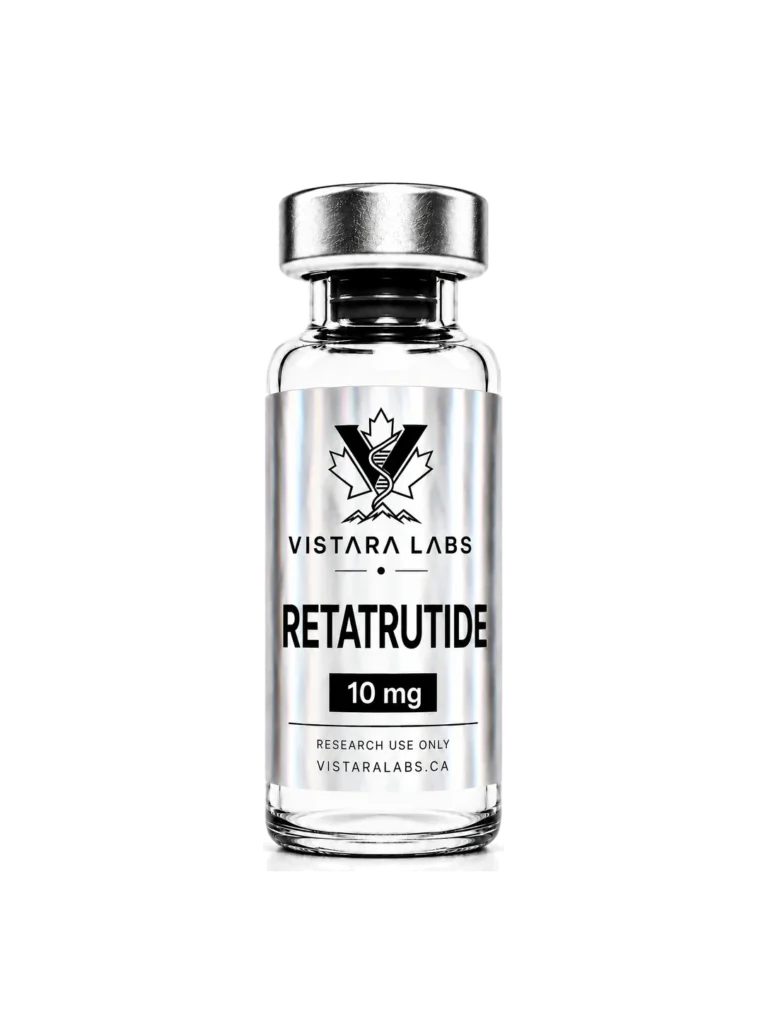 View product →
Findings
- “Peptides for weight loss” almost always means one family: incretin receptor agonists.
- The ladder is simple: semaglutide (1 receptor), tirzepatide (2), retatrutide (3).
- Many other peptides get swept into weight-loss conversations while sitting in unrelated research areas.
- Knowing the difference saves real money.
What people usually mean
The compounds driving nearly all of this interest are incretin receptor agonists — peptides that act on the receptors the gut uses to signal the pancreas and brain after a meal. Three receptors matter here:
- GLP-1 — glucagon-like peptide-1
- GIP — glucose-dependent insulinotropic polypeptide
- Glucagon
The well-known research compounds differ mainly in how many of those three they engage:
- Semaglutide — GLP-1 only
- Tirzepatide — GLP-1 and GIP
- Retatrutide — GLP-1, GIP and glucagon
That is the whole ladder, and it is why they are usually discussed in that order. We go into the differences in retatrutide vs semaglutide and retatrutide vs tirzepatide.
The peptides that are not this
This is where most of the wasted money goes. A large number of research peptides get swept into “weight loss” conversations while sitting in completely unrelated areas of the literature:
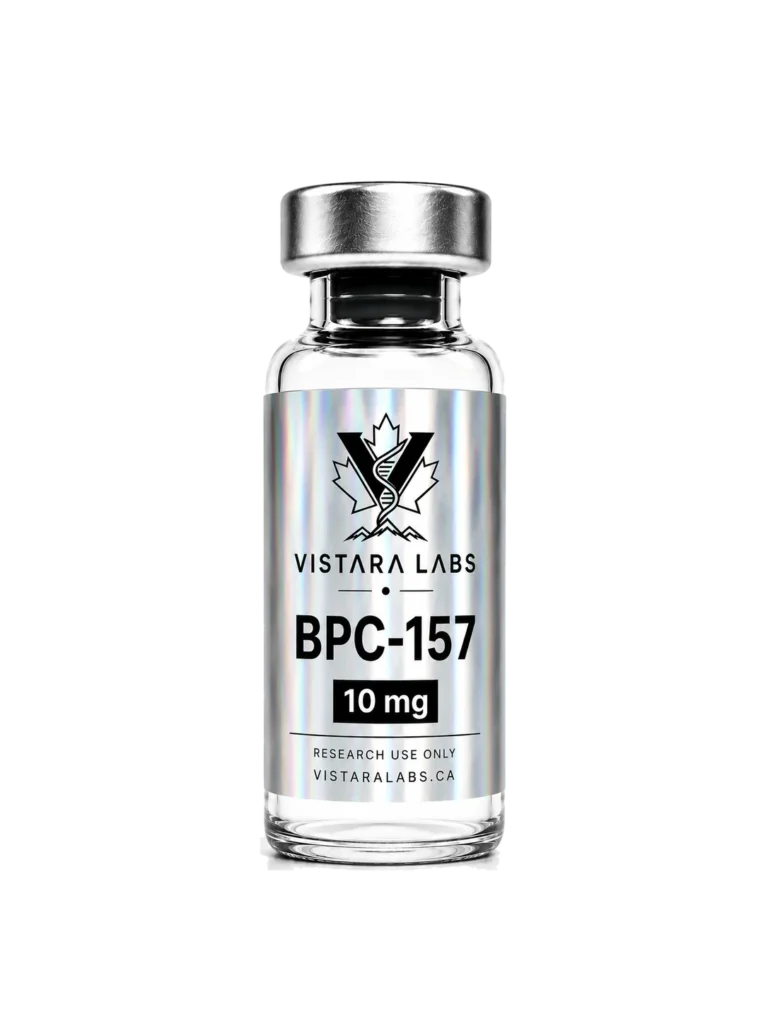
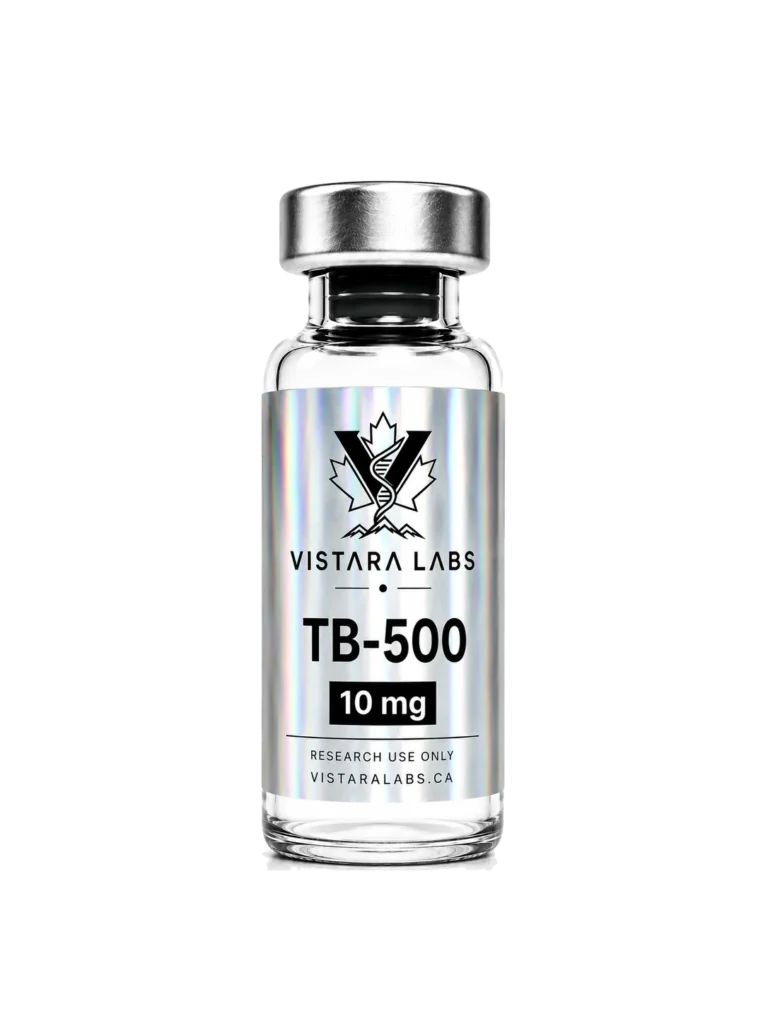
- BPC-157 and TB-500 — soft tissue and repair models
- GHK-Cu — skin, hair and tissue remodelling
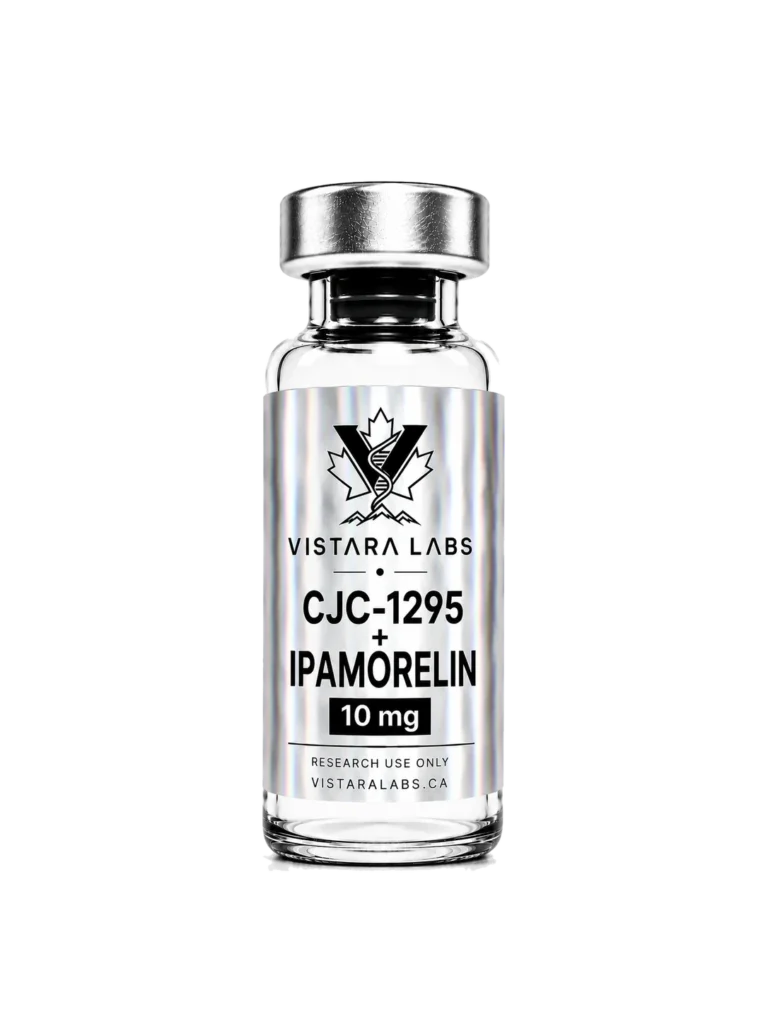
- CJC-1295, ipamorelin, tesamorelin — growth hormone axis, a genuinely different mechanism
- MOTS-c — mitochondrial and metabolic signalling, related but not an incretin
None of these is an incretin receptor agonist. If someone is pointed at BPC-157 expecting what the GLP-1 literature describes, they have been sold the wrong thing.
Where the research market sits
Semaglutide and tirzepatide exist as approved prescription medicines under brand names in Canada and elsewhere. Retatrutide does not — it holds no approval anywhere and exists only as an investigational and research compound. That is a real distinction and it is worth being precise about: an approved medicine obtained through medical care is not the same thing as a research material, and neither this page nor anything else on this site is guidance for human use.
Buying research peptides in Canada
Where a compound is supplied as a research material rather than a medicine, it comes as a freeze-dried powder in a sealed vial, sold for laboratory work.
Canadian fulfilment. Orders ship from within Canada by domestic post to every province, and the vial arrives sealed and ready for storage.
Questions are welcome. Our team answers questions about retatrutide, tirzepatide or an order through our contact page.
Retatrutide and tirzepatide: format and specification
- The actual compound, named. Retatrutide and tirzepatide are each listed by the molecule itself, spelled out, rather than under a general label such as “weight loss blend” or “metabolic stack”.
- The milligram figure. Vial sizes differ widely between suppliers, so it is the only basis for comparing price.
- Published certificates. Certificates of analysis from independent laboratories are published for each compound on our lab reports page, with purity above 99 percent.
- Research-use framing. This is the category where health claims appear most often. Retatrutide and tirzepatide are supplied for laboratory research only, and our listings describe the compound, its strength and its format.
Vistara Labs stocks retatrutide and tirzepatide as lyophilised research materials, shipped from within Canada to every province.
Frequently asked questions
What are peptides for weight loss?
The phrase almost always refers to incretin receptor agonists — peptides acting on the GLP-1, GIP and glucagon receptors. “Peptide” itself only describes a short chain of amino acids and says nothing about what a compound does.
What is the difference between semaglutide, tirzepatide and retatrutide?
How many receptors they engage. Semaglutide acts on GLP-1; tirzepatide on GLP-1 and GIP; retatrutide on GLP-1, GIP and glucagon.
Is BPC-157 a weight loss peptide?
No. BPC-157 sits in the soft tissue and repair literature and is not an incretin receptor agonist. It is frequently and wrongly grouped with this category.
Can you buy these peptides in Canada?
Retatrutide is available from Canadian research suppliers as a research material. Semaglutide and tirzepatide exist as approved prescription medicines in Canada, which is a separate route entirely.
Will a research peptide order be stopped at customs?
No. Every Vistara Labs order ships from within Canada, so there is no customs step, just an ordinary domestic parcel moving between two Canadian addresses.
All products supplied by Vistara Labs are intended for laboratory research use only. They are not drugs, are not approved for human or veterinary use, and are not intended to diagnose, treat, cure or prevent any condition. Nothing on this page constitutes medical advice or guidance for use in humans.
References
Retatrutide has been evaluated in randomised, placebo-controlled human trials through phase 3.
- Triple-Hormone-Receptor Agonist Retatrutide for Obesity - A Phase 2 TrialRandomised, double-blind, placebo-controlled phase 2 obesity trial, 48 weeks.
- Retatrutide, a GIP, GLP-1 and glucagon receptor agonist, for people with type 2 diabetes: a randomised, double-blind, placebo and active-controlled, parallel-group, phase 2 trial conducted in the USARandomised, double-blind, placebo- and active-controlled phase 2 trial; 281 participants with type 2 diabetes.
- Triple hormone receptor agonist retatrutide for metabolic dysfunction-associated steatotic liver disease: a randomized phase 2a trialRandomised phase 2a substudy; 98 participants with metabolic dysfunction-associated steatotic liver disease.
- Efficacy and safety of retatrutide, a GIP, GLP-1, and glucagon receptor agonist, in people with type 2 diabetes and inadequate glycaemic control with diet and exercise: a double-blind, randomised, phase 3 trialDouble-blind randomised phase 3 trial in type 2 diabetes.
Links open the study record on PubMed so the source can be checked directly. Listing a study is not a claim that its findings apply to any other use, product or route of administration. Research use only.