Melanotan II: The Clinical History and the PT-141 Connection
Sexual Health & Intimacy Research
Melanotan II sits in an unusual position among research peptides: it has a documented clinical-testing history in humans, and it directly spawned an approved drug. A peer-reviewed review in Peptides lays out that milestone record.
 View product →
Findings
- In trials, Melanotan II produced measurable skin darkening, its original research purpose.
- A side effect observed in those trials led directly to the development of PT-141 (bremelanotide).
- PT-141 went on to become an FDA-approved medication.
- The trail runs straight from trials to a spin-off approved medicine.
The clinical-history review (Peptides, 2006)
Hadley and Dorr reviewed the melanocortin peptide family and its clinical development. Two analogues — the linear melanotan I and the cyclic, truncated melanotan II — were patented and tested clinically: melanotan I for skin tanning, and melanotan II for the diagnosis and treatment of male erectile dysfunction. The review notes that a melanotan II-derived analogue, PT-141 (Palatin Technologies), had completed initial Phase I/II trials and was scheduled to enter Phase III, on the path to commercialization for sexual function in both men and women.
That descendant compound, bremelanotide (PT-141), later reached approval — making Melanotan II one of the rare research peptides whose lineage produced a marketed medicine.
A note on the toxicity reports
The melanocortin literature also contains published case reports of adverse effects from misuse of injected Melanotan II. They are part of the honest picture and one reason the compound is handled strictly as a research material.
What Melanotan II is
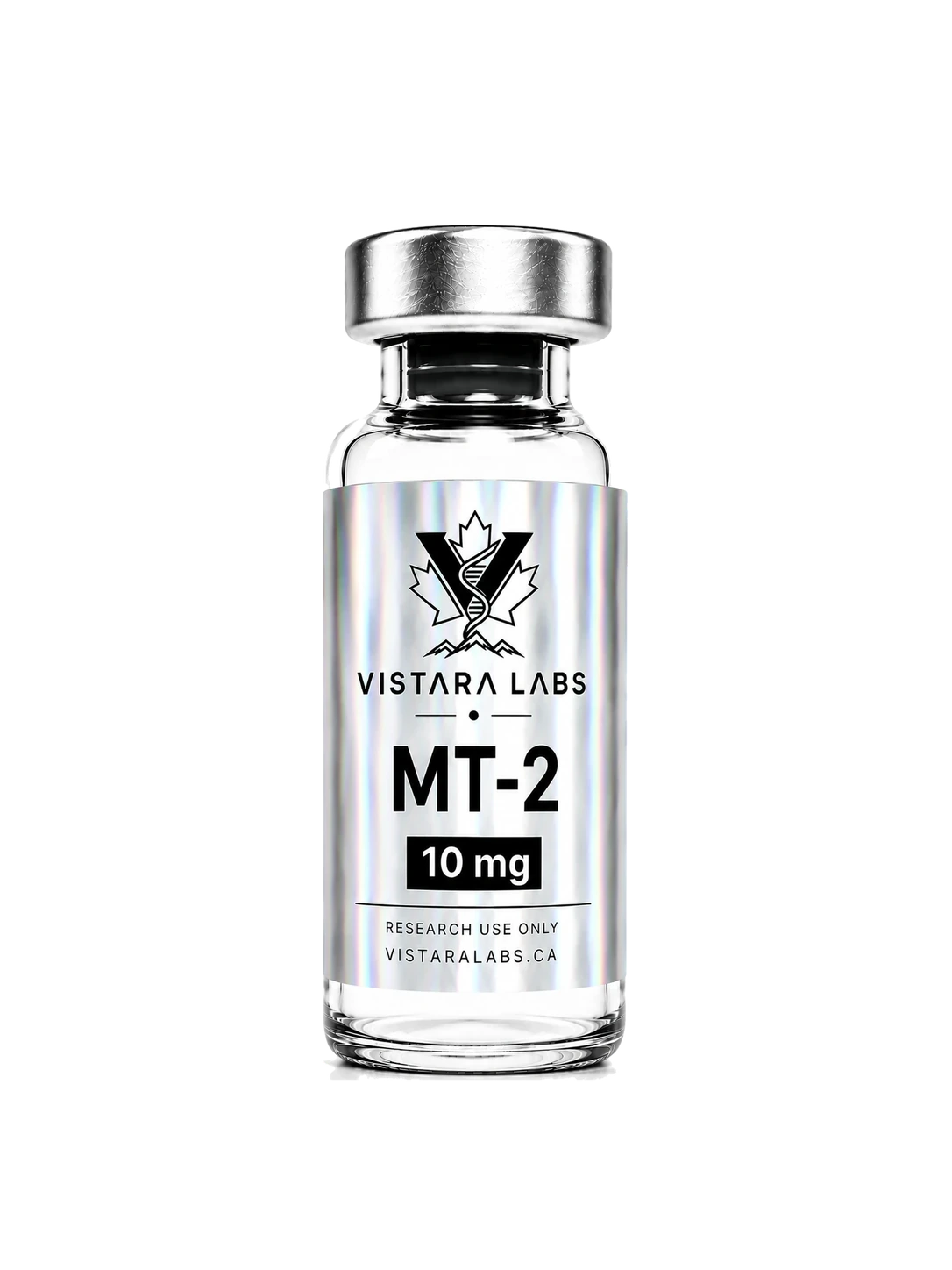
Melanotan II is a synthetic, enzymatically resistant analogue of alpha-melanocyte-stimulating hormone, acting on melanocortin receptors involved in pigmentation and sexual function. Our Melanotan II buying guide covers the compound as research material.
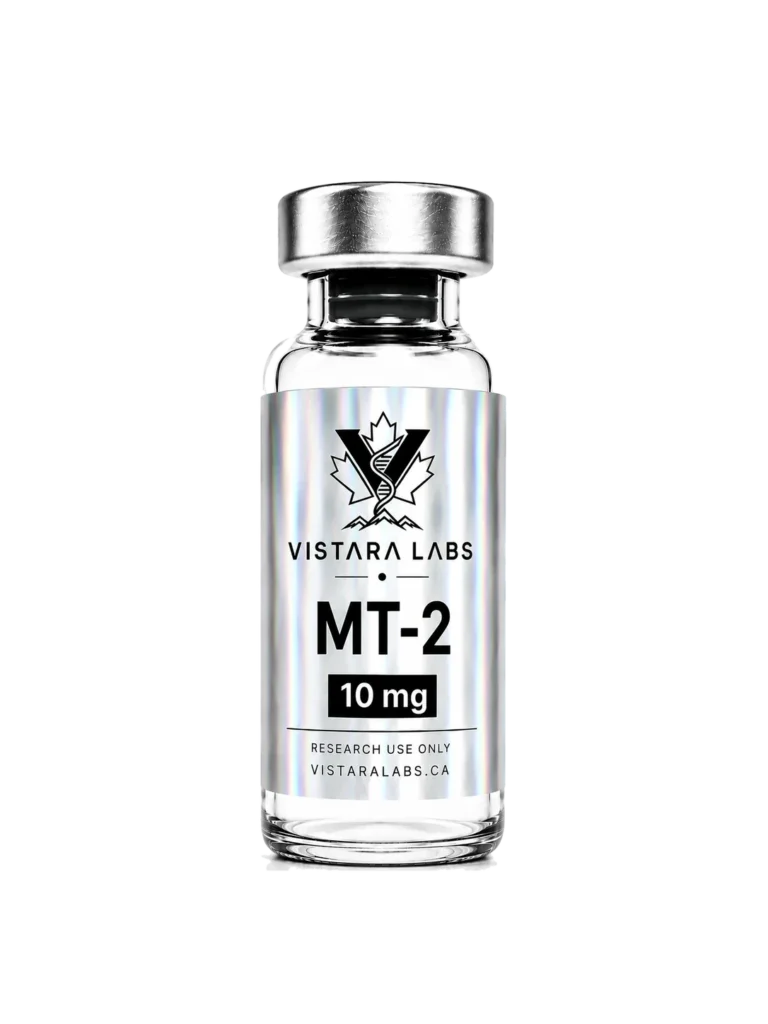
Vistara Labs stocks Melanotan II vials and a Melanotan II nasal spray, shipped from within Canada to every province.
For sourcing, you can buy Melanotan 2 in Canada as 10 mg research vials, third-party tested and shipped domestically.
Frequently asked questions
What has Melanotan II been tested for in humans?
Melanotan II has been tested clinically for skin tanning and, separately, for erectile function. That erectile-function research led to PT-141 (bremelanotide), an analogue that advanced through clinical trials toward approval.
Is Melanotan II the same as PT-141?
No. PT-141 (bremelanotide) is a separate analogue derived from Melanotan II research. Melanotan II itself is the earlier melanocortin compound; PT-141 is the descendant developed specifically around sexual function.
What is a melanocortin peptide?
Melanocortins are a family of signalling peptides that act on melanocortin receptors involved in pigmentation, appetite, and sexual function. Melanotan II is a synthetic, enzymatically resistant melanocortin analogue.
Source: Hadley ME, Dorr RT. Melanocortin peptide therapeutics: historical milestones, clinical studies and commercialization. Peptides. 2006;27:921-930. PMID 16412534.
References
Melanotan II has direct human research from small controlled studies, centred on pigmentation and erectile function. Adverse effects including nausea were commonly reported.
- Evaluation of melanotan-II, a superpotent cyclic melanotropic peptide in a pilot phase-I clinical studyPlacebo-controlled pilot phase 1 study; measurable pigmentation after repeated low-dose exposure. Nausea, fatigue, yawning and spontaneous erections observed.
- Effect of an alpha-melanocyte stimulating hormone analog on penile erection and sexual desire in men with organic erectile dysfunctionRandomised, double-blind, placebo-controlled crossover trial; 10 men with organic erectile dysfunction. Nausea common and sometimes severe.
Links open the study record on PubMed so the source can be checked directly. Listing a study is not a claim that its findings apply to any other use, product or route of administration. Research use only.