Bacteriostatic Water vs Sterile Water: Key Differences
Bacteriostatic water and sterile water are the same sterile Water for Injection, except that bacteriostatic water contains a preservative, usually 0.9% benzyl alcohol, and is packaged for repeated withdrawals, while sterile water has no preservative and is labelled for a single use. That difference decides which one a laboratory picks: sterile water for a vial dissolved and used at once, bacteriostatic water for a peptide vial that will be drawn from over days or weeks. Here is how the two compare on the label, in the pharmacopoeia and at the bench.
Findings
- Hospira’s sterile water label states it “contains no bacteriostat, antimicrobial agent or added buffer” and says “Do not reuse single-dose containers. Discard unused portion.”
- Hospira’s bacteriostatic water label lists 0.9% (9 mg/mL) benzyl alcohol and a multiple-dose container “from which repeated withdrawals may be made”.
- The USP requires bacteriostatic water’s preservative to pass antimicrobial effectiveness testing: a 99.9% fall in bacteria by day 14 and no regrowth to day 28.
- Sterile water is the choice where benzyl alcohol is unwanted; bacteriostatic water carries a “not for use in newborns” label warning.
 View product →
What is sterile water for injection?
Sterile Water for Injection, USP is water purified to injection grade, sterilised and sealed with nothing added. Hospira’s label describes it as supplied “only in single-dose containers to dilute or dissolve drugs for injection”, with no bacteriostat, antimicrobial agent or added buffer, and instructs that single-dose containers are not reused and any unused portion is discarded (Hospira, Sterile Water for Injection label). Its labelled storage is 20 to 25 °C.
The absence of a preservative is the point. Sterile water is sterile up to the moment the stopper is first pierced. After that, nothing in the water slows the growth of an organism carried in on a needle, which is why the label treats each container as a one-time product.
What is bacteriostatic water?
The USP monograph defines Bacteriostatic Water for Injection as sterilised Water for Injection containing one or more suitable antimicrobial agents, with a pH between 4.5 and 7.0, fewer than 0.5 endotoxin units per mL, and a label that names each preservative and its proportion (USP 35, Bacteriostatic Water for Injection monograph). Hospira’s version uses 0.9% (9 mg/mL) benzyl alcohol, pH 5.7, in a multiple-dose vial (Hospira, Bacteriostatic Water for Injection label, 2019).
“Bacteriostatic” means the preservative stops bacteria multiplying rather than killing them on contact. The test it must pass is set out in USP chapter <51>: for injectable products, an inoculated sample has to show at least a 1.0 log reduction in bacteria at day 7, at least a 3.0 log reduction at day 14 and no increase through day 28 (USP 32, chapter <51>). The whole background is in bacteriostatic water explained.
How do bacteriostatic water and sterile water compare side by side?
| Question | Bacteriostatic water | Sterile water |
|---|---|---|
| Base | Sterile Water for Injection | Sterile Water for Injection |
| Preservative | Benzyl alcohol, usually 0.9% | None |
| Container | Multiple-dose | Single-dose |
| After first puncture | Dated, discarded within 28 days (CDC) | Unused portion discarded |
| Newborn warning | Yes, “not for use in newborns” | No benzyl alcohol warning |
| Labelled storage | 20 to 25 °C | 20 to 25 °C |
| Typical lab role | Peptide vials drawn from repeatedly | Material dissolved and used at once |
Single-use vs multi-dose: why it matters for peptides
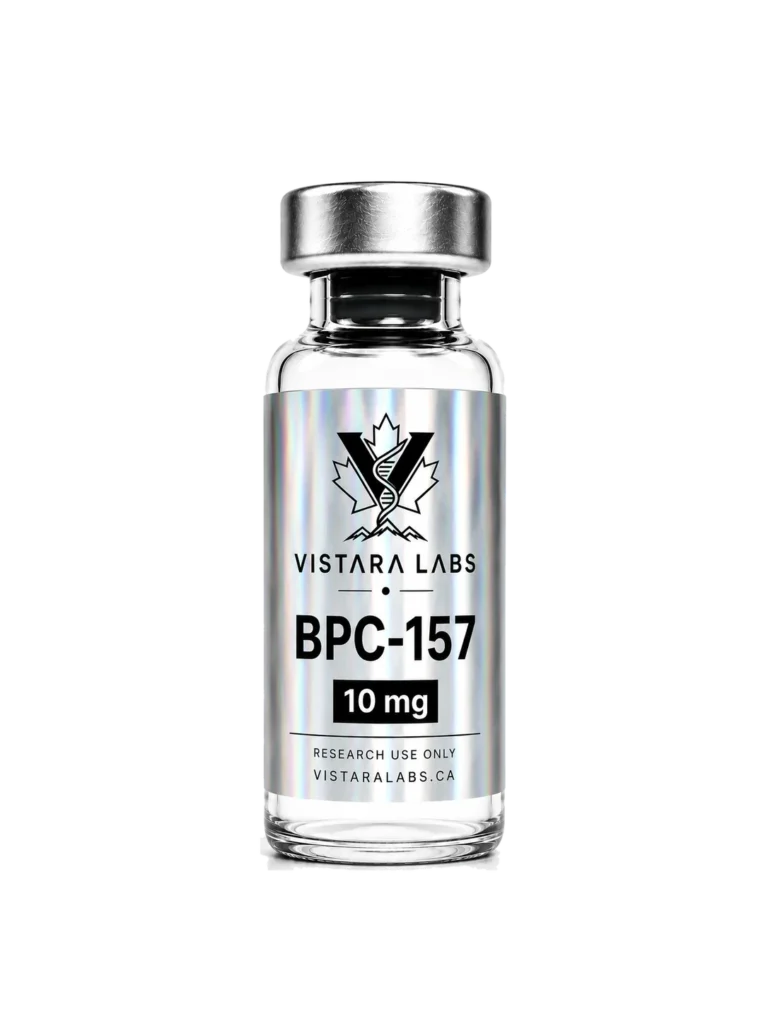
A lyophilised peptide vial is usually a working stock. A BPC-157 10 mg vial dissolved in 2 mL gives 5 mg/mL, and the laboratory then draws small measured volumes from it across a research timeline. The stopper may be pierced dozens of times.
With sterile water as the diluent, each of those punctures enters an unpreserved solution. With bacteriostatic water, the benzyl alcohol keeps working between draws. The CDC treats a needle-punctured multi-dose vial as usable for up to 28 days unless the manufacturer says otherwise (CDC, Preventing Unsafe Injection Practices); no equivalent window exists for a single-dose container, which is meant to be finished at first opening. The 28-day convention is explained in how long bacteriostatic water lasts.
That is why peptide reconstitution pages, including our step-by-step guide to reconstituting peptides with bacteriostatic water, specify bac water. The concentration arithmetic is identical with either diluent; the peptide calculator works the same whichever is used.
When is sterile water chosen?
- Single-access preparations: when a vial is reconstituted and the entire contents are used in one session, a preservative adds nothing.
- Benzyl alcohol incompatibility: Hospira’s bacteriostatic water label notes some drugs may be incompatible in a vehicle containing benzyl alcohol. Where a compound’s documentation names sterile water, that instruction is followed.
- Preservative-free designs: where benzyl alcohol would be a variable in its own right, a preservative-free diluent keeps it out of the system.
- Newborns, in clinical settings: benzyl alcohol products are labelled “not for use in newborns”, a rule that follows the 1982 reports of benzyl alcohol toxicity in premature infants (CDC, MMWR, 1982), so preservative-free diluents are used there.
When is bacteriostatic water chosen?
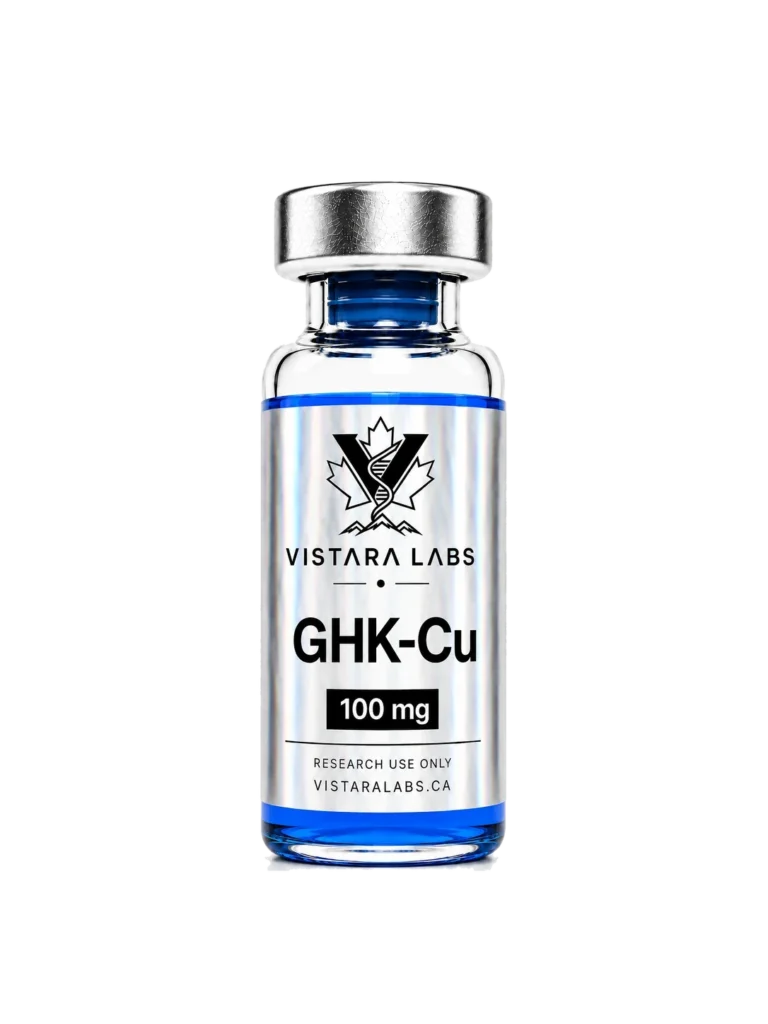
For any vial that stays in use. That covers nearly every lyophilised research peptide in a 5 mg to 30 mg vial, from retatrutide to GHK-Cu. Worked examples are on the retatrutide reconstitution page and the BPC-157 reconstitution page. Bac water is also the diluent where the solution will be measured with small syringes over time, such as the 0.5 mL U-100 insulin syringes covered in insulin syringes explained.
A third option, 0.9% saline, is a different comparison: it adds sodium chloride to make the solution isotonic. That is covered in bacteriostatic water vs saline.
How Vistara Labs supplies it
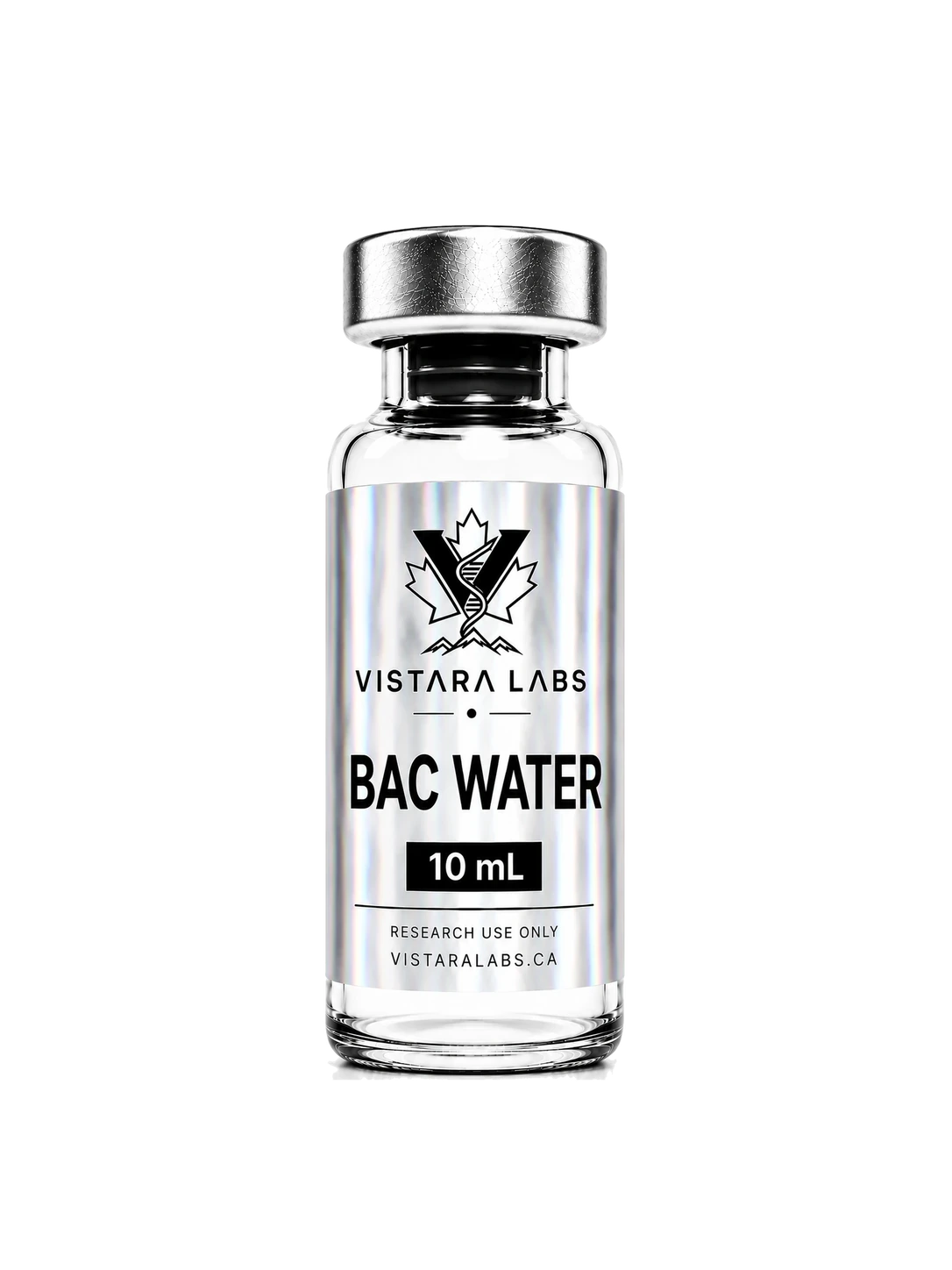
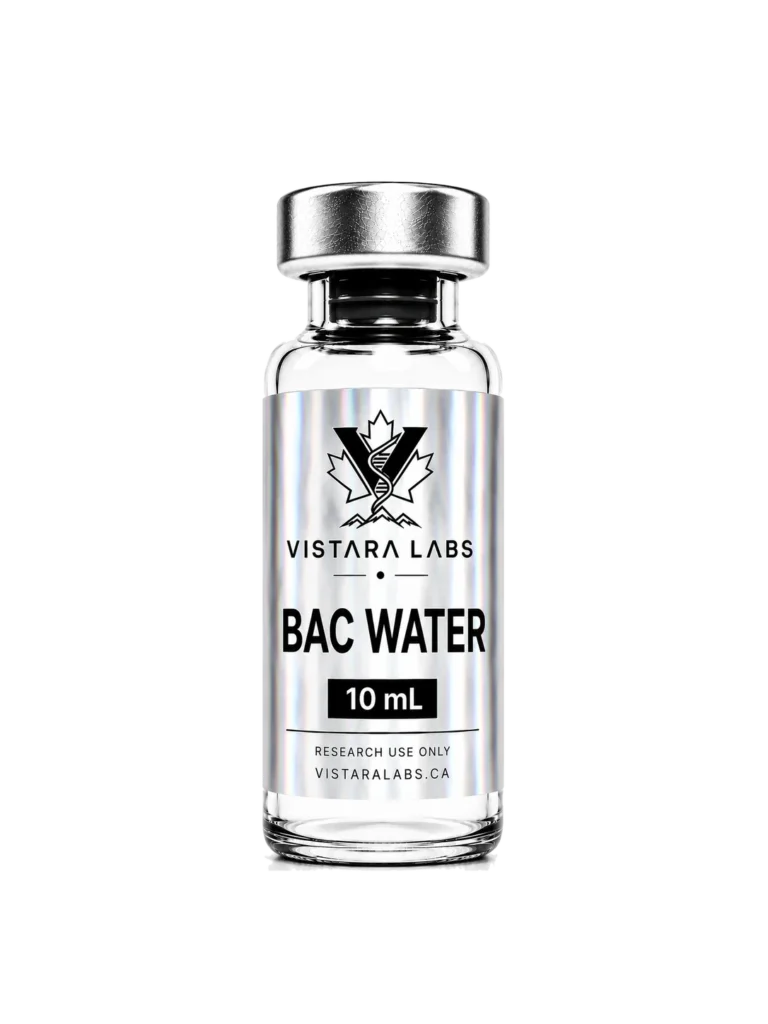
We stock bacteriostatic water in multi-dose vials: sterile water with 0.9% benzyl alcohol, shipped from within Canada by Canada Post Xpresspost. One multi-dose vial covers several peptide reconstitutions. Buying options are set out in buy bacteriostatic water in Canada, and certificates for our peptides are on the lab reports page.
The label and pharmacopoeia figures above describe pharmaceutical products. Vistara Labs bacteriostatic water is supplied for laboratory research use only.
Frequently asked questions
What is the difference between bacteriostatic water and sterile water?
Bacteriostatic water is sterile water with a preservative, usually 0.9% benzyl alcohol, packaged in multiple-dose vials. Sterile water has no preservative and is packaged in single-dose containers, with the label instructing that any unused portion is discarded.
Can you use sterile water instead of bacteriostatic water for peptides?
Sterile water dissolves lyophilised peptides just as well, and it is the choice when a vial is reconstituted and used in a single session or when benzyl alcohol must be avoided. For a vial drawn from repeatedly, bacteriostatic water is standard because its preservative suppresses bacterial growth between punctures.
Why is bacteriostatic water called bacteriostatic?
Because its preservative holds bacteria static: it stops them multiplying rather than killing them outright. Under USP chapter 51 the preservative must cut bacterial counts by 99.9% within 14 days and allow no regrowth to day 28.
How long does sterile water last once opened?
Sterile water for injection is labelled as a single-dose product: once opened, the unused portion is discarded. Bacteriostatic water is the multi-dose alternative, conventionally dated and discarded within 28 days of first puncture.
Where can I buy bacteriostatic water in Canada?
Vistara Labs supplies bacteriostatic water in multi-dose vials of sterile water with 0.9% benzyl alcohol, shipped from within Canada by Canada Post Xpresspost.
Product details from vistaralabs.ca, October 2026. Sources: Hospira. Sterile Water for Injection, USP, prescribing information. Pfizer labeling. Hospira. Bacteriostatic Water for Injection, USP, prescribing information. Revised 2019. Pfizer labeling. United States Pharmacopeia. Bacteriostatic Water for Injection monograph. USP 35. Monograph text. United States Pharmacopeia. Chapter <51> Antimicrobial Effectiveness Testing. USP 32. Chapter text. Centers for Disease Control and Prevention. Preventing Unsafe Injection Practices. CDC. Centers for Disease Control and Prevention. Neonatal deaths associated with use of benzyl alcohol, United States. MMWR. 1982;31(22):290-1. MMWR.
More on this: Bacteriostatic Water: What It Is and Why Labs Use It and Where Do I Get Bacteriostatic Water in Canada?
All products supplied by Vistara Labs are intended for laboratory research use only. They are not drugs, are not approved for human or veterinary use, and are not intended to diagnose, treat, cure or prevent any condition. Nothing on this page constitutes medical advice or guidance for use in humans.