Buy KPV in Canada: A Researcher’s Guide
KPV is a tripeptide fragment of alpha-MSH, studied for its interaction with inflammatory signalling. It penetrates cells and is investigated in gut-integrity and localised-inflammation research models. For Canadian researchers the sourcing questions are straightforward; this guide also covers what KPV is, what the research does and does not show, and how to handle it.
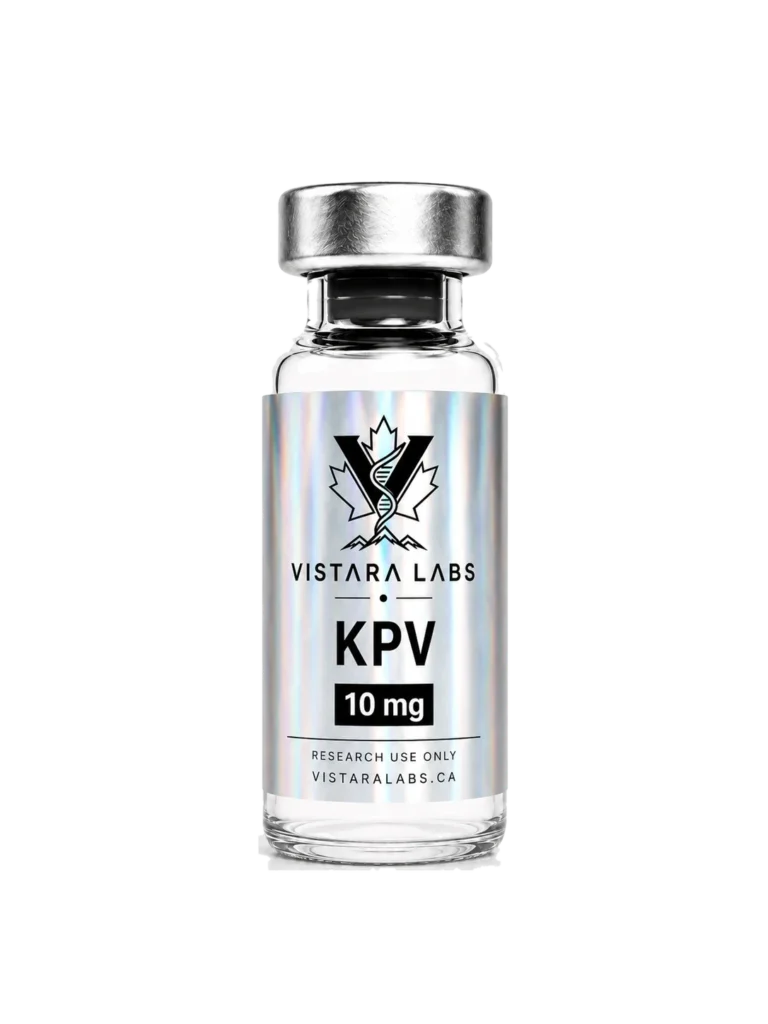 View product →
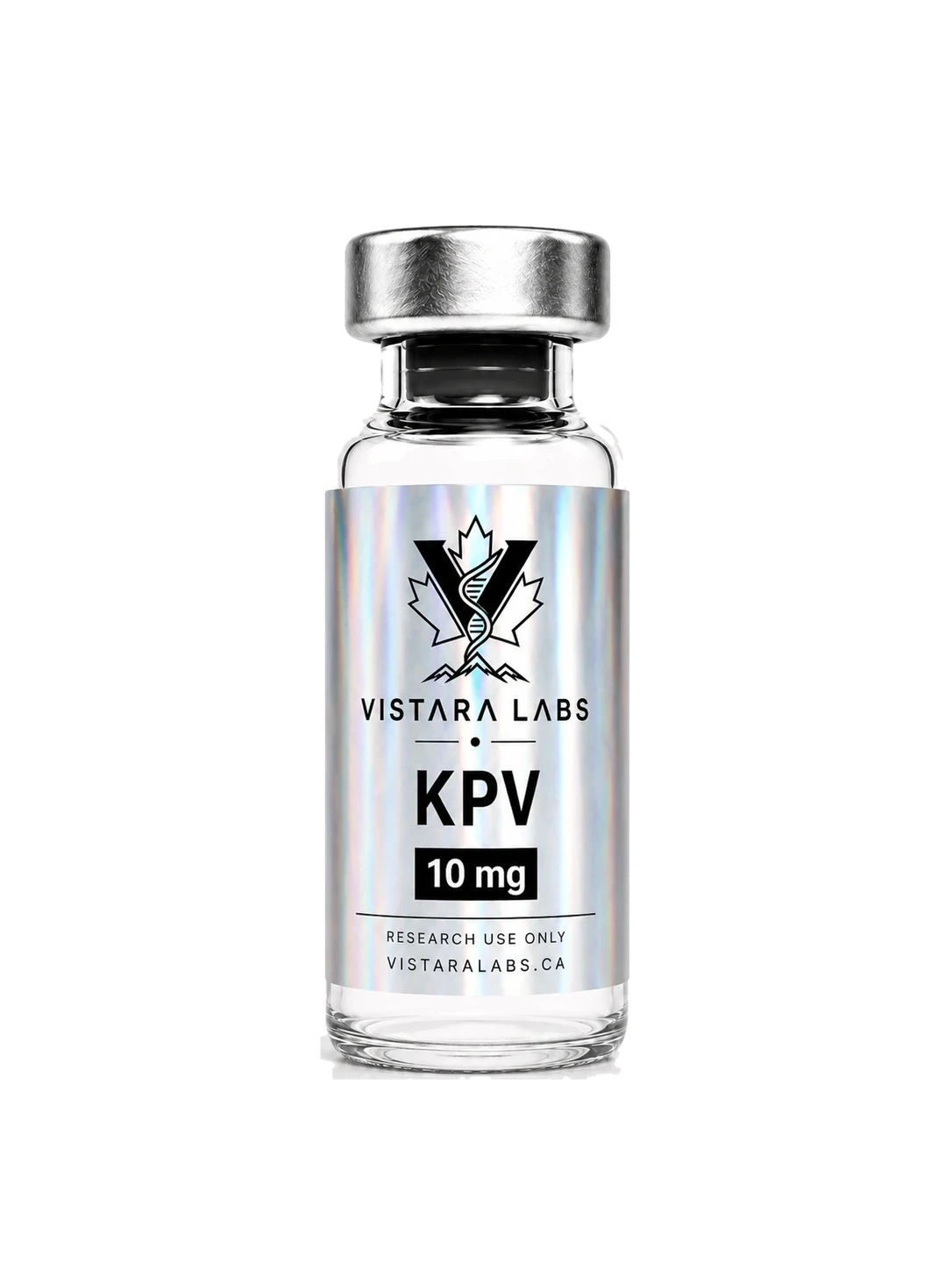
At a glance: Vistara Labs stocks KPV in 10 mg vials and as a ready-mixed nasal spray, independently tested, with a certificate of analysis on our Lab Reports page, shipped from within Canada by Canada Post Xpresspost, with same-business-day dispatch on orders before 3 pm Pacific. We deliver to every province, including Ontario, Quebec, British Columbia and Alberta.
What KPV is
KPV is three amino acids long: lysine, proline and valine. It is the C-terminal end of alpha-melanocyte-stimulating hormone (alpha-MSH), a melanocortin hormone the body makes naturally. Researchers found that this short tail keeps much of the parent hormone’s anti-inflammatory signalling without its pigmentation effects, and that separation is what made KPV a research subject in its own right. Its small size matters too: in gut models, KPV is carried into intestinal cells by PepT1, a transporter that normally takes up di- and tripeptides from digested food.
What the research covers
The KPV literature concentrates on inflammatory processes. Much of it uses gut-tissue models, including mouse models of colitis, and skin models, along with derivative molecules built on the same three-residue core. A 2025 review of tripeptides in wound care and tissue regeneration identified the class as a promising direction, with delivery and stability as the main engineering questions. Human trials of KPV itself have not been published; the interest rests on the consistency of the laboratory findings. We go through it in KPV: the anti-inflammatory tripeptide, explained.
Formats
Vistara Labs stocks KPV three ways. The KPV 10 mg vial is a lyophilised powder reconstituted with bacteriostatic water. The KPV nasal spray ships pre-mixed in a metered atomiser. And KPV is one of the four peptides in the KLOW blend, alongside GHK-Cu, BPC-157 and TB-500. All are third-party tested with the purity figure on the product page, and the single-peptide formats are also sold in packs of ten.
Handling and storage
Keep unopened vials cold and dark. A 10 mg vial reconstituted with 2 mL of bacteriostatic water gives 5 mg/mL; with 1 mL it gives 10 mg/mL. The volume and syringe tables are in how much bacteriostatic water for a KPV 10 mg vial, and the peptide calculator covers other combinations. After reconstitution, label the vial with the date and concentration and refrigerate it at 2 to 8 °C, away from light. The spray arrives ready to use; store it as its label directs.
KPV quality and lab reports
- Purity documentation: certificates of analysis from independent laboratories are published for each compound, including HPLC purity, on the Lab Results page.
- Identity: KPV (Lys-Pro-Val, C16H30N4O4) has a molecular mass of about 342 Da, small enough for the PepT1 transporter to carry it into intestinal cells.
- Format: a lyophilised vial, a pre-mixed spray, or KPV inside a multi-peptide blend, chosen to match the protocol.
- Research-use framing: sold for laboratory research only; see our legal overview.
Buying KPV in Canada
KPV is not a controlled substance in Canada and is not an approved medicine; it is sold as a laboratory research material. All three KPV formats ship from within Canada, so there is no customs step. Shipping is covered in domestic shipping within Canada, and questions about the vial, the spray or the KLOW blend can go to our team at [email protected].
Where it fits
KPV sits within gut and tissue research. The wider set is on the Injury Recovery Research page, and the blend comparison is in KLOW vs GLOW.
Frequently asked questions
Where can I buy KPV in Canada?
From domestic research suppliers. Vistara Labs stocks KPV as a vial, a pre-mixed nasal spray and within the KLOW blend, and ships from within Canada to every province.
How is KPV supplied?
As a lyophilised powder in a sealed vial, third-party tested, reconstituted with bacteriostatic water for research handling. It is also available as a ready-to-use nasal spray.
Is KPV the same as alpha-MSH?
No. KPV is only the last three amino acids of alpha-MSH. It keeps the anti-inflammatory signalling studied in the parent hormone without its pigmentation effects.
Has KPV been tested in humans?
Human trials of KPV itself have not been published. The research is laboratory work in gut and skin models.
Is KPV legal in Canada?
It is sold for laboratory research use only. It is not sold for human use, and nothing here is medical advice.
All products discussed are for laboratory research use only and are not for human use. Nothing on this page is medical advice, and no statement about any compound is a claim of therapeutic benefit.
References
No human exposure study of KPV was identified by any route. The foundational research below is cellular and animal work.
- PepT1-mediated tripeptide KPV uptake reduces intestinal inflammationLaboratory study in human intestinal epithelial cells and human T cells; no human exposure.
Links open the study record on PubMed so the source can be checked directly. Listing a study is not a claim that its findings apply to any other use, product or route of administration. Research use only.