GHK-Cu Side Effects: What the Research Reports
GHK-Cu has been used in skin and hair products for decades, and the published human studies are topical: 12-week cosmetic trials in groups of 41 to 71 women reported firmer, thicker skin, and a 2015 review by the peptide’s discoverer states that no issues have arisen in cosmetic or human wound-healing use (Pickart et al., Biomed Res Int, 2015). For injected GHK-Cu, the published work to date is laboratory research, where mouse studies reported protective effects without significant systemic toxicity. This page sets out what each body of work recorded, including the question researchers most often raise: the copper. GHK-Cu is also supplied as a ready-mixed GHK-Cu Nasal Spray.
Findings
- GHK is a naturally occurring tripeptide in human plasma, at about 200 ng/mL at age 20 and 80 ng/mL by age 60 (Pickart and Margolina, Int J Mol Sci, 2018).
- Placebo-controlled cosmetic studies in women around the age of 50 reported improved skin density, thickness and fine lines over 12 weeks (Pickart and Margolina, 2018).
- In mice with silica-induced lung disease, GHK-Cu reduced lung inflammation and fibrosis without significant systemic toxicity (Redox Biol, 2024).
- GHK binds copper about as tightly as albumin, the body’s own copper carrier, and in cell studies it reduced copper’s redox activity and prevented copper-induced cell death (Min et al., Metallomics, 2024).
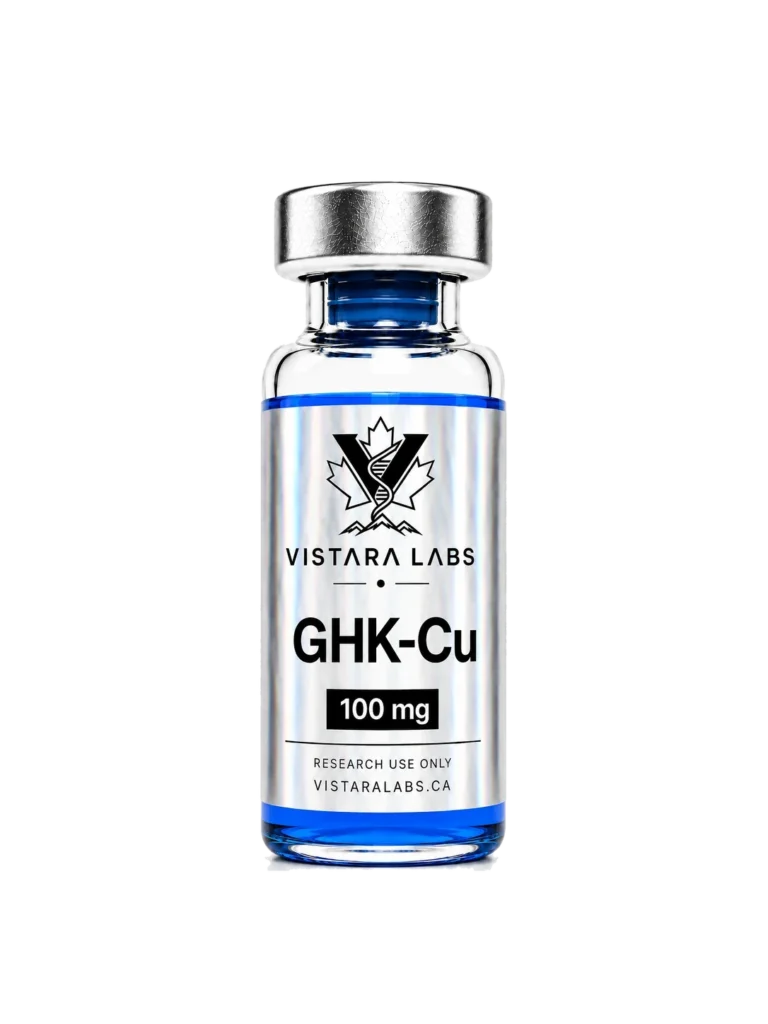 View product →
What is GHK-Cu?
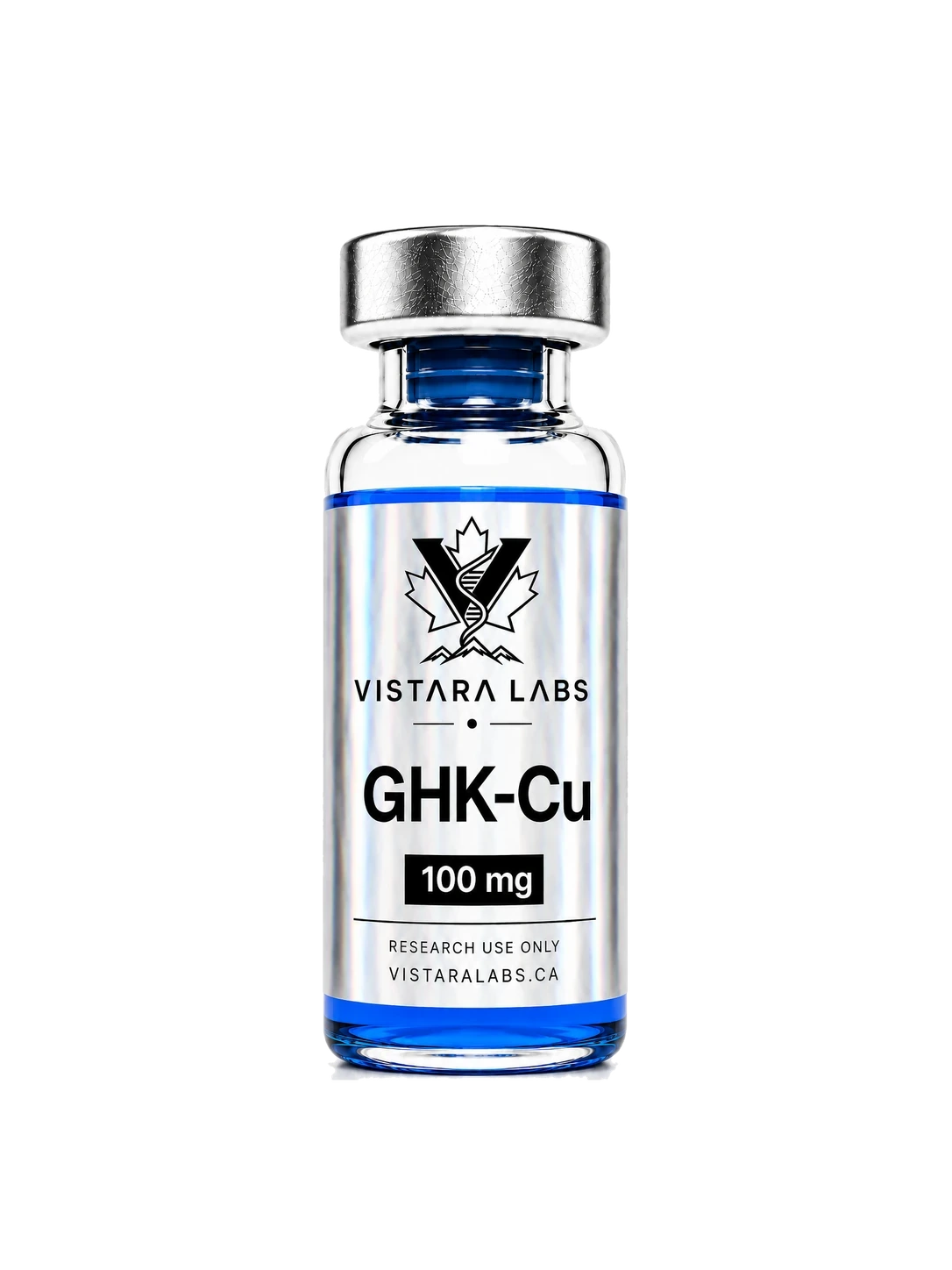
GHK-Cu is the copper complex of glycyl-L-histidyl-L-lysine, a three-amino-acid peptide (tripeptide) found in human plasma, saliva and urine. It was isolated in 1973 by Loren Pickart as an activity in human albumin that caused old human liver tissue to make proteins like younger tissue (Pickart et al., 2015). GHK can also be released from tissue proteins after an injury, which is why it is described as part of the body’s own repair signalling. Its intense blue colour comes from the bound copper, explained in Why GHK-Cu Is Blue, and the skin research in full is in GHK-Cu: The Skin Research.
What do human studies report?
All published human studies of GHK-Cu applied it to the skin. A 2018 review summarised the main cosmetic trials (Pickart and Margolina, Int J Mol Sci, 2018):
- Facial cream, 71 women, 12 weeks: increased skin density and thickness, reduced laxity, improved clarity and reduced fine lines and wrinkle depth in women with mild to advanced photoaging.
- Eye cream, 41 women, 12 weeks: performed better than both placebo and a vitamin K cream on lines, wrinkles, overall appearance and skin density.
- Thigh skin: collagen production rose in 70% of women using GHK-Cu, against 50% with vitamin C cream and 40% with retinoic acid.
- Randomised, double-blind serum study, 8 weeks: GHK-Cu in a nano-lipid carrier reduced wrinkle volume by 55.8% against the carrier alone and by 31.6% against a commercial peptide comparator.
Separate studies of related copper peptide complexes in creams, on skin deliberately irritated with tape stripping, detergent or acetone, or in people with nickel allergy, reported faster healing and, in the nickel-allergy group, faster reduction of redness than control creams (Pickart et al., 2015). A 2026 systematic review in Aesthetic Surgery Journal identified two randomised trials among 20 eligible studies and reported improved patient satisfaction after laser resurfacing and reduced wrinkle volume and depth against controls (Mokhtar et al., 2026).
On tolerability, the 2015 review by Pickart and colleagues states that the molecule has had no issues in its use as a skin cosmetic or in human wound-healing studies. That statement comes from the peptide’s discoverer, and the individual trial reports summarised above describe outcomes rather than listing adverse events.
What does laboratory research report on injected GHK-Cu?
No human trial of injected GHK-Cu has been published. In animal models, it has been studied for its effects on several organs:
- Lung fibrosis: in mice with bleomycin-induced lung fibrosis, GHK-Cu injected into the abdominal cavity every other day reduced inflammation, collagen deposition and inflammatory markers such as TNF-alpha and IL-6 (Life Sci, 2020).
- Silicosis: in mice exposed to crystalline silica, GHK-Cu bound the antioxidant enzyme peroxiredoxin 6 and reduced lung inflammation and fibrosis without significant systemic toxicity (Redox Biol, 2024).
- Colitis: in a mouse model of ulcerative colitis, GHK-Cu reduced weight loss and inflammatory cytokines and promoted repair of the gut lining (Front Pharmacol, 2025).
The published work to date is laboratory research. A phase 2 study of GHK-Cu in acute wounds has been registered and was recruiting as of August 2026, with no results yet (Mateescu et al., Pharmaceutics, 2026).
What about the copper?
Free copper ions can drive oxidative reactions that damage cells, so the question is whether GHK-Cu releases copper in a harmful form. Its binding constant for copper (log 16.44) is slightly higher than that of albumin’s high-affinity copper site (log 16.2), and copper bound to GHK has its redox activity silenced, allowing copper to be delivered into cells in a non-toxic form (Pickart et al., 2015). A 2024 study by researchers in Stockholm found that GHK bound copper, reduced its redox activity, prevented copper- and zinc-induced cell death in culture and reduced copper’s added toxicity during inflammation (Min et al., Metallomics, 2024).
Reviewers point out that the exact chemical form of GHK-Cu, including how much copper is bound and how much is free, can vary between formulations, and propose tighter specifications for copper content and purity (Mateescu et al., 2026). That is one reason verified, consistent material matters for laboratory work.
How does GHK-Cu compare with related peptides?
GHK-Cu is often studied alongside BPC-157 for tissue repair and alongside KPV, another tripeptide, for inflammation. The differences in origin and evidence are covered in BPC-157 vs GHK-Cu and KPV vs GHK-Cu.
Why research-grade quality and storage matter
Every Vistara Labs product is third-party tested, with certificates on the lab reports page. GHK-Cu is supplied as a lyophilised (freeze-dried) vial and as a ready-mixed metered nasal spray. Storage before and after mixing is covered in How Long Does GHK-Cu Last?, the GHK-Cu reconstitution guide and GHK-Cu Stability. Orders ship from within Canada by Canada Post Xpresspost.
GHK-Cu is supplied for laboratory research use only. The human studies above tested topical products on the skin.
Frequently asked questions
What side effects have GHK-Cu studies reported?
The published human studies tested GHK-Cu on the skin, and a 2015 review by its discoverer states that no issues have arisen in cosmetic or human wound-healing use. In mouse studies of injected GHK-Cu, it reduced lung inflammation and fibrosis without significant systemic toxicity.
What did the human skin studies of GHK-Cu show?
Twelve-week placebo-controlled studies in 71 and 41 women reported increased skin density and thickness and reduced fine lines and wrinkles. In a randomised, double-blind 8-week study, a GHK-Cu serum reduced wrinkle volume by 55.8% against its carrier alone.
Has injected GHK-Cu been studied in humans?
No human trial of injected GHK-Cu has been published. The published work to date is laboratory research in mice, covering lung fibrosis, silicosis and colitis models.
What does research show about the copper in GHK-Cu?
GHK binds copper about as tightly as albumin and silences its redox activity. A 2024 cell study found GHK prevented copper- and zinc-induced cell death and reduced copper’s toxicity during inflammation.
Where can I buy GHK-Cu in Canada?
Vistara Labs supplies GHK-Cu as a lyophilised vial and a ready-mixed nasal spray, third-party tested and shipped from within Canada by Canada Post Xpresspost.
Product details from vistaralabs.ca, October 2026. Sources: Pickart L, Margolina A. Regenerative and protective actions of the GHK-Cu peptide in the light of the new gene data. Int J Mol Sci. 2018. PMID 29986520. Pickart L, Vasquez-Soltero JM, Margolina A. GHK peptide as a natural modulator of multiple cellular pathways in skin regeneration. Biomed Res Int. 2015. PMID 26236730. Mokhtar J et al. The regenerative potential of GHK-Cu in aesthetic medicine. Aesthet Surg J. 2026. PMID 42619529. Mateescu DM et al. GHK-Cu as a bioactive metallopeptide and drug-delivery cargo. Pharmaceutics. 2026. PMID 42797253. The glycyl-l-histidyl-l-lysine-Cu(2+) tripeptide complex attenuates lung inflammation and fibrosis in silicosis by targeting peroxiredoxin 6. Redox Biol. 2024. PMID 38879894. Protective effects of GHK-Cu in bleomycin-induced pulmonary fibrosis via anti-oxidative stress and anti-inflammation pathways. Life Sci. 2020. PMID 31809714. Exploring the beneficial effects of GHK-Cu on an experimental model of colitis and the underlying mechanisms. Front Pharmacol. 2025. PMID 40672369. Min JH, Sarlus H, Harris RA. Glycyl-l-histidyl-l-lysine prevents copper- and zinc-induced protein aggregation and central nervous system cell death in vitro. Metallomics. 2024. PMID 38599632.
More on this: Buy GHK-Cu in Canada.
All products supplied by Vistara Labs are intended for laboratory research use only. They are not drugs, are not approved for human or veterinary use, and are not intended to diagnose, treat, cure or prevent any condition. Nothing on this page constitutes medical advice or guidance for use in humans.
References
The stronger human GHK-Cu evidence is topical and wound-related. It does not establish effects for systemic or injectable use, and one randomised cosmetic study found no objective advantage.
- Enhanced healing of ulcers in patients with diabetes by topical treatment with glycyl-l-histidyl-l-lysine copperMulticentre randomised, evaluator-blinded, placebo-controlled trial; topical GHK-Cu in diabetic neuropathic ulcers.
- Effects of topical copper tripeptide complex on CO2 laser-resurfaced skinRandomised trial after CO2 laser resurfacing; 13 patients completed. No significant objective advantage found for erythema, wrinkles or overall skin quality.
Links open the study record on PubMed so the source can be checked directly. Listing a study is not a claim that its findings apply to any other use, product or route of administration. Research use only.