


L'ensemble Wolverine : BPC-157 + TB-500
Recherche sur la récupération après blessure
“Wolverine” is a nickname the research community gave this pairing, not a formulation. No laboratory named it, no monograph defines it, and nothing stops two vendors putting the word on two different mixtures. That matters more than it sounds: when you compare two products called a Wolverine stack, you are comparing marketing names, and the only way through is to read what is actually in the vial.
What the Wolverine stack is
In its standard form it is two peptides supplied together:
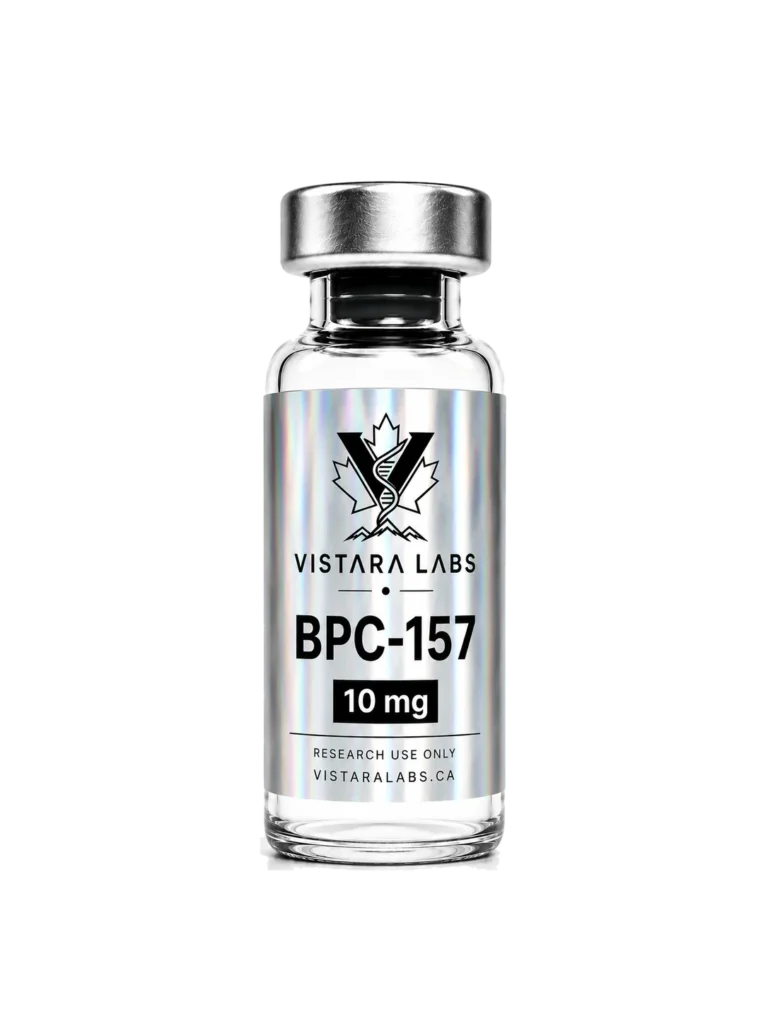
- BPC-157 — a fifteen amino acid fragment of a protein found in gastric juice. Studied across soft tissue, tendon and ligament models, with a substantial body of gastrointestinal work behind it.
- TB-500 — a synthetic peptide corresponding to the active region of thymosin β4. Associated in the literature with cell migration, tissue regeneration and new blood vessel formation.
The reason they are paired is that they are studied around related but distinct mechanisms rather than the same one. That is the entire logic of the stack, and it is also why the pairing acquired a nickname in the first place.
Where the name came from
It is a comic-book reference — the character whose defining trait is rapid healing. It spread through forums and community write-ups rather than from any vendor or paper, which is exactly why it has no fixed meaning. You will also see it written Wolverine blend, Wolverine peptide stack or just the Wolverine peptide. They all point at the same BPC-157 and TB-500 pairing.
The number that actually matters
Because nothing standardises the name, the specification is the only thing worth comparing. Two figures decide it:
- The total milligrams in the vial, and
- the split between the two peptides.
A cheaper Wolverine stack with a lower total is not cheaper, and a listing that states neither number cannot be compared with anything. If a vendor will not put the milligram figures on the product page, that is the first thing to ask for — and the answer tells you a great deal about how the rest of the operation is run.
Buying it in Canada
Neither peptide holds approval for human use in Canada. They are supplied as research materials for laboratory use, which leaves two routes.
From a US or overseas vendor. The parcel crosses the border, where unapproved compounds are precisely the category the CBSA may hold or seize. A blend is a more expensive thing to lose than a single peptide, and a seized vial is not replaced.
From a supplier already inside Canada. No border and no customs exposure — an ordinary domestic parcel. This is the plain reason Canadian research buyers have moved toward domestic supply.
What to check before ordering
- Both peptides named. “Recovery blend” is not a specification. You want BPC-157 and TB-500 stated explicitly.
- A stated milligram total. Without it there is no price comparison to make.
- An intact white cake. Both peptides are white lyophilised powders. Discolouration or a collapsed, sticky puck points to moisture ingress.
- Verifiable domestic dispatch. Canadian tracking from a Canadian origin, not a Canadian storefront drop-shipping from overseas.
- Research-use framing. This pairing attracts more informal recovery claims than almost anything else in the category, precisely because of the nickname. A vendor leaning on the comic book rather than the specification is telling you something.
The stack, or the peptides separately?
Buying the blend is generally the cheaper route and gives you both compounds in a single vial. Buying them separately — BPC-157 and TB-500 as individual vials — costs more but leaves the ratio in your hands rather than the vendor’s. Which is right depends entirely on whether the work needs the two held independently.
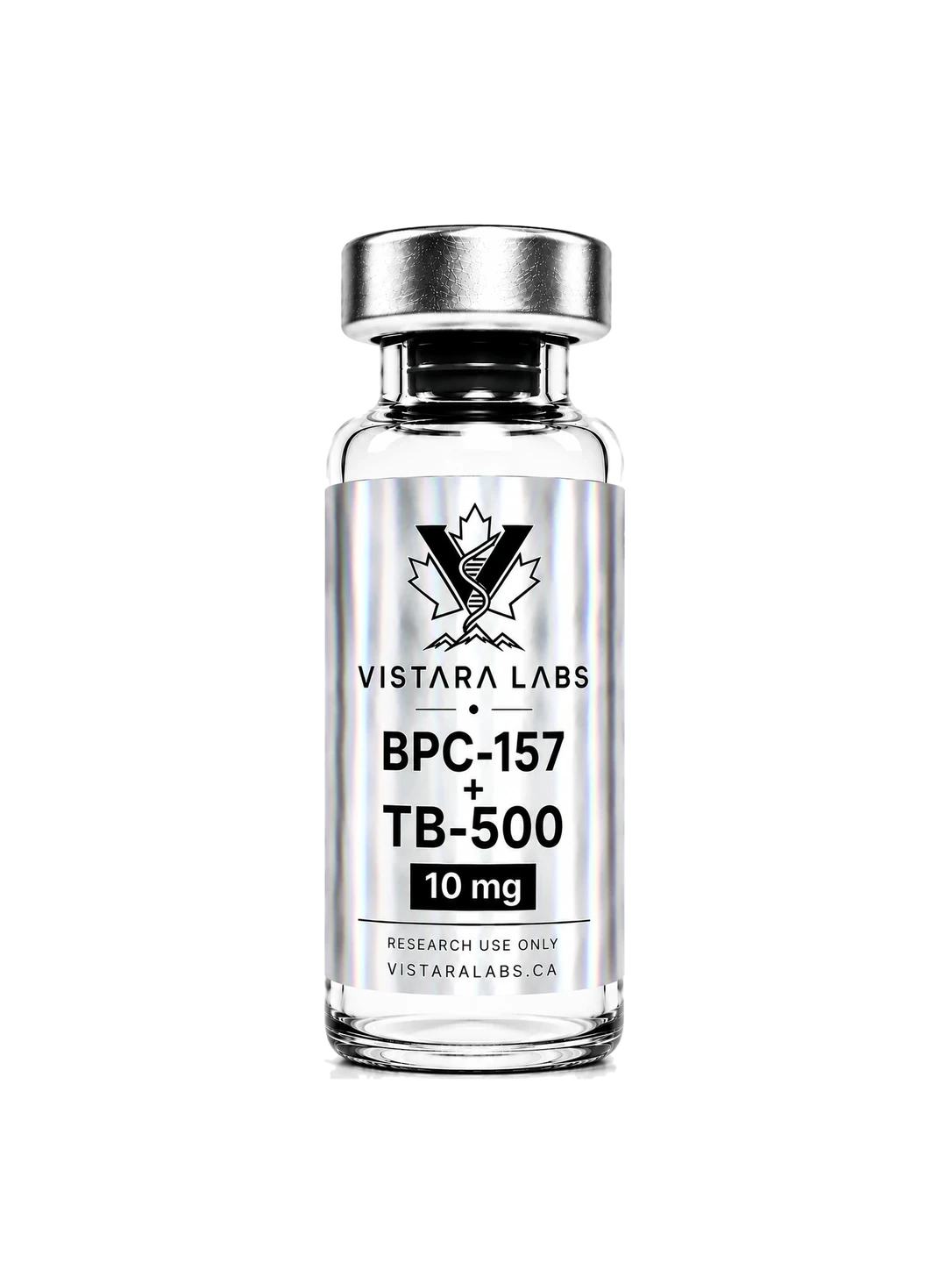
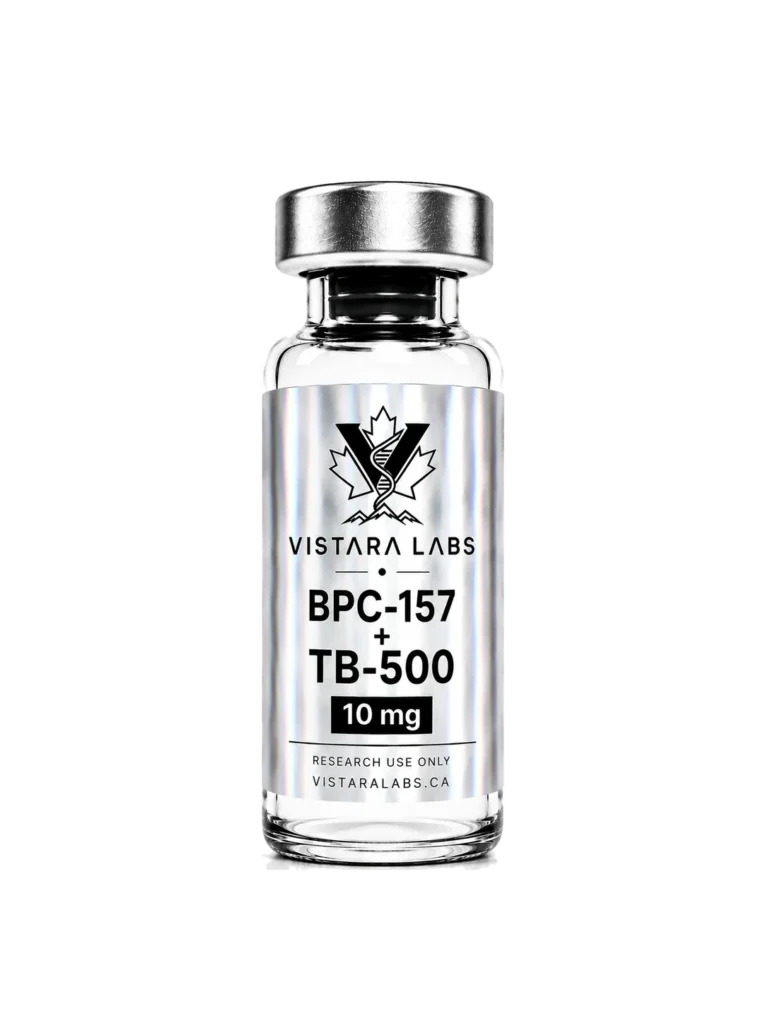
Vistara Labs stocks the BPC-157 + TB-500 blend, in two sizes, shipped from within Canada to every province, with a certificate of analysis available on request. Payment is by Interac e-Transfer.
Frequently asked questions
Why is it called the Wolverine stack?
It is a comic-book reference to the character known for rapid healing. The name came from community forums rather than from any vendor or published paper, which is why it has no standard definition.
What is in a Wolverine peptide stack?
Ordinarily BPC-157 and TB-500 supplied together in one lyophilised vial. Because the name is informal, the exact contents and the milligram split should always be confirmed with the vendor.
Is the Wolverine stack the same as BPC-157 on its own?
No. BPC-157 alone is a single peptide; the stack pairs it with TB-500, which is studied around a different set of mechanisms. The pairing is the point.
Can you buy the Wolverine stack in Canada?
Yes, as a research material from Canadian research suppliers, for laboratory use only. Neither peptide is approved as a medicine in Canada.
Will a Wolverine stack order be stopped at customs?
Only if it is shipped to you from outside Canada. An order dispatched from within Canada never crosses a border and never enters the customs process.
All products supplied by Vistara Labs are intended for laboratory research use only. They are not drugs, are not approved for human or veterinary use, and are not intended to diagnose, treat, cure or prevent any condition. Nothing on this page constitutes medical advice or guidance for use in humans.
References
No controlled human trial of the BPC-157 + TB-500 combination was identified. In the retrospective knee-pain review below, four patients received BPC-157 with full-length thymosin β4 — a different molecule from TB-500.
- Intra-Articular Injection of BPC 157 for Multiple Types of Knee PainRetrospective chart review, 17 patients (16 followed up by telephone); no control group, no blinding, no validated outcome instrument.
- Synthesis and characterization of the N-terminal acetylated 17-23 fragment of thymosin beta 4 identified in TB-500, a product suspected to possess doping potentialAnalytical chemistry: characterises TB-500 as the N-terminally acetylated 17-23 fragment of thymosin β4 (Ac-LKKTETQ), not the intact 43-amino-acid protein.
- Emerging Use of BPC-157 in Orthopaedic Sports Medicine: A Systematic ReviewSystematic review; 544 records screened, 36 studies included — 35 preclinical and 1 clinical.
Links open the study record on PubMed so the source can be checked directly. Listing a study is not a claim that its findings apply to any other use, product or route of administration. Research use only.