Acheter du GHK-Cu au Canada
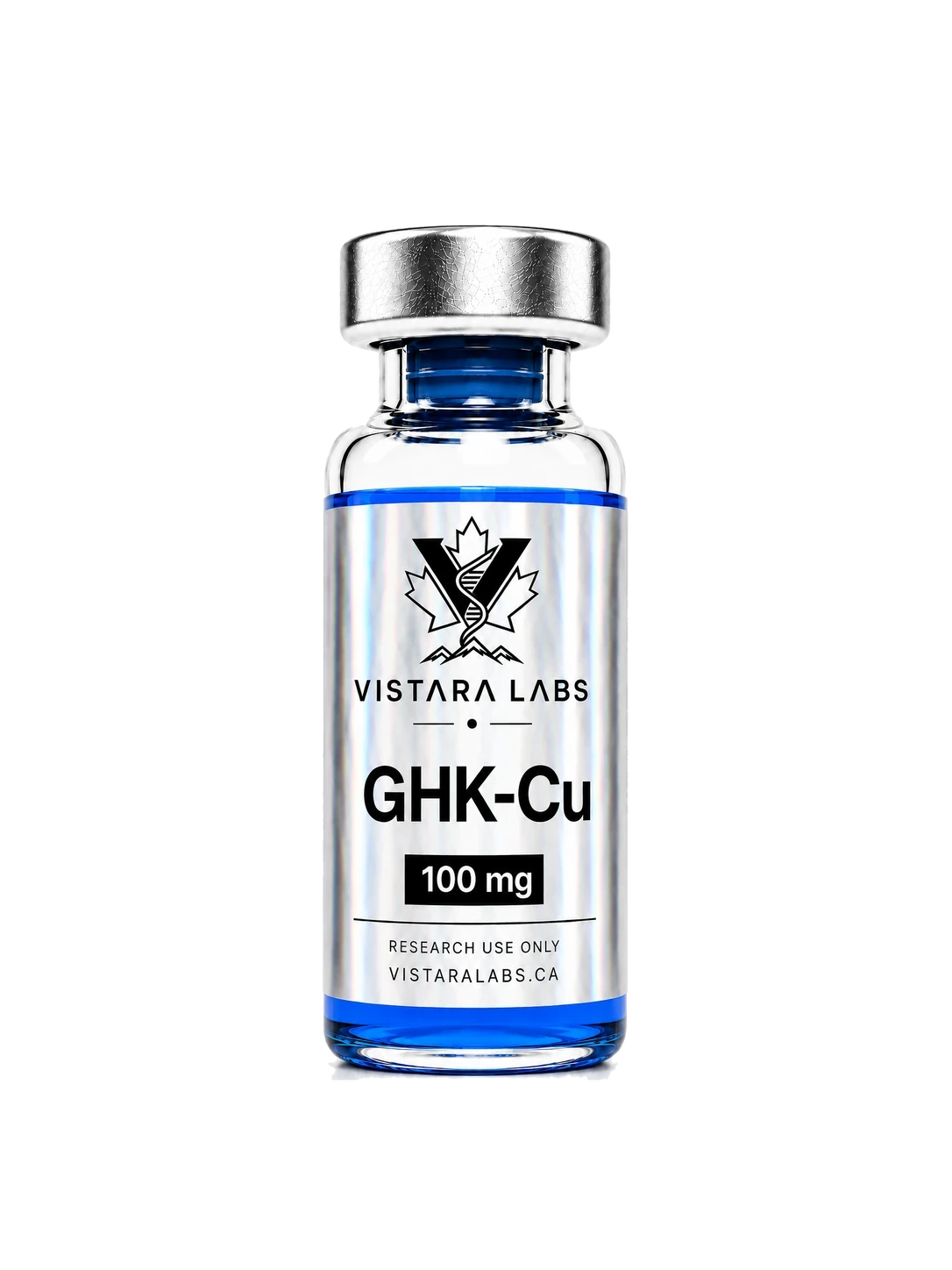
Le GHK-Cu est le seul peptide de recherche qui possède sa propre couleur. C’est un complexe de cuivre, et les peptides de cuivre sont bleus. Cette couleur n’a rien de cosmétique : c’est le cuivre qui fait ce que fait le cuivre, et c’est pourquoi une fiole de GHK-Cu contient une pastille d’un bleu profond plutôt que la poudre blanche de la plupart des peptides.
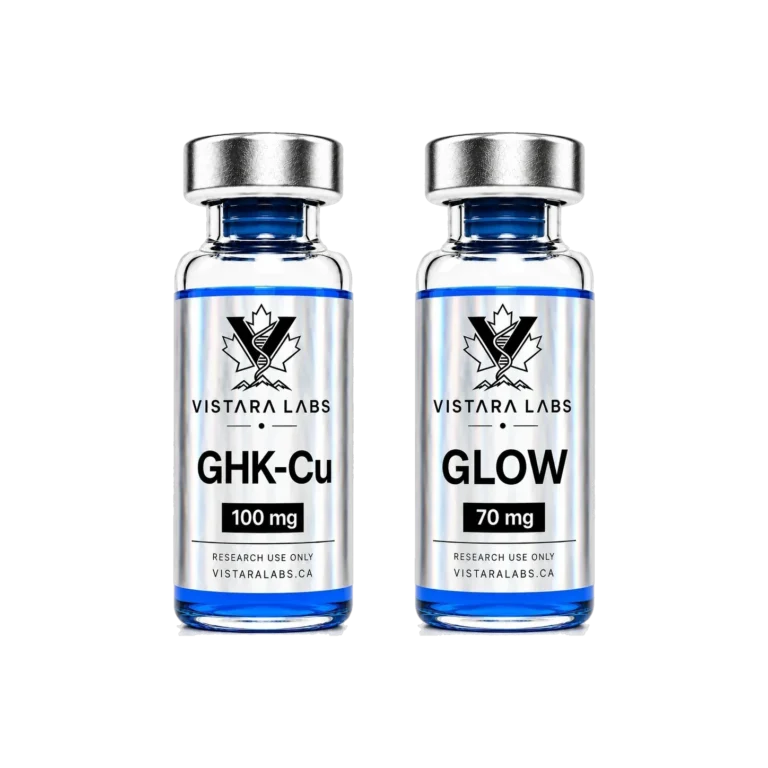
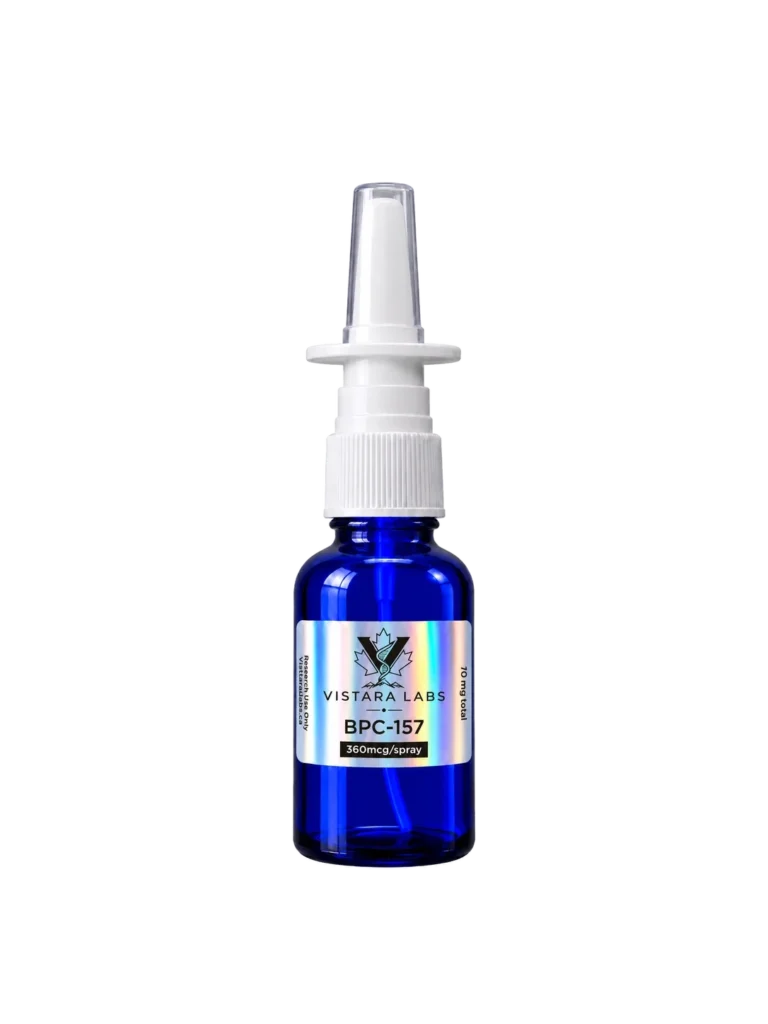
En bref : Vistara Labs offre le GHK-Cu en fioles de 50 et de 100 mg et en vaporisateur nasal prémélangé, testé de façon indépendante, avec un certificat d’analyse sur notre page des rapports de laboratoire, expédié depuis le Canada par Xpresspost de Postes Canada, le jour ouvrable même pour les commandes passées avant 15 h, heure du Pacifique. Nous livrons dans toutes les provinces, y compris l’Ontario, le Québec, la Colombie-Britannique et l’Alberta.
Ce qu’est réellement le GHK-Cu
Le GHK est un tripeptide (glycine, histidine, lysine) présent naturellement dans le plasma humain et dont le taux diminue avec l’âge. Seul, c’est une poudre blanche comme la plupart des peptides. Ce qui distingue le GHK-Cu, c’est que le tripeptide est complexé à un ion cuivre(II), et c’est ce complexe qui intéresse la littérature scientifique. Il est étudié en lien avec les voies liées à la peau, aux cheveux et aux tissus.
Le bleu en est la signature. Une pastille lyophilisée d’un bleu profond signifie que le cuivre est présent et complexé, et c’est exactement l’apparence de notre GHK-Cu dans la fiole, dans tous les formats que nous offrons.
L’acheter au Canada
Le GHK-Cu n’est pas approuvé pour un usage humain au Canada et est fourni comme matériel de recherche destiné au laboratoire, comme tous les autres peptides de recherche.
Rapports de laboratoire. Les certificats d’analyse de laboratoires indépendants sont publiés pour chaque composé sur notre page des rapports de laboratoire, avec une pureté supérieure à 99 pour cent. Le GHK-Cu se présente sous forme de pastille bleue lyophilisée qui se conserve bien au froid, au sec et à l’abri de la lumière.
Contexte de recherche. Le GHK a été isolé pour la première fois du plasma humain par Loren Pickart dans les années 1970. Des travaux de laboratoire ultérieurs ont étudié le complexe de cuivre dans la recherche sur le collagène, les modèles de plaies et l’expression génique.
Commander du GHK-Cu auprès de Vistara Labs
- Un bleu cuivré profond. Notre description du produit nomme ce bleu et l’explique : c’est l’ion cuivre lié au peptide, et non un colorant.
- Fioles de 50 mg et de 100 mg. Le GHK-Cu est généralement vendu en fioles plus grandes que la plupart des peptides, et le nôtre est offert dans les deux formats.
- Livraison avec suivi dans toutes les provinces. Les commandes expédiées voyagent avec suivi de l’expédition à la livraison.
- Fourni pour la recherche en laboratoire. Le GHK-Cu est largement étudié dans la recherche sur la peau et les tissus, et le nôtre est fourni strictement pour un usage en laboratoire, décrit par sa chimie.
Vistara Labs offre le GHK-Cu sous forme de complexe de cuivre lyophilisé, expédié depuis le Canada vers toutes les provinces.
Questions fréquentes
Pourquoi le GHK-Cu est-il bleu?
Parce que c’est un complexe de cuivre. L’ion cuivre(II) lié au tripeptide GHK donne au matériel sa couleur bleue : c’est un indicateur visuel direct de la présence du complexe.
Peut-on acheter du GHK-Cu au Canada?
Oui, comme matériel de recherche auprès de fournisseurs de recherche canadiens. Il n’est pas vendu comme médicament au Canada.
Quelle est la différence entre le GHK et le GHK-Cu?
Le GHK est le tripeptide seul. Le GHK-Cu est ce même tripeptide complexé au cuivre, la forme sur laquelle porte généralement la littérature scientifique.
Une commande de GHK-Cu sera-t-elle retenue à la douane?
Chaque commande est expédiée depuis le Canada, sans aucune étape douanière. Votre GHK-Cu voyage comme un colis intérieur ordinaire.
Tous les produits fournis par Vistara Labs sont destinés uniquement à la recherche en laboratoire. Ce ne sont pas des médicaments, ils ne sont pas approuvés pour un usage humain ou vétérinaire et ne sont pas destinés à diagnostiquer, traiter, guérir ou prévenir une maladie. Rien sur cette page ne constitue un avis médical ni une indication d’usage chez l’humain.