How to Store a Peptide Nasal Spray
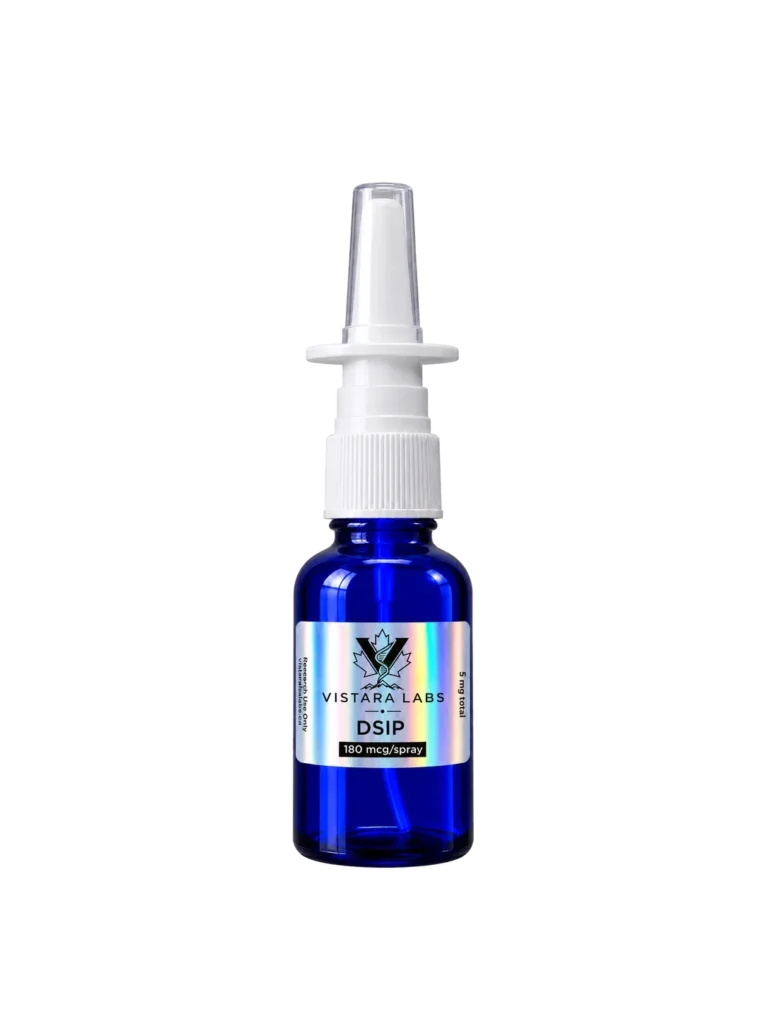
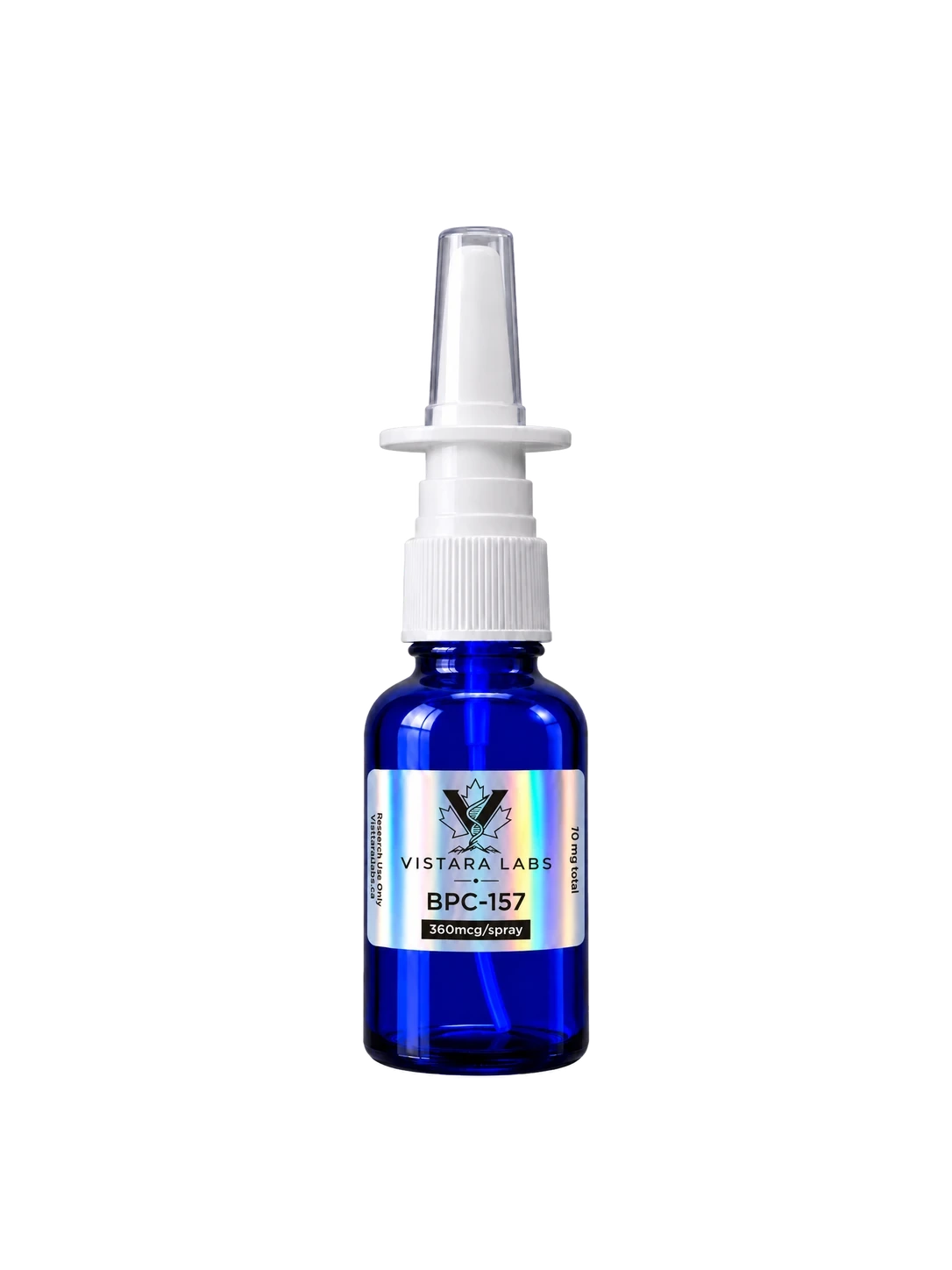
Keep a peptide nasal spray in the fridge at 2 to 8 °C once it is opened, standing upright with the cap on and away from light, and follow the storage directions on its label. Vistara Labs sprays arrive ready-mixed in sterile saline in a sealed metered pump, so there is nothing to reconstitute. What matters from then on is keeping the solution cold and clean and the pump in working order.
 View product →
Does a peptide nasal spray need to be refrigerated?
Yes, once it has been opened. A ready-mixed spray is a peptide in solution, which is far less stable than the freeze-dried powder in a vial and degrades faster the warmer it gets. Store an opened bottle at 2 to 8 °C:
- In the main body of the fridge, not the door, where the temperature swings each time it opens.
- Upright, so liquid does not sit in the pump or creep past the cap.
- Capped, with the cap back on straight after every use.
- In the dark, in its box or a closed container.
- Never frozen. Freezing and thawing aggregates peptides in solution.
Keep it away from heat: a hot car, a sunny windowsill or a bag left in the sun. For a day out of the fridge, an insulated bag with a cold pack keeps it cool. Vials follow the same principles: how to store peptides.
How long does an opened peptide nasal spray last?
As long as its label allows. The product pages set no fixed number of weeks for an opened spray, so the label is the reference, and there is no reason to borrow a figure from vial guidance: a vial mixed with bacteriostatic water and a spray in saline are different preparations. Three habits help:
- Date the bottle on the day it is first opened.
- Know the count. Every 5 mL bottle gives about 28 metered sprays and every 10 mL bottle about 57; the full list is in how many sprays are in a peptide nasal spray.
- Look before each use for the changes listed below.
How is a metered nasal spray pump primed?
A new pump is empty inside: its chamber and dip tube fill only after a few presses.
- Take off the cap and hold the bottle upright.
- Point the nozzle away from the face and from other people.
- Press the pump down fully, into the air, until a full, even mist comes out rather than a spurt or a drip.
- Wipe the nozzle and replace the cap.
Follow the label’s number of priming presses if it gives one. A pump that has stood unused, or that sputters, may need a press or two into the air again.
How do you keep the pump tip clean?
- Wipe the nozzle with a clean, dry tissue after each use and recap it straight away.
- Keep fingers and surfaces off the nozzle opening.
- Do not unscrew the pump, pour out the contents or top the bottle up.
- Do not push a pin into a blocked nozzle. If the pump still will not mist after re-priming, contact Vistara Labs.
When is a nasal spray finished?
Discard the bottle, whatever the date, if any of these apply:
- Cloudiness, particles or strands in a solution that was clear when it arrived.
- A colour change. The GHK-Cu Nasal Spray, GLOW Nasal Spray and KLOW Nasal Spray are blue from the copper in GHK-Cu, and that clear blue is normal. Any other change from the colour it arrived with is not.
- Past the label’s limit for an opened bottle, or past any printed expiry date.
- Frozen, or left somewhere hot.
- A pump that only sputters after re-priming, usually a sign the bottle is down to the last of the liquid.
Why are the sprays made with saline rather than bacteriostatic water?
Bacteriostatic water carries 0.9% benzyl alcohol as a preservative, and benzyl alcohol irritates the lining of the nose, so intranasal research formulations are made up in saline, as covered in Semax and Selank: intranasal vs subcutaneous research routes. It is one more reason the 28-day convention for vials mixed with bacteriostatic water does not simply carry over to a spray.
Vistara Labs supplies its nasal sprays for laboratory research use only. The handling on this page keeps the solution and the pump in good condition; it is not guidance for any other use.
Frequently asked questions
Does a peptide nasal spray need to be kept in the fridge?
Yes, once it is opened. Store it at 2 to 8 °C, upright, capped and out of the light, never frozen, and follow the storage directions on its label.
How long does an opened peptide nasal spray last?
As long as its label allows. Date the bottle when it is first opened, and discard it sooner if the solution turns cloudy, shows particles or changes colour.
How is a new nasal spray pump primed?
Take off the cap, hold the bottle upright, point it away from the face and press the pump fully into the air until a full, even mist appears.
Can a peptide nasal spray be frozen?
No. Freezing and thawing aggregates peptides in solution. Keep the bottle in the main body of the fridge, away from the freezer compartment.
Is it normal for a nasal spray to be blue?
Yes, for the GHK-Cu, GLOW and KLOW nasal sprays. The blue comes from the copper in GHK-Cu and stays clear.
Products: Semax Nasal Spray, BPC-157 Nasal Spray, NAD+ Nasal Spray and the full range of peptide nasal sprays.
More on this: How Long Do Peptides Last After Mixing?.
All products supplied by Vistara Labs are intended for laboratory research use only. They are not drugs, are not approved for human or veterinary use, and are not intended to diagnose, treat, cure or prevent any condition. Nothing on this page constitutes medical advice or guidance for use in humans.