

Cerebrolysin: Stroke and Brain-Injury Research
Recherche cognitive et nootropique
Cerebrolysin has been tested in randomized, placebo-controlled trials for stroke and brain-injury recovery. Two of them, published in Stroke and Neurological Sciences, are worth reading closely.
 View product →
Findings
- In the CARS trial (208 stroke patients, randomized, double-blind, placebo-controlled), patients on Cerebrolysin recovered clearly more arm-and-hand function by day 90 than patients on placebo.
- The advantage was large and statistically clear, and safety was comparable to placebo.
- In the CAPTAIN I trial of moderate-to-severe traumatic brain injury, patients on Cerebrolysin did significantly better on several thinking-and-memory measures.
- Cerebrolysin has decades of clinical use in stroke units across Europe and Asia.
CARS: stroke recovery (Stroke, 2016)
The Cerebrolysin and Recovery After Stroke (CARS) trial was a prospective, randomized, double-blind, placebo-controlled, multicenter study. Patients received Cerebrolysin (30 mL/day) or saline placebo once daily for 21 days alongside a standardized rehabilitation program, starting within 72 hours of stroke onset. The primary endpoint was the Action Research Arm Test score at day 90.
Cerebrolysin showed a large superiority over placebo on that arm-function test (Mann-Whitney estimator 0.71, 95% CI 0.63-0.79, P<0.0001), and a further significant superiority across a 12-scale measure of global status (P<0.0001). Premature discontinuation was under 4%, and Cerebrolysin was safe and well tolerated.
CAPTAIN I: traumatic brain injury (Neurol Sci, 2020)
This Phase IIIb/IV randomized, double-blind, placebo-controlled trial evaluated Cerebrolysin as an add-on after moderate-to-severe TBI. Three individual cognitive outcomes (Stroop and Color Trails tests) showed stand-alone statistically significant superiority for Cerebrolysin, and in the per-protocol analysis the pooled multidimensional result was significant (P=0.024), with six single outcomes above the benchmark for large superiority. Safety was comparable to placebo.
What Cerebrolysin is
Cerebrolysin is a peptide preparation derived from porcine brain tissue, studied around neurorecovery and neuroprotection. It carries a long international clinical history, which is why the trial record above exists at all. Our Cerebrolysin buying guide covers sourcing and handling.
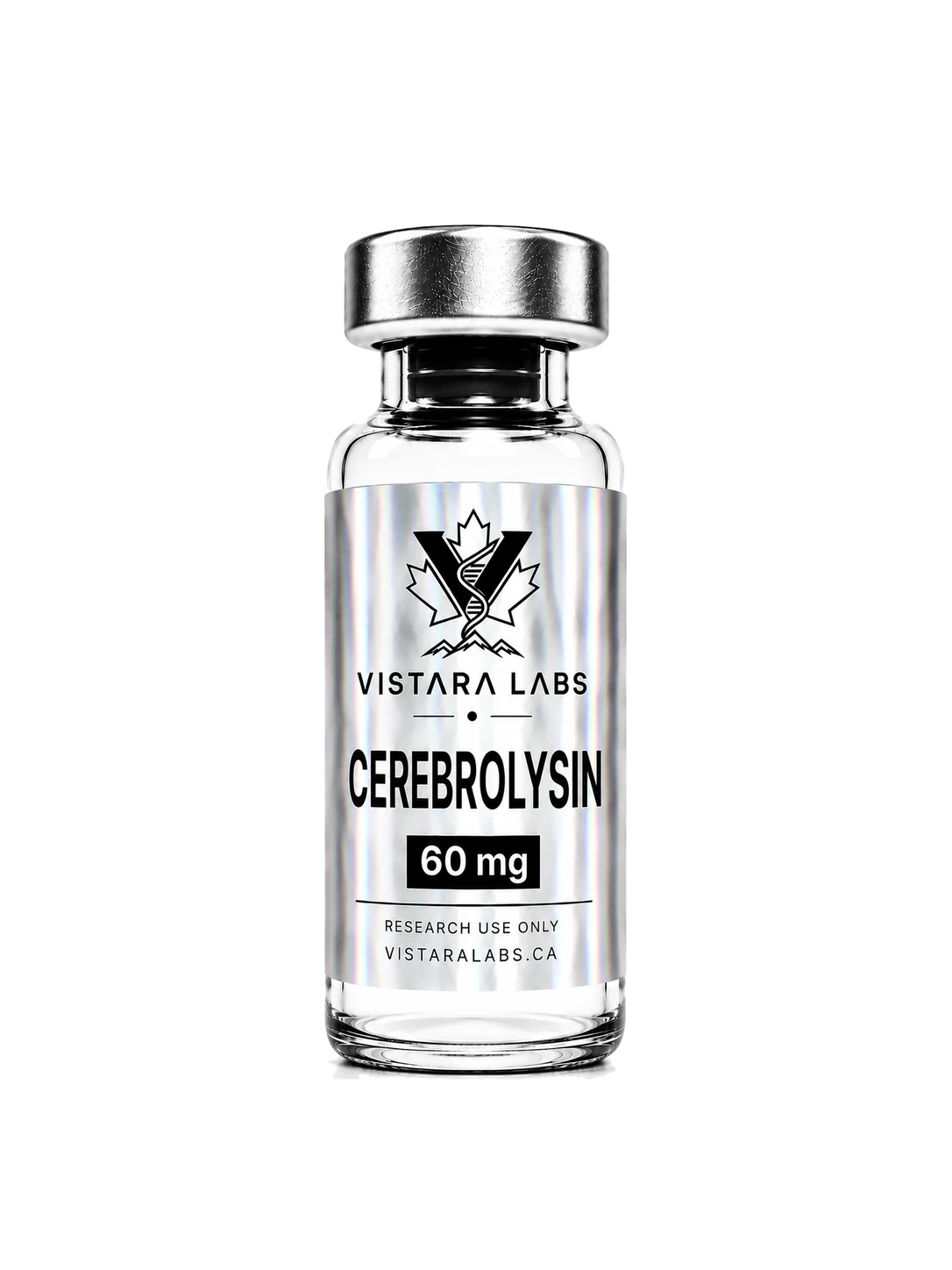
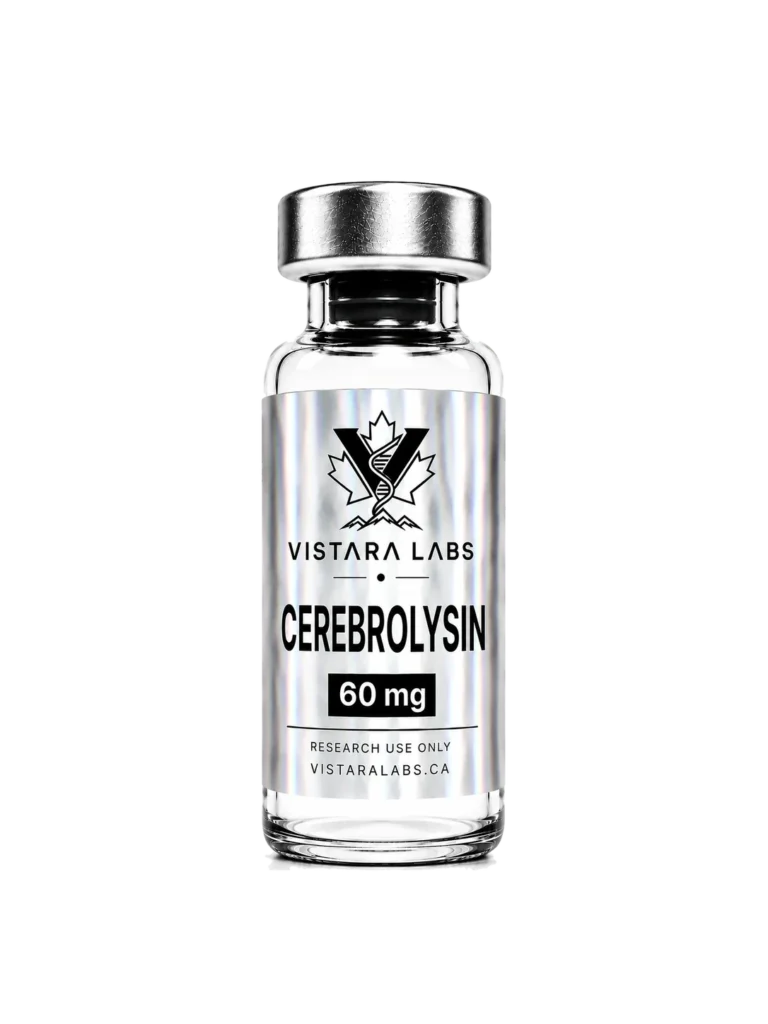
Vistara Labs stocks Cerebrolysin 60 mg research vials, shipped from within Canada to every province.
Frequently asked questions
What did the Cerebrolysin stroke trial find?
The CARS randomized, double-blind, placebo-controlled trial found a large superiority of Cerebrolysin over placebo for arm-motor recovery at day 90 (Mann-Whitney estimator 0.71, P<0.0001), with safety comparable to placebo.
Has Cerebrolysin been studied in traumatic brain injury?
Yes. The CAPTAIN I Phase IIIb/IV trial in moderate-to-severe TBI patients found statistically significant benefits on several cognitive outcome measures, with several effect sizes above the benchmark for large superiority in the per-protocol analysis.
What is Cerebrolysin?
Cerebrolysin is a peptide preparation derived from porcine brain tissue, studied for neurorecovery. It has a long clinical history abroad.
Sources: Muresanu DF, et al. Cerebrolysin and Recovery After Stroke (CARS). Stroke. 2016;47:151-159. PMID 26564102. Poon W, et al. Cerebrolysin in acute brain injury and neurorecovery: CAPTAIN I. Neurol Sci. 2020;41:281-290. PMID 31494820.