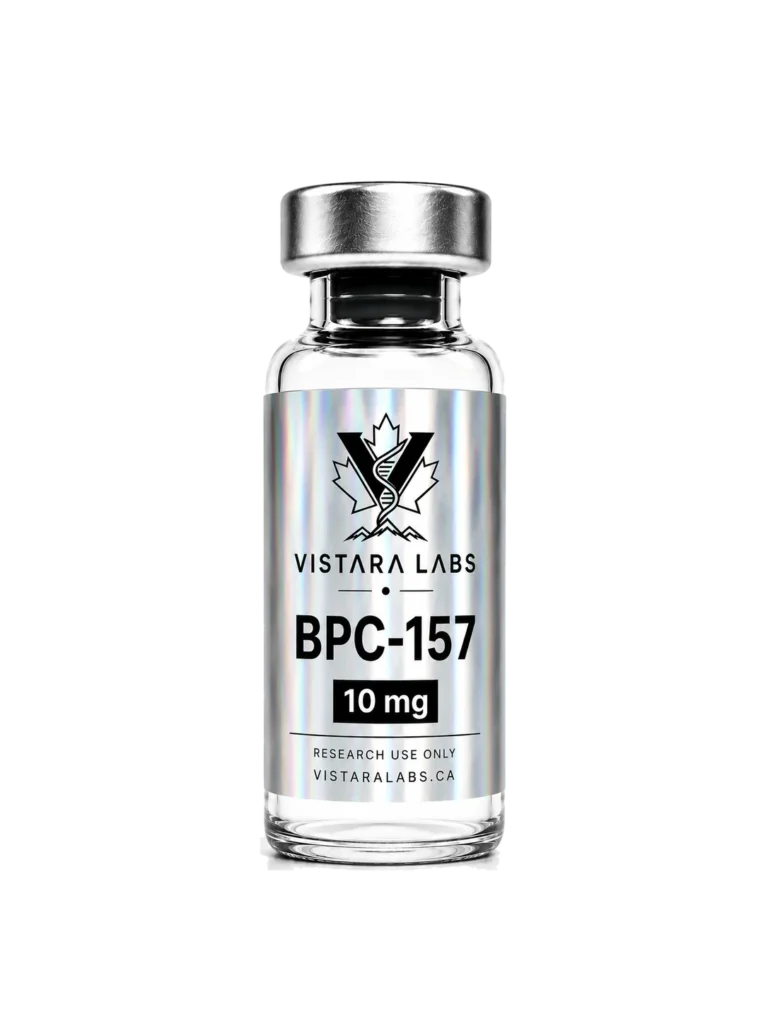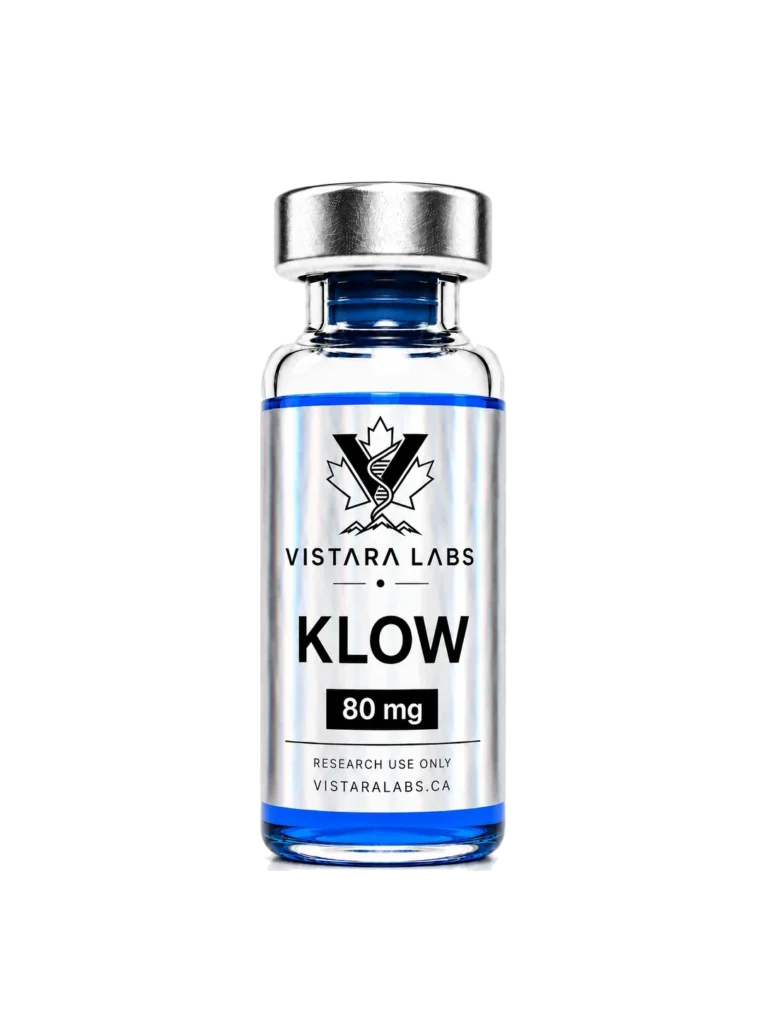



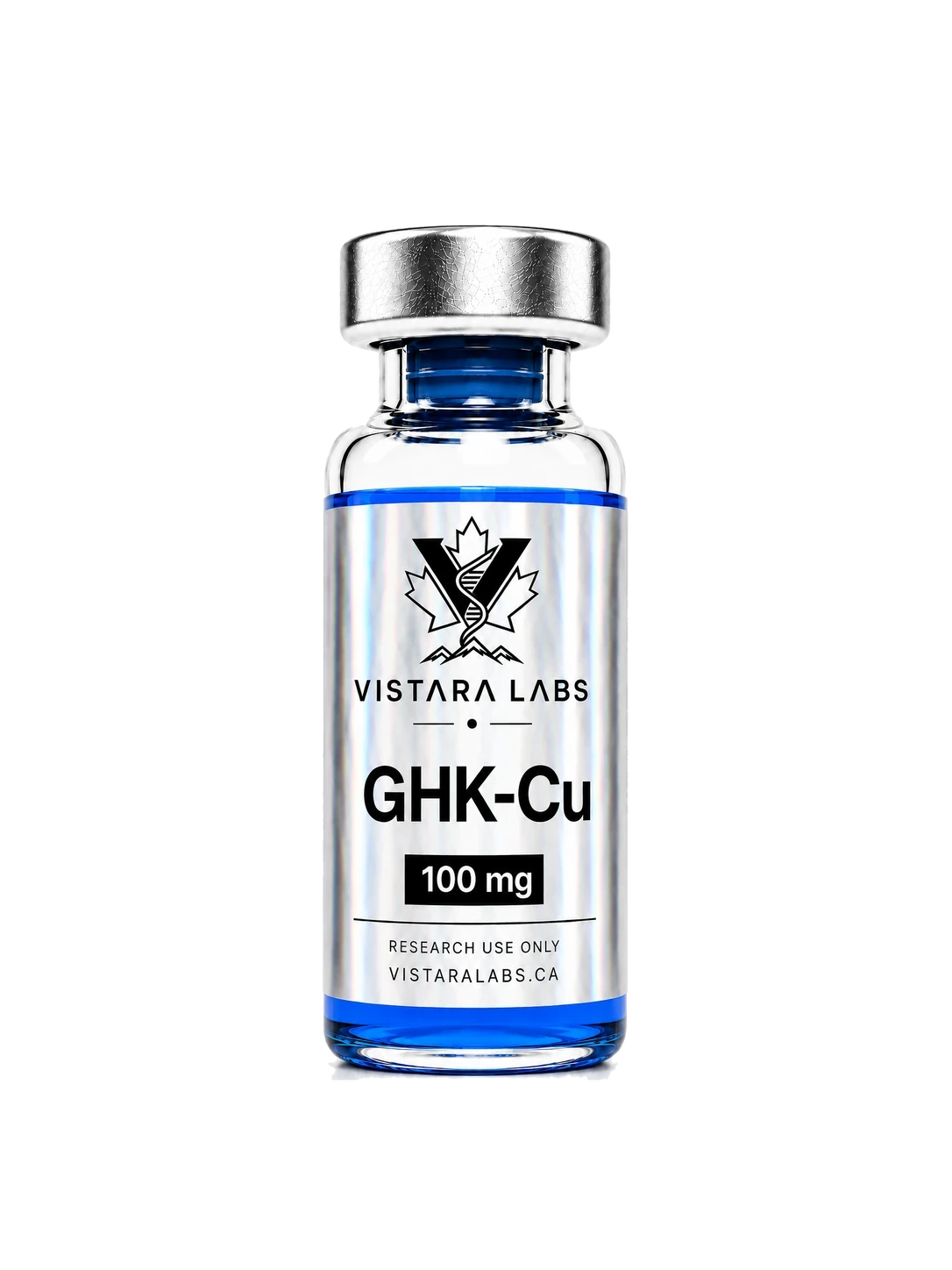
Pourquoi le GHK-Cu est bleu, et ce que cela vous apprend
Recherche sur la peau, les cheveux et les tissus
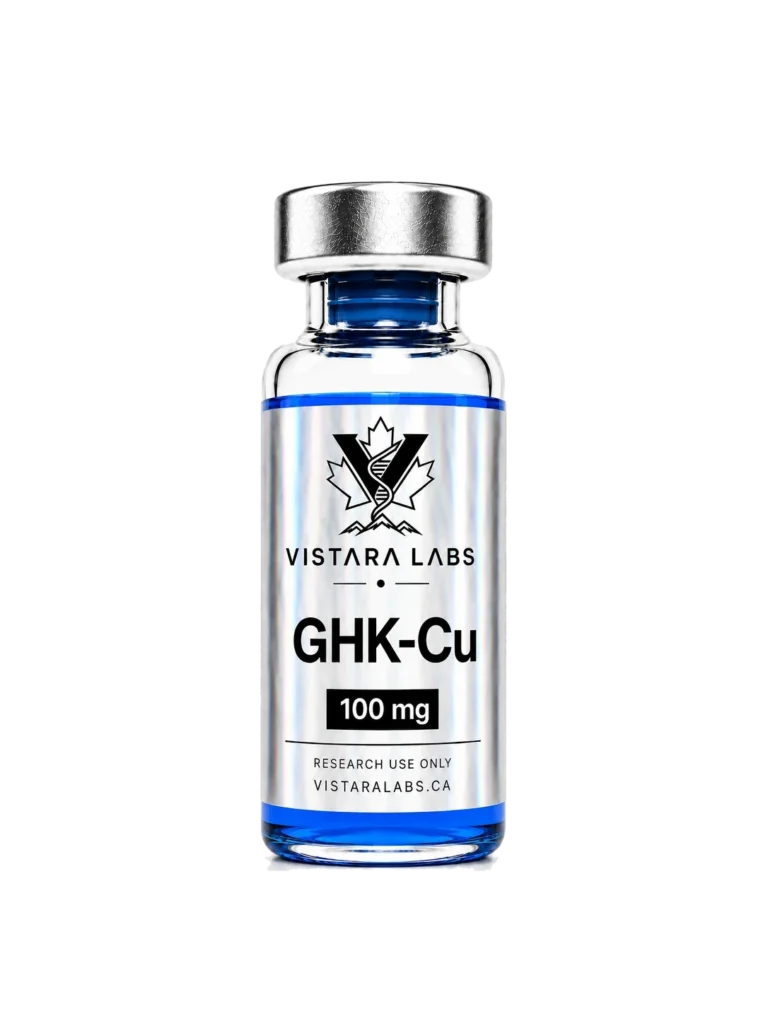
GHK-Cu is the one peptide in a research catalogue you can identify by looking at it. It is deep blue. Not off-white, not translucent — blue, because there is a copper ion bound into the molecule, and copper in this configuration absorbs light in the red end of the spectrum.
Why the colour is the specification
GHK is a tripeptide: glycine, histidine, lysine. Three amino acids, unremarkable on their own. What makes GHK-Cu a distinct research material is that the peptide binds a copper(II) ion with high affinity, and it is the copper complex that most published work refers to.
So the colour is not cosmetic. A vial of genuine GHK-Cu is visibly blue, and material sold as GHK-Cu that arrives white or off-white is worth querying before anything else happens to it.
GHK and GHK-Cu are different materials with different research literatures. Ordering one when the protocol calls for the other is the most common mistake in this corner of the catalogue.
The observation that started the interest
GHK occurs naturally in human plasma, and its concentration falls substantially with age. That single fact — abundant in youth, diminished later — is what drew research attention in the first place, and it still frames most of the questions asked about it.
Investigation centres on skin and connective tissue biology, extracellular matrix components such as collagen and elastin, and the copper-dependent enzymes for which the ion is a required cofactor.
Where GHK-Cu turns up in blends
GHK-Cu is also a component of combination preparations. Two in this catalogue are built around it:
- GLOW Blend — a combination preparation with GHK-Cu at its centre.
- KLOW Blend — a related preparation with an additional component.
Blends suit research questions about interaction between components. Where the question is about GHK-Cu specifically, the single peptide is the cleaner material — a blend introduces variables you then have to control for.
Handling: keep it dark
Copper complexes are light-sensitive, so protection from light is not generic storage boilerplate here — it is specific to this molecule. GHK-Cu is supplied lyophilised in a sealed vial; reconstitution in a laboratory setting is typically performed with eau bactériostatique, with vials kept cold and shielded from light thereafter.
What the COA covers
For a copper peptide there are two things to establish, not one: peptide purity and copper content. Both are determined analytically, and the certificate of analysis is where that is recorded. Vistara Labs material is third-party tested with COAs available on request.
Buying GHK-Cu in Canada
Vistara Labs ships GHK-Cu 100 mg across Canada, with free shipping over $150. Domestic transit keeps the vial in controlled conditions for less time — relevant for a light- and moisture-sensitive material.
All products supplied by Vistara Labs are intended for laboratory research use only. They are not drugs, are not approved for human or veterinary use, and are not intended to diagnose, treat, cure or prevent any condition. Nothing on this page constitutes medical advice or guidance for use in humans.
References
The stronger human GHK-Cu evidence is topical and wound-related. It does not establish effects for systemic or injectable use, and one randomised cosmetic study found no objective advantage.
- Enhanced healing of ulcers in patients with diabetes by topical treatment with glycyl-l-histidyl-l-lysine copperMulticentre randomised, evaluator-blinded, placebo-controlled trial; topical GHK-Cu in diabetic neuropathic ulcers.
- Effects of topical copper tripeptide complex on CO2 laser-resurfaced skinRandomised trial after CO2 laser resurfacing; 13 patients completed. No significant objective advantage found for erythema, wrinkles or overall skin quality.
Links open the study record on PubMed so the source can be checked directly. Listing a study is not a claim that its findings apply to any other use, product or route of administration. Research use only.