

BPC-157 + TB-500 : mélange ou flacons séparés?
Recherche sur la récupération après blessure
The most common question we get about BPC-157 and TB-500 is not what they are. It is whether to buy the blend or the two vials separately. The answer depends on three things: how much of each peptide the protocol calls for, whether the ratio needs to change between experiments, and what the milligrams cost each way. This article works through all three with the actual numbers.
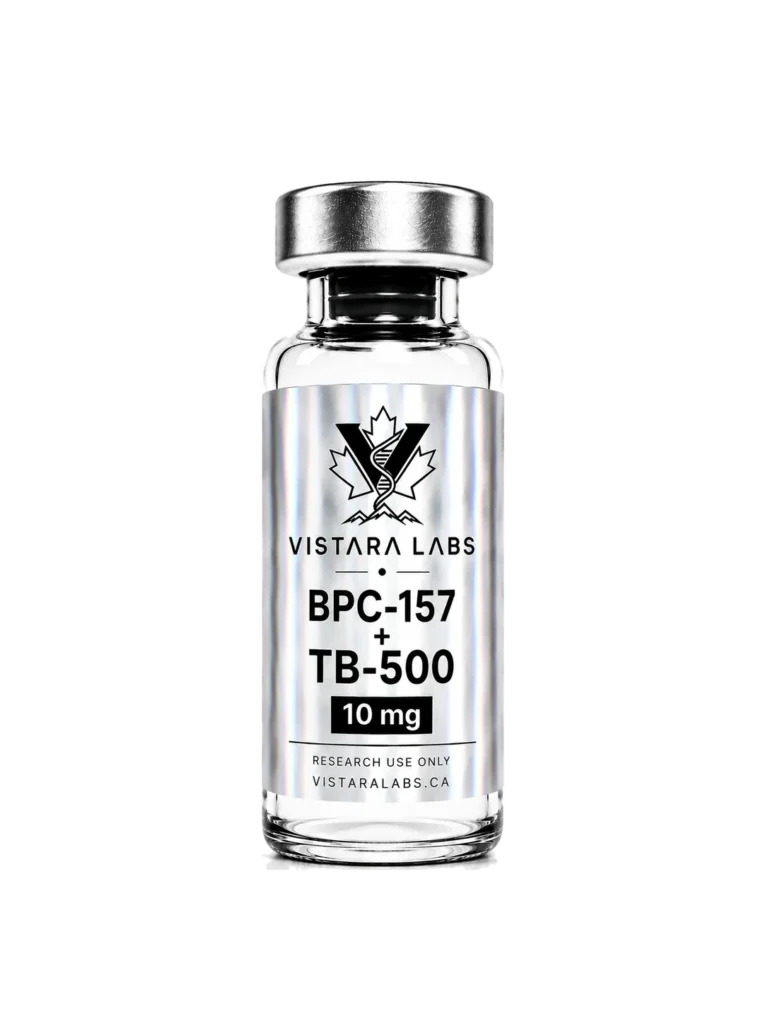 Voir le produit →
Findings
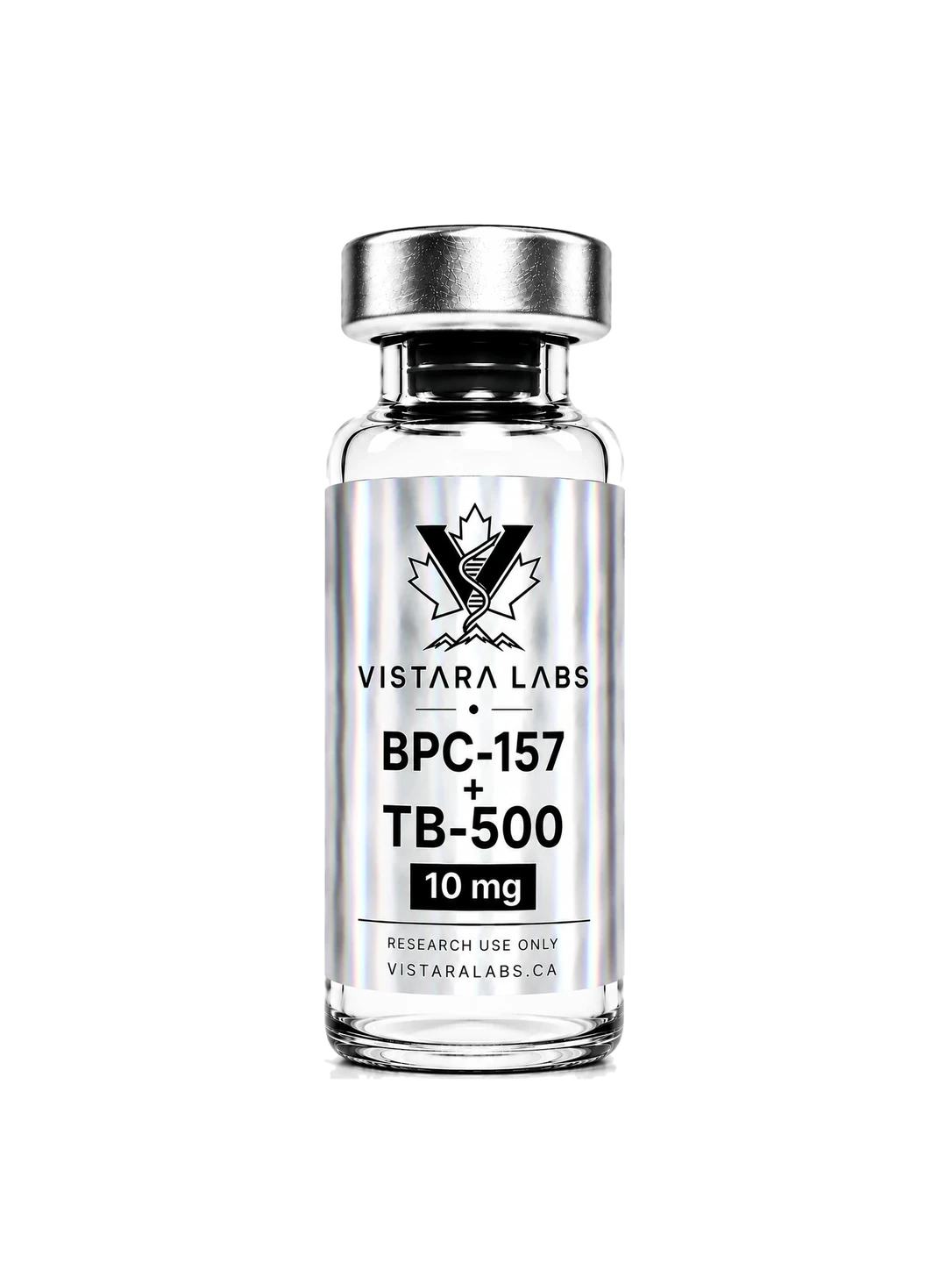
- The blend is fixed at 1:1: the 10 mg vial holds 5 mg of BPC-157 and 5 mg of TB-500, the 20 mg vial holds 10 mg of each.
- At today’s prices the 20 mg blend costs about 28% less per milligram than buying a 10 mg vial of each peptide, for the same 20 mg of material.
- Separate vials cost more but put the ratio in your hands, and let you run either peptide on its own.
- Reconstitution is the same either way: bacteriostatic water into the vial, concentration set by the volume you add. The calculator does the arithmetic.
What is in each vial
Nothing standardises the name “Wolverine”, so the specification is the only thing worth comparing between vendors. Ours is printed on the label and the certificate of analysis:
| Vial | BPC-157 | TB-500 | Total peptide |
|---|---|---|---|
| BPC-157 + TB-500 blend, 10 mg | 5 mg | 5 mg | 10 mg |
| BPC-157 + TB-500 blend, 20 mg | 10 mg | 10 mg | 20 mg |
| BPC-157, 10 mg | 10 mg | 0 | 10 mg |
| TB-500, 10 mg | 0 | 10 mg | 10 mg |
The point that catches people: the 10 mg blend is not “10 mg of BPC-157 with some TB-500 added”. It is 5 mg of each. If a protocol is written around 10 mg of BPC-157, the 20 mg blend or a single BPC-157 vial is the matching purchase.
Cost per milligram, both ways
Prices below are the September 2026 single-vial prices on this site; the product pages are always current and 10-packs run 20% lower per vial.
| Route | What you get | Price | Per mg of peptide |
|---|---|---|---|
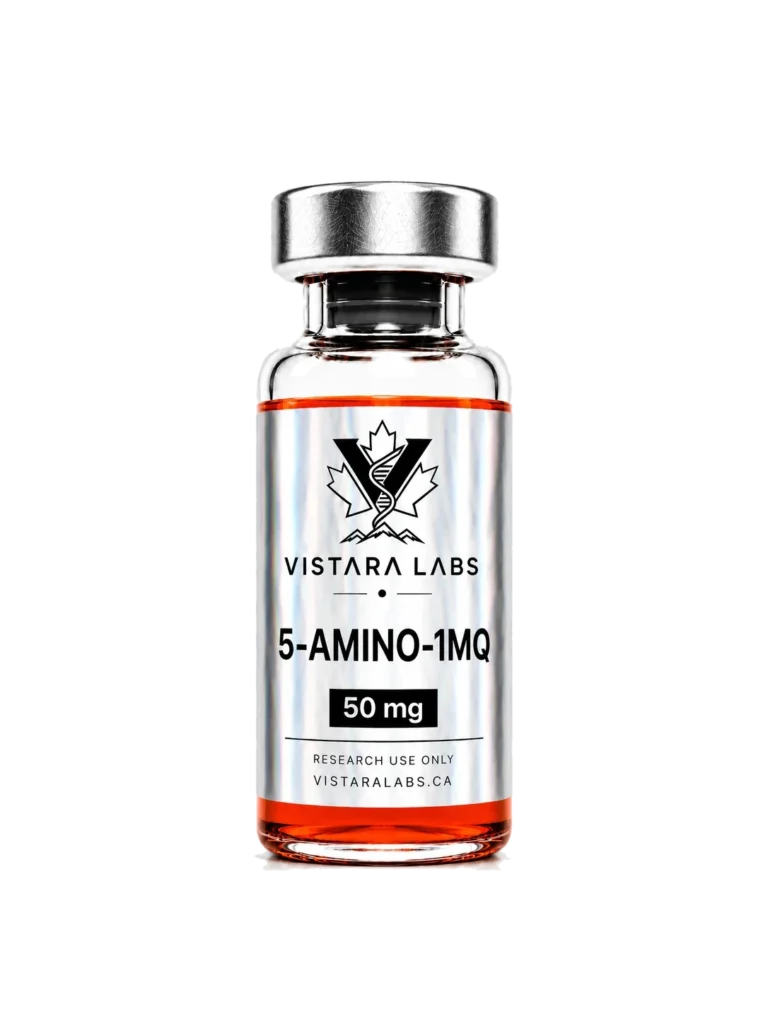
| Blend, 10 mg | 5 mg BPC-157 + 5 mg TB-500 | $68 | $6.80 |
| Blend, 20 mg | 10 mg BPC-157 + 10 mg TB-500 | $98 | $4.90 |
| Two singles | 10 mg BPC-157 + 10 mg TB-500, two vials | $136 | $6.80 |
So for the same 20 mg of material at a 1:1 ratio, the 20 mg blend saves $38 against two single vials, about 28% per milligram. The 10 mg blend and the two singles cost the same per milligram; the blend simply lets you buy half the quantity.
When separate vials are the right call
- The ratio is not 1:1. Protocols vary. With separate vials any ratio is available, and it can change between experiments without buying a different product.
- One peptide is studied alone. BPC-157 on its own has a substantial gastrointestinal literature that TB-500 has nothing to do with; TB-500 on its own is the molecule in the cell-migration and angiogenesis work. A blend forces the pairing.
- Separate reconstitution schedules. Two vials can be reconstituted at different times and kept at different concentrations. One vial cannot.
When the blend is the right call
- The design is the pairing. The two are studied around related but distinct repair mechanisms, which is the whole logic of combining them. If that is the question, one vial at a fixed ratio removes a preparation step and a source of error.
- Quantity. At 20 mg the blend is the cheapest way to hold both peptides.
- Fewer vials to store, label and track.
Reconstitution: the arithmetic is the same
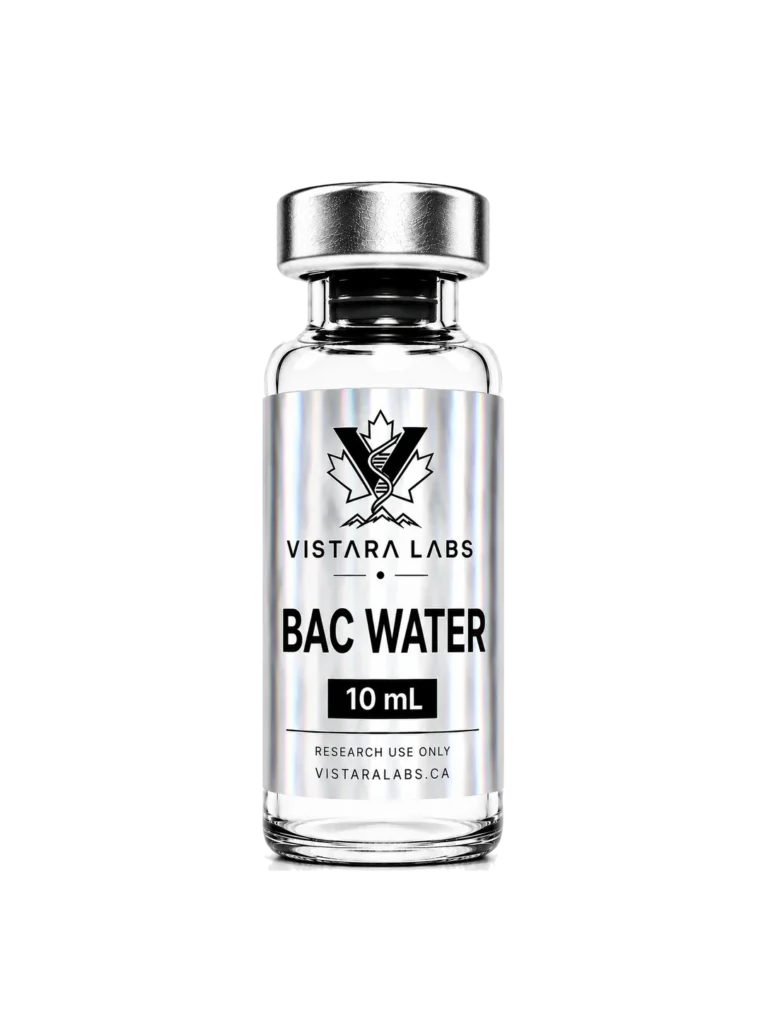
Whichever route you take, the vial holds a fixed mass of lyophilised peptide and the concentration is set by how much eau bactériostatique goes in. Two worked examples for the blend:
- 20 mg blend + 2 mL of bacteriostatic water = 10 mg/mL total peptide, which is 5 mg/mL of BPC-157 and 5 mg/mL of TB-500.
- 10 mg blend + 2 mL = 5 mg/mL total, 2.5 mg/mL of each.
With separate vials the two concentrations are set independently. Our calculateur de peptides takes any vial size and volume and returns the concentration, and the BPC-157 reconstitution guide walks through the handling step by step. Reconstituted vials are kept refrigerated and out of light; specific handling protocols are set by the researcher.
BPC-157 is a 15 amino acid fragment of a protein found in gastric juice; TB-500 corresponds to the active region of thymosin beta-4. Both are supplied for laboratory research use only. For the published research on each, see BPC-157: what the studies show, TB-500 and thymosin beta-4, and the 2021 clinic report that covered the two together.
Reading the certificate before you decide
Whatever the route, the certificate of analysis is what confirms the material. For the blend, the product page states the milligrams of each peptide and the certificate reports a purity of 99.6%; the singles run 99.8% (BPC-157) and 99.6% (TB-500). A vendor selling a “Wolverine” product without stating the milligrams of each component is selling a name. Certificates for every assayed compound are on the lab reports page.
Questions fréquentes
How much BPC-157 is in the 10 mg blend?
5 mg. The 10 mg blend is 5 mg of BPC-157 and 5 mg of TB-500. The 20 mg blend is 10 mg of each.
Is the blend cheaper than buying the peptides separately?
At 20 mg, yes: $98 for the blend against $136 for a 10 mg vial of each, about 28% less per milligram at September 2026 prices. The 10 mg blend costs the same per milligram as the singles.
Can I change the ratio with the blend?
No. The blend is fixed at 1:1. Any other ratio needs separate vials.
Where can I buy BPC-157 and TB-500 in Canada?
Vistara Labs supplies the blend in 10 mg and 20 mg vials and each peptide separately in 10 mg vials, shipped from within Canada to every province. Laboratory research use only.
Product specifications and prices from vistaralabs.ca, September 2026. Research background: Lee E, Padgett B. Intra-articular injection of BPC 157 for multiple types of knee pain. Altern Ther Health Med. 2021. PMID 34324435. Thymosin beta-4 in tissue repair, review. PMID 22962027.
Références
No controlled human trial of the BPC-157 + TB-500 combination was identified. In the retrospective knee-pain review below, four patients received BPC-157 with full-length thymosin β4 — a different molecule from TB-500.
- Intra-Articular Injection of BPC 157 for Multiple Types of Knee PainRevue rétrospective de dossiers, 17 patients (16 suivis par téléphone); pas de groupe témoin, pas d'insu, pas d'instrument de mesure validé.
- Synthesis and characterization of the N-terminal acetylated 17-23 fragment of thymosin beta 4 identified in TB-500, a product suspected to possess doping potentialChimie analytique : caractérise le TB-500 comme le fragment 17-23 N-acétylé de la thymosine β4 (Ac-LKKTETQ), pas la protéine intacte de 43 acides aminés.
- Emerging Use of BPC-157 in Orthopaedic Sports Medicine: A Systematic ReviewRevue systématique; 544 dossiers examinés, 36 études retenues — 35 précliniques et 1 clinique.
Les liens ouvrent la fiche de l'étude sur PubMed afin que la source puisse être vérifiée directement. Citer une étude ne signifie pas que ses résultats s'appliquent à un autre usage, produit ou mode d'administration. Usage laboratoire uniquement.