

GHK-Cu: The Skin Research
Recherche sur la peau, les cheveux et les tissus
GHK-Cu is a copper peptide the human body makes on its own, and a large body of published review work describes what it does in skin. Two peer-reviewed reviews, in BioMed Research International and the International Journal of Molecular Sciences, summarize the human-relevant findings.
 View product →
Findings
- GHK-Cu occurs naturally in human plasma, and levels decline substantially with age.
- In human facial-skin studies, GHK-Cu formulations improved skin appearance, firmness and fine lines.
- It is among the most-studied peptides in the cosmetic-science literature.
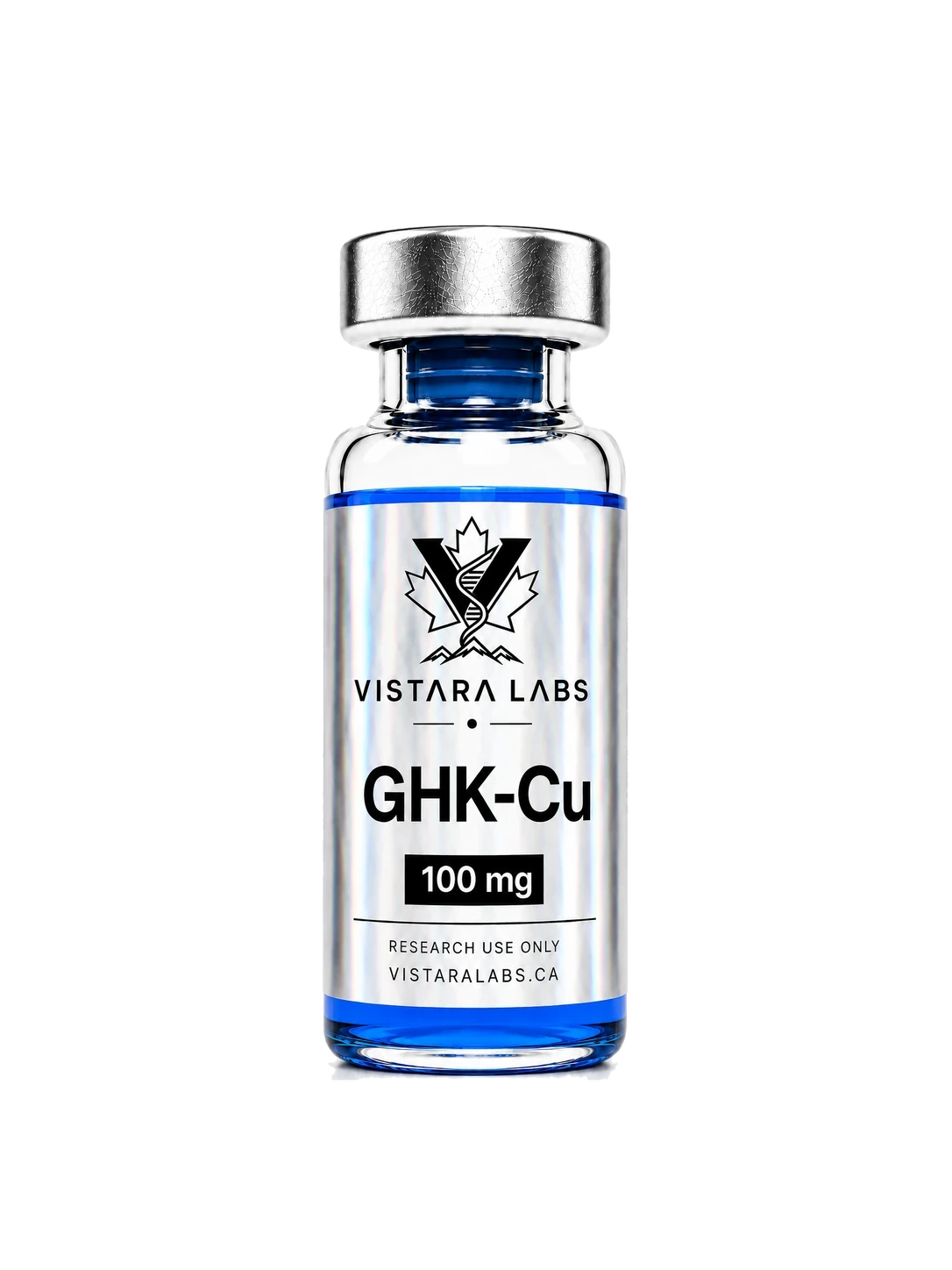
- The bound copper is central to how it works, and it is why genuine GHK-Cu is visibly blue.
What the reviews describe
GHK (glycyl-L-histidyl-L-lysine) is present in human plasma, saliva and urine, but plasma levels fall with age — from an average near 200 ng/ml at age 20 to much lower in later decades. Bound to copper, it forms the GHK-Cu complex. According to the reviews:
- It stimulates synthesis of collagen, elastin and glycosaminoglycans, and modulates the enzymes that break them down.
- In cosmetic products it has been reported to tighten loose skin, improve elasticity, density and firmness, reduce fine lines and wrinkles, reduce photodamage and hyperpigmentation, and increase keratinocyte activity.
- It attracts immune and repair cells to injury sites and supports wound healing across skin and other tissues.
- Recent gene data show GHK can influence thousands of human genes, which the authors propose as the basis for its wide-ranging activity.
Reading it honestly
Much of the cosmetic evidence comes from product and formulation studies rather than large independent randomized trials, so GHK-Cu’s record is best described as a deep, consistent body of mechanistic and applied research rather than a single pivotal trial. It is nonetheless one of the most thoroughly documented peptides in skin science.
What GHK-Cu is
GHK-Cu is a naturally occurring copper-binding tripeptide studied around skin regeneration and tissue repair. Our GHK-Cu explainer and buying guide cover the compound and its handling. It also anchors the GLOW blend.
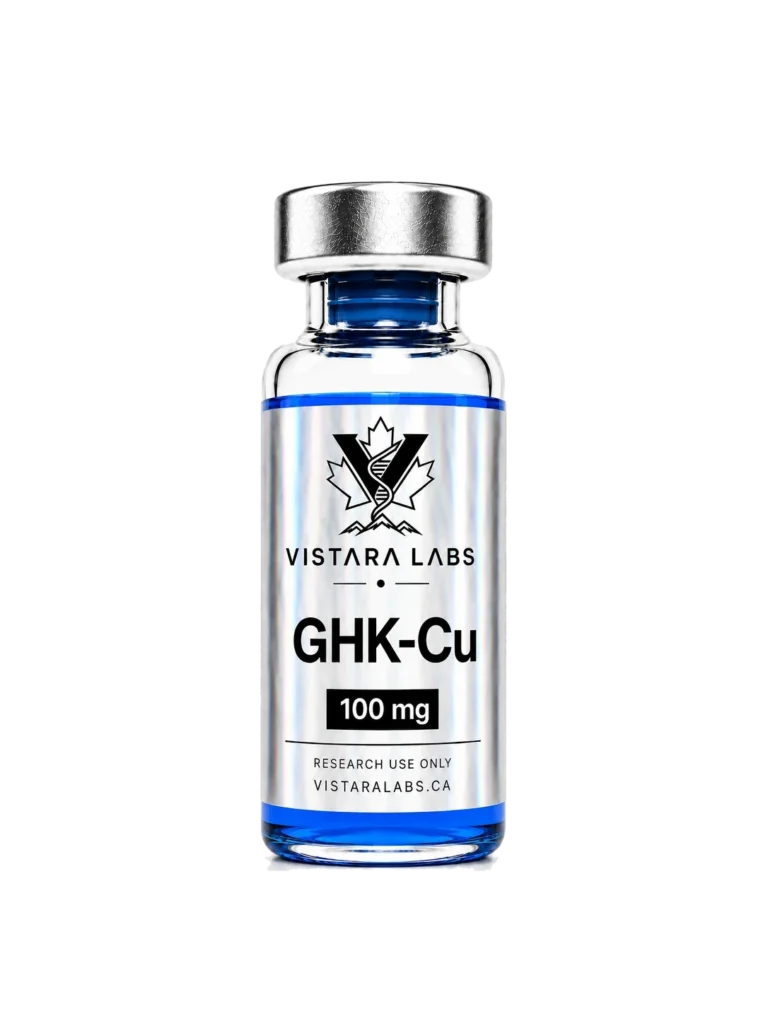
Vistara Labs stocks GHK-Cu 100 mg research vials, shipped from within Canada to every province.
Frequently asked questions
What does the human research on GHK-Cu describe?
Peer-reviewed reviews describe GHK-Cu increasing collagen, elastin and glycosaminoglycan synthesis, and cosmetic studies reporting firmer skin, improved elasticity and density, reduced fine lines and photodamage, and reduced hyperpigmentation.
Is GHK-Cu naturally present in the body?
Yes. GHK is present in human plasma, saliva and urine, with plasma levels averaging around 200 ng/ml at age 20 and declining substantially with age. GHK-Cu is the copper-bound complex.
What is GHK-Cu studied for?
GHK-Cu (a copper peptide) is studied around skin regeneration, wound healing and tissue repair, and its broad gene-regulatory activity. It is one of the most-researched cosmetic peptides.
Sources: Pickart L, et al. GHK Peptide as a Natural Modulator of Multiple Cellular Pathways in Skin Regeneration. Biomed Res Int. 2015;2015:648108. PMID 26236730. Pickart L, Margolina A. Regenerative and Protective Actions of the GHK-Cu Peptide. Int J Mol Sci. 2018;19:1987. PMID 29986520.