Retatrutide vs Cagrilintide: How They Differ
Retatrutide is an investigational triple agonist that acts on the GIP, GLP-1 and glucagon receptors, while cagrilintide is a long-acting analogue of amylin, a satiety hormone from the pancreas, that acts on amylin and calcitonin receptors. Both are once-weekly peptides studied for body weight, but they come from different hormone families: one from the incretin and glucagon system, the other from amylin. Here is how they compare, what the human trials found, and where each fits in research.
Findings
- Reta (GLP-3) combines three receptor targets in one molecule. In a phase 3 trial of 2,339 adults with obesity, 80 weeks lowered body weight by 25.0% at the highest dose, against 3.9% with placebo (Jastreboff et al., N Engl J Med, 2026).
- Cagrilintide is a lipidated, stabilised amylin analogue. In a 706-participant phase 2 trial, 26 weeks lowered weight by 6.0% to 10.8% across doses, against 3.0% with placebo, and the top dose beat the GLP-1 drug liraglutide (10.8% vs 9.0%) (Lau et al., Lancet, 2021).
- In a 68-week phase 3 trial of 3,417 adults, the cagrilintide-only group lost 11.5% of body weight against 3.0% on placebo (treatment-policy analysis, presented 2025); paired with semaglutide, the figure was 20.4% (Garvey et al., N Engl J Med, 2025).
- Both last for days in the body: about 6 days for reta and 159 to 195 hours for cagrilintide.
What is reta (GLP-3)?
Reta is a single peptide built on the GIP hormone backbone, carrying non-natural amino acids and a fatty diacid chain at lysine 17 (Li et al., Cell Discov, 2024). Its design pairs GIP and GLP-1 receptor activity, which reduced calorie intake in obese mice, with glucagon receptor activity, which added a rise in energy expenditure (Coskun et al., Cell Metab, 2022). Its half-life of about 6 days was measured in a phase 1b study in type 2 diabetes (Urva et al., Lancet, 2022). It remains investigational and, at the time of writing, unapproved in Canada and the United States.
The human trials
The phase 2 obesity trial (338 adults, 48 weeks) reported weight down 24.2% at the highest dose against 2.1% on placebo (Jastreboff et al., N Engl J Med, 2023). The 80-week phase 3 trial confirmed that scale and added less knee pain in participants with knee osteoarthritis and fewer breathing interruptions per hour in those with obstructive sleep apnea (Jastreboff et al., N Engl J Med, 2026). In type 2 diabetes, a 537-person phase 3 trial reported HbA1c down 1.94 percentage points against 0.81 on placebo, and weight down 15.3% against 2.6%, over 40 weeks (Bajaj et al., Lancet, 2026). In 98 people with fatty liver disease, 86% of the highest-dose group reached normal liver fat by 24 weeks (Sanyal et al., Nat Med, 2024). Side effects were mainly gastrointestinal and mostly mild to moderate.
What is cagrilintide?
Amylin is a pancreatic hormone that induces satiety (Lau et al., Lancet, 2021). The natural hormone readily forms amyloid fibrils, and the older amylin analogue pramlintide needs three injections a day because of its short half-life. Cagrilintide was developed as a stable, lipidated, long-acting analogue that avoids both problems (Kruse et al., J Med Chem, 2021). It activates both amylin and calcitonin receptors; in obese mice its weight-lowering effect depended on the amylin 1 and amylin 3 receptor subtypes, and it activated neurons in the dorsal vagal complex and lateral parabrachial nucleus of the brainstem (Carvas et al., eBioMedicine, 2025). Its half-life in humans was 159 to 195 hours (Enebo et al., Lancet, 2021). It has not been approved on its own.
The human trials
The phase 2 dose-finding trial ran at 57 sites in ten countries, including Canada. All five cagrilintide doses lowered weight more than placebo over 26 weeks, and the highest dose lowered it more than liraglutide; gastrointestinal events, chiefly nausea, were the most common side effects (Lau et al., Lancet, 2021). In the 68-week phase 3 trial, the cagrilintide-only arm (302 participants) lost 11.5% under the treatment-policy analysis and 11.8% if all participants stayed on treatment, and 31.6% of that arm lost 15% or more of their weight, against 4.7% on placebo (sub-analysis presented at EASD, September 2025).
Most of cagrilintide’s large-trial data come from pairing it with semaglutide, a GLP-1 drug. A 96-person phase 1b study first tested the pairing over 20 weeks (Enebo et al., Lancet, 2021), and the 3,417-person phase 3 trial reported 20.4% weight loss with the combination against 3.0% on placebo at 68 weeks (Garvey et al., N Engl J Med, 2025).
How do reta and cagrilintide compare side by side?
| Question | Reta (GLP-3) | Cagrilintide |
|---|---|---|
| What is it? | Triple hormone receptor agonist | Long-acting amylin analogue |
| Size | One acylated peptide on a GIP backbone | Lipidated amylin analogue |
| Main research area | Body weight, blood sugar, liver fat | Body weight and satiety |
| Mechanism | GIP, GLP-1 and glucagon receptors | Amylin and calcitonin receptors |
| Half-life | About 6 days | 159 to 195 hours |
| Human evidence | Phase 2 and phase 3 trials, 2023 to 2026 | Phase 2 alone; phase 3 alone and with semaglutide |
| Forms we supply | 10 mg, 20 mg and 30 mg vials | 10 mg vial |
Which one fits which research question?
- Amylin and calcitonin receptor signalling, and satiety pathways in the brainstem: cagrilintide, the only one of the two acting on that system.
- Glucagon receptor activity and energy expenditure: reta, whose design adds glucagon agonism to the incretin pair.
- Multi-hormone designs: reta builds GLP-1 activity into one molecule, while cagrilintide’s largest trials paired it with a separate GLP-1 drug. That makes reta a one-molecule model and cagrilintide a component model.
- Glucose control: reta, which has dedicated type 2 diabetes trials as a single agent.
The two have not been tested against each other, and the trial populations, lengths and analyses differ, so the percentages above are not a ranking. For related comparisons, see Cagrilintide vs Tirzepatide, Reta vs Semaglutide and Tirzepatide vs Semaglutide.
Can reta and cagrilintide be studied together?
We found no published human study combining them. The amylin pathway is distinct from the GIP, GLP-1 and glucagon receptors, and the cagrilintide and semaglutide work shows that amylin and GLP-1 agonism have been studied side by side. But both compounds reduce food intake, so their effects on weight would be hard to separate in one design. Any rationale for pairing them rests on each compound’s own literature.
How are they supplied?
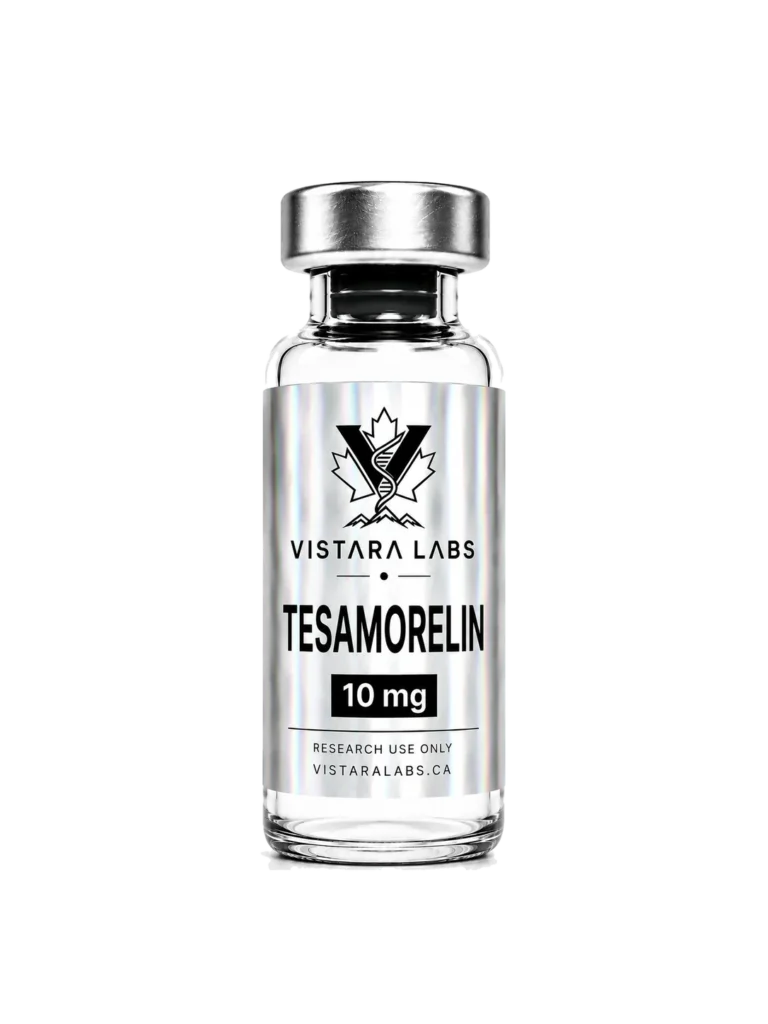
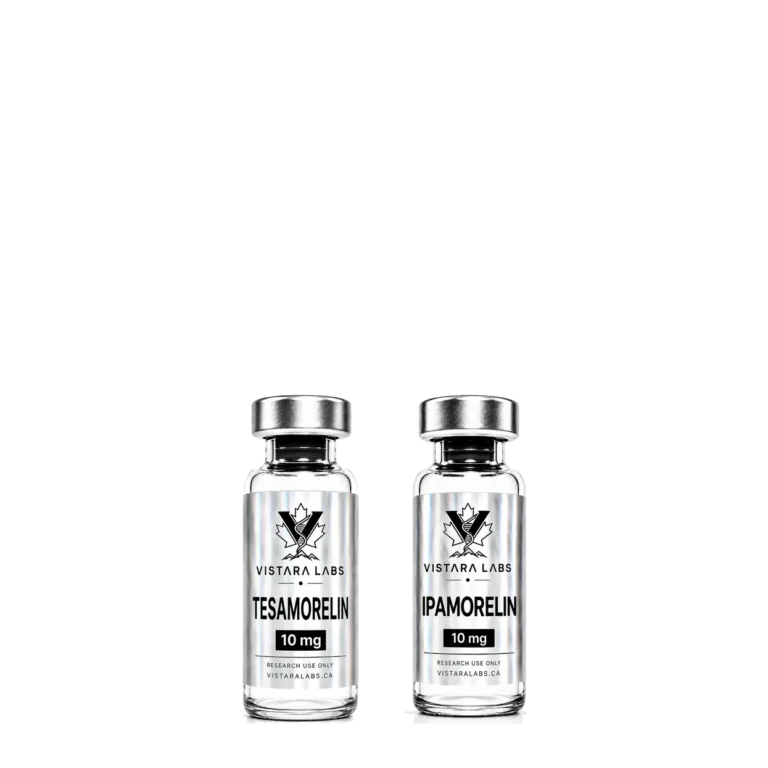
Reta comes as 10 mg, 20 mg and 30 mg lyophilised vials, and cagrilintide as a 10 mg lyophilised vial. Both are reconstituted with bacteriostatic water; the peptide calculator converts vial size and water volume, and how to reconstitute peptides covers the method. Reta’s storage window after mixing is in how long reta lasts. Reta is also part of the Metabolic Axis stack. Certificates of analysis are on the lab reports page, and every order ships from within Canada by Canada Post Xpresspost.
Reta and cagrilintide are supplied for laboratory research use only. The studies above were clinical research using pharmaceutical preparations.
Frequently asked questions
What is the difference between reta (GLP-3) and cagrilintide?
Reta is a triple agonist at the GIP, GLP-1 and glucagon receptors. Cagrilintide is a long-acting analogue of amylin, a pancreatic satiety hormone, and acts on amylin and calcitonin receptors. Both are weekly peptides studied for body weight, through different hormone systems.
Is reta stronger than cagrilintide?
No trial has compared them directly. In separate phase 3 trials, reta lowered body weight by 25.0% at the highest dose over 80 weeks, and cagrilintide alone lowered it by 11.5% over 68 weeks. The populations and analyses differ, so the figures are not a head-to-head result.
Is cagrilintide a GLP-1?
No. Cagrilintide is an amylin analogue that acts on amylin and calcitonin receptors. Its largest trials paired it with semaglutide, a GLP-1 drug, which is why the two are often mentioned together.
Can reta and cagrilintide be studied together?
No published human study has combined them. Their receptor targets are distinct, but both reduce food intake, so their effects on weight would be hard to tell apart in a single design.
Where can I buy reta and cagrilintide in Canada?
Vistara Labs supplies reta (GLP-3) as 10 mg, 20 mg and 30 mg lyophilised vials and cagrilintide as a 10 mg vial, with certificates of analysis on the lab reports page, shipped from within Canada by Canada Post Xpresspost.
Product details from vistaralabs.ca, October 2026. Sources: Li W et al. Structural insights into triple agonism at GLP-1R, GIPR and GCGR. Cell Discov. 2024. PMID 39019866. Coskun T et al. Discovery and clinical proof of concept of a triple glucagon, GIP and GLP-1 receptor agonist. Cell Metab. 2022. PMID 35985340. Urva S et al. Phase 1b multiple-ascending-dose trial of a GIP, GLP-1 and glucagon receptor agonist in type 2 diabetes. Lancet. 2022. PMID 36354040. Jastreboff AM et al. Phase 2 trial of a triple-hormone-receptor agonist for obesity. N Engl J Med. 2023. PMID 37366315. Jastreboff AM et al. Phase 3 trial of a triple hormone receptor agonist for obesity. N Engl J Med. 2026. PMID 42814954. Bajaj HS et al. Phase 3 trial of a GIP, GLP-1 and glucagon receptor agonist in type 2 diabetes. Lancet. 2026. PMID 42250575. Sanyal AJ et al. Triple hormone receptor agonist for metabolic dysfunction-associated steatotic liver disease: a randomized phase 2a trial. Nat Med. 2024. PMID 38858523. Lau DCW et al. Once-weekly cagrilintide for weight management in people with overweight and obesity: a dose-finding phase 2 trial. Lancet. 2021. PMID 34798060. Kruse T et al. Development of cagrilintide, a long-acting amylin analogue. J Med Chem. 2021. PMID 34288673. Carvas AO et al. Cagrilintide lowers bodyweight through brain amylin receptors 1 and 3. eBioMedicine. 2025. PMID 40609154. Enebo LB et al. Concomitant administration of multiple doses of cagrilintide with semaglutide for weight management: a phase 1b trial. Lancet. 2021. PMID 33894838. Garvey WT et al. Coadministered cagrilintide and semaglutide in adults with overweight or obesity. N Engl J Med. 2025. PMID 40544433. Cagrilintide monotherapy sub-analysis of the 68-week phase 3 trial, presented at the EASD Annual Meeting, September 2025.
More on this: Peptides for Weight Loss: What People Actually Mean and Reta vs Tirzepatide.
All products supplied by Vistara Labs are intended for laboratory research use only. They are not drugs, are not approved for human or veterinary use, and are not intended to diagnose, treat, cure or prevent any condition. Nothing on this page constitutes medical advice or guidance for use in humans.