Bacteriostatic Water: What the 0.9% Actually Does
Bacteriostatic water is sterile water with one addition: roughly 0.9% benzyl alcohol. That single ingredient is the entire difference between it and ordinary sterile water, and it is the reason it is the standard diluent in peptide laboratories rather than a nice-to-have.
 View product →
Findings
- Bacteriostatic water is sterile water plus about 0.9% benzyl alcohol, which stops bacteria growing between uses of a vial.
- Plain sterile water is a single-use product: sterile only until the first needle passes the stopper.
- Research peptides ship freeze-dried and need a diluent; bacteriostatic water is the standard choice for any vial used more than once.
What benzyl alcohol changes
Benzyl alcohol is a bacteriostatic agent — it inhibits bacterial growth rather than killing what is already present. The distinction is in the name: bacteriostatic (holds bacteria static) as opposed to bactericidal (kills them).
Plain sterile water is sterile at the moment it is sealed. The first time a needle passes through the stopper, that guarantee is gone. Bacteriostatic water is formulated on the assumption that the vial will be entered more than once, and the benzyl alcohol suppresses growth in the interval between accesses.
This is why the two are not interchangeable. Sterile water is a single-access product. Bacteriostatic water is built for a vial that stays in use across a research timeline.
Why lyophilised peptides need a diluent at all
Research peptides arrive freeze-dried — a small quantity of powder, often barely visible at the bottom of the vial. Lyophilisation is used because the dry state is markedly more stable than a solution: it survives shipping, tolerates temperature variation better, and stores far longer.
The trade-off is that the material must be brought back into solution before it can be measured or worked with, and the choice of diluent determines how long that solution remains usable.
Storage
Unopened bacteriostatic water is stable at room temperature. Once a vial has been entered, most laboratory protocols move it to refrigeration and note the date of first access, since the benzyl alcohol slows bacterial growth between uses rather than stopping the clock altogether.
Reconstituted peptide solutions are generally refrigerated and protected from light. Specific handling windows are determined by the researcher and the requirements of the study.
Buying bacteriostatic water in Canada
There is not much to a good bacteriostatic water, and that simplicity is the appeal: sterile water, a stated benzyl alcohol concentration, and a sealed vial sized for the research timeline it will serve. Because the same diluent is used across many compounds, it is one of the most common items in a peptide order.
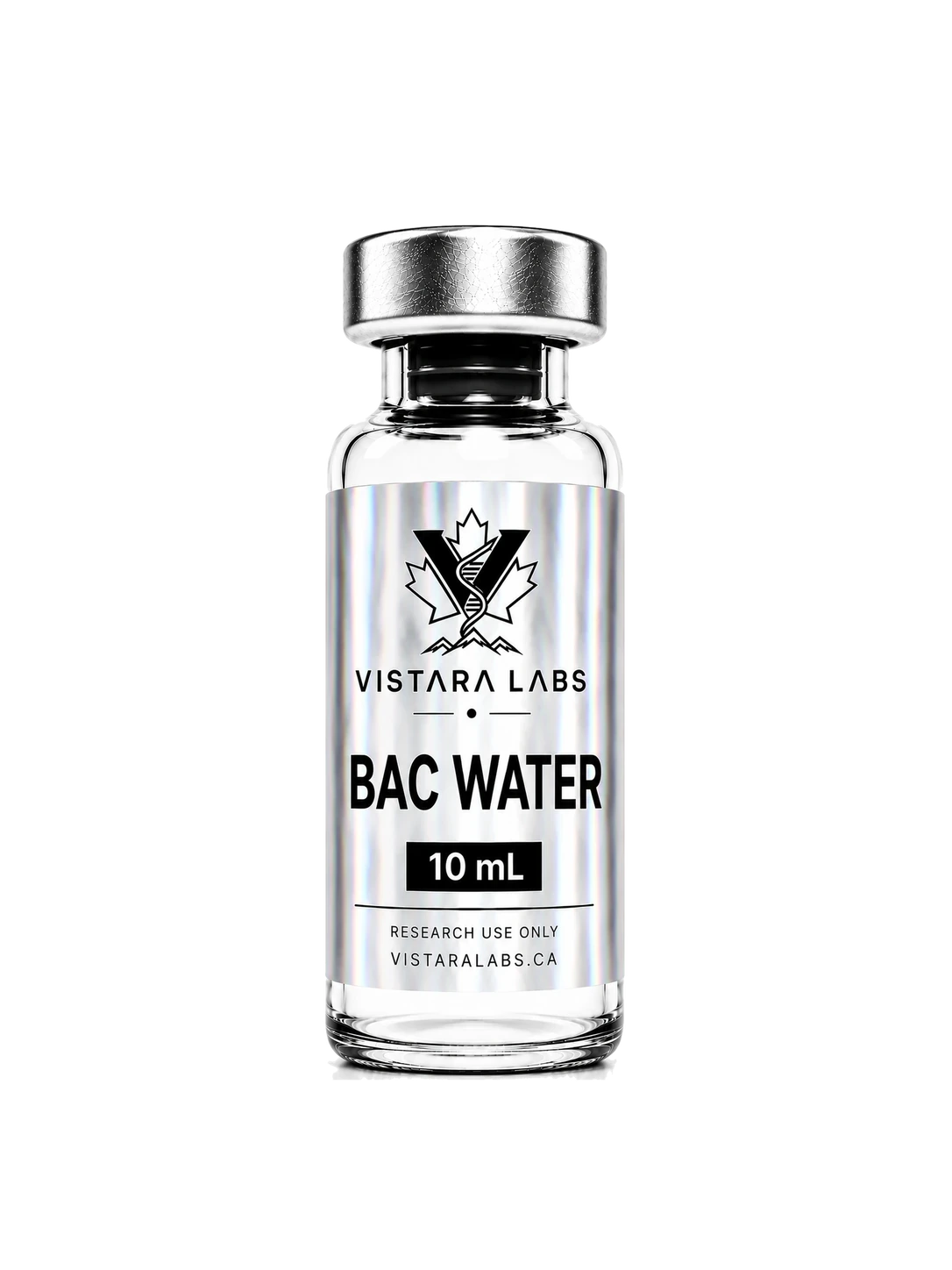
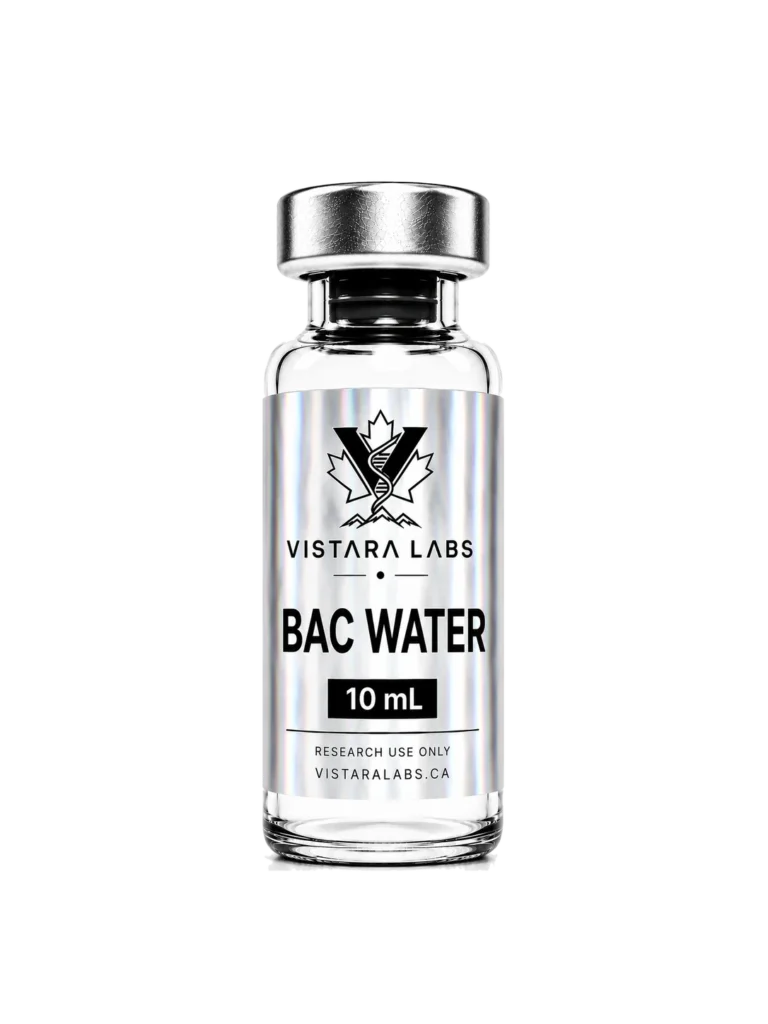
Vistara Labs supplies bacteriostatic water in 10 mL vials, which is the size most researchers order alongside a peptide. It ships across Canada, and larger orders ship free.
Ordering it with the peptide
Diluent is the item people forget. If you are ordering MOTS-c, GHK-Cu, BPC-157 or anything else supplied lyophilised, the vial is not usable on arrival without it. Adding it to the same order avoids a second shipment and a second wait.
You can buy bacteriostatic water in Canada directly from Vistara Labs in sealed 10 mL vials, in stock and shipped from within Canada.
All products supplied by Vistara Labs are intended for laboratory research use only. They are not drugs, are not approved for human or veterinary use, and are not intended to diagnose, treat, cure or prevent any condition. Nothing on this page constitutes medical advice or guidance for use in humans.
Working out the volume? The step-by-step page on how to reconstitute peptides with bacteriostatic water has the concentration tables for 5, 10, 20 and 30 mg vials, and there are worked pages for CJC-1295 + Ipamorelin and BPC-157.