Semax et Selank : voie intranasale ou sous-cutanée en recherche
Pour la plupart des peptides de recherche, la voie est sous-cutanée et il n’y a rien à en dire. Le Semax et le Selank font exception. Les produits russes homologués sont des solutions nasales, les travaux cliniques publiés utilisent très majoritairement cette voie, et la raison n’est pas la commodité : c’est un problème précis de pharmacologie, celui de faire parvenir des peptides jusqu’au cerveau.
Constats
- Le Semax et le Selank font exception à la voie injectable habituelle : les travaux cliniques utilisent très majoritairement le nez.
- La voie nasale existe parce que le cerveau est difficile à atteindre; les nerfs olfactifs offrent un chemin qui contourne la barrière hématoencéphalique.
- Les produits russes homologués sont des solutions nasales.
- Ces vaporisateurs utilisent une solution saline, et non de l’eau bactériostatique.
Le problème que la voie nasale cherche à résoudre
Les peptides sont de piètres candidats pour atteindre le système nerveux central. Ils sont relativement gros, ils portent une charge, et la barrière hématoencéphalique est conçue précisément pour exclure ce genre de molécules. Un peptide injecté par voie sous-cutanée entre dans la circulation générale, se distribue dans l’organisme, est dégradé par des enzymes circulantes, et seule une petite fraction atteint le cerveau.
Pour un composé dont tout l’intérêt de recherche est périphérique (réparation tissulaire, signalisation métabolique), cela n’a pas d’importance. Pour un composé dont tout l’intérêt de recherche se situe dans le cerveau, c’est l’obstacle principal.
Ce que la voie nasale fait différemment
La cavité nasale présente une particularité : l’épithélium olfactif, au plafond de la cavité, est l’un des rares endroits où le système nerveux n’est séparé du monde extérieur que par très peu de tissu. Les voies des nerfs olfactif et trijumeau qui le traversent sont étudiées comme un chemin par lequel des molécules peuvent atteindre le système nerveux central en contournant en partie la circulation générale et la barrière hématoencéphalique.
C’est un domaine réel et actif : la littérature parle d’administration du nez au cerveau (nose-to-brain delivery), et il dépasse largement ces deux peptides. Deux choses en découlent :
- Le peptide évite le métabolisme de premier passage. Il n’a pas à survivre à un passage par le foie ni à un long séjour dans la circulation sanguine.
- La distribution est différente, pas seulement plus rapide. L’intérêt n’est pas que la voie intranasale soit un raccourci vers le même résultat. Elle produit un profil de distribution différent, et c’est pourquoi cette voie est choisie dans la conception des études plutôt que d’être simplement une solution de rechange plus douce à l’aiguille.
La contrepartie est que l’administration intranasale est beaucoup moins constante. L’absorption nasale varie selon l’état de la muqueuse, le volume que la cavité peut contenir, la quantité qui s’écoule et la quantité avalée. L’administration sous-cutanée est la plus reproductible des deux, et c’est précisément pourquoi tant de recherches sur les peptides l’utilisent.
Pourquoi cette voie est propre à certains composés
L’administration du nez au cerveau n’est pas un substitut universel à l’injection. La littérature l’applique à un ensemble restreint de composés, et il y a des raisons structurelles à cela :
- Les petits peptides passent plus facilement. Le Semax compte sept acides aminés et le Selank est d’une longueur semblable. Les peptides plus gros traversent mal l’épithélium nasal.
- Ils doivent survivre à l’environnement. Les deux composés portent la queue stabilisatrice Pro-Gly-Pro qui les rend résistants à une dégradation enzymatique rapide; sans elle, aucune des deux voies ne fonctionnerait.
- La cible doit être centrale. Cette voie n’a de sens que si la question de recherche porte sur le cerveau.
C’est pourquoi on trouve des formulations nasales de Semax et de Selank, et pratiquement jamais de BPC-157, de tésamoréline ou des peptides métaboliques. Ce n’est pas que personne n’a essayé; c’est que cette voie ne convient ni à la molécule ni à la question.
Une solution saline plutôt que de l’eau bactériostatique
Une différence pratique mérite d’être comprise, parce qu’elle prend les gens au dépourvu.
Les formulations de recherche intranasales décrites dans la littérature publiée sont généralement préparées dans une solution saline, et non dans de l’eau bactériostatique. La raison est l’alcool benzylique, l’agent de conservation qui rend l’eau bactériostatique adaptée à une fiole qui sera ponctionnée à plusieurs reprises. L’alcool benzylique irrite la muqueuse nasale, et l’épithélium nasal est considérablement plus sensible que le tissu sous-cutané.
Les produits nasaux russes homologués sont donc des solutions aqueuses formulées pour cette voie, et non reconstituées avec un diluant conservé à l’alcool benzylique. Quiconque lit la littérature en supposant que le diluant se transpose d’une voie à l’autre l’a mal lue.
Cet article décrit ce que la littérature de recherche publiée a fait et pourquoi. Ce n’est pas un protocole de préparation, et rien ici ne constitue une indication pour administrer un composé à une personne. Vistara Labs ne fournit d’instructions d’administration pour aucun produit.
Quelle voie la littérature utilise réellement
Pour le Semax et le Selank en particulier, le résumé honnête est que la littérature intranasale est la littérature principale. Les travaux cliniques russes qui donnent à ces deux composés leur historique inhabituel ont été réalisés avec des formulations nasales. Des travaux par voie sous-cutanée existent, mais ils forment un corpus plus restreint, et ce n’est pas sur eux que reposent les homologations.
Cela inverse la situation habituelle dans cette catégorie, où l’injection est la norme et tout le reste une curiosité. Ici, c’est la voie nasale qui a l’historique clinique derrière elle.
Sous quelle forme les composés sont fournis
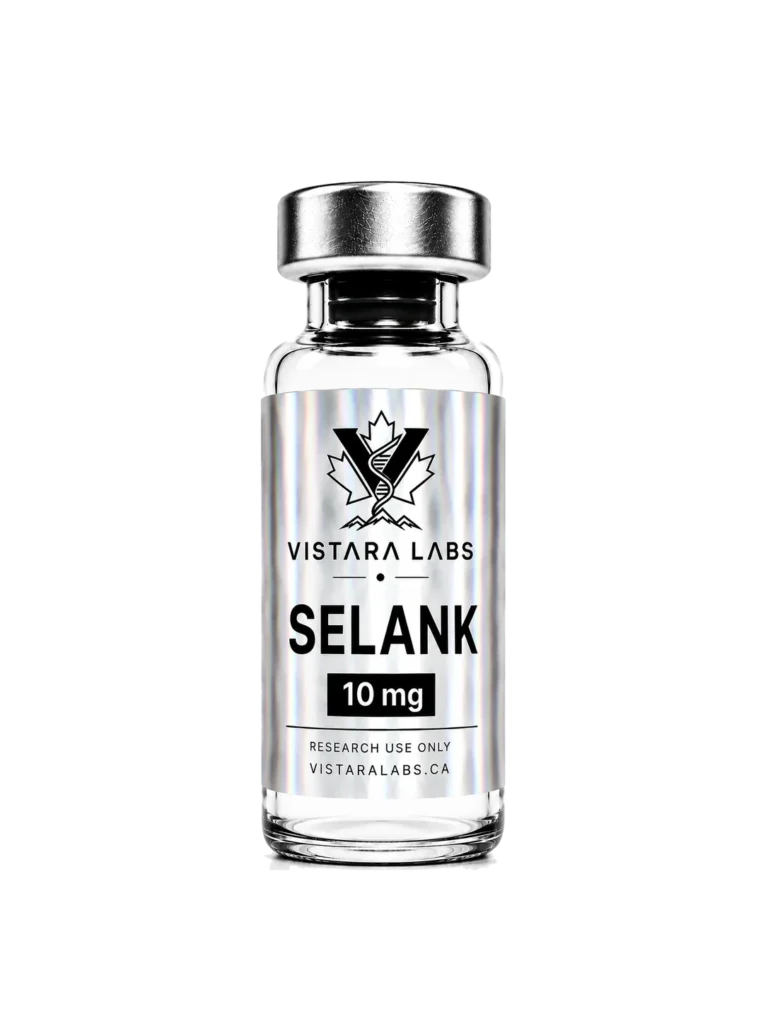
Le Semax et le Selank sont fournis sous forme de poudre lyophilisée dans une fiole scellée, comme le reste de la catégorie des peptides de recherche. La forme lyophilisée est utilisée parce que l’état sec est nettement plus stable que n’importe quelle solution : elle survit à l’expédition, tolère les variations de température et se conserve beaucoup plus longtemps. Le choix du diluant, et donc de la voie qu’utilise une étude, est fait par le chercheur après la réception de la fiole, et non par le fournisseur.
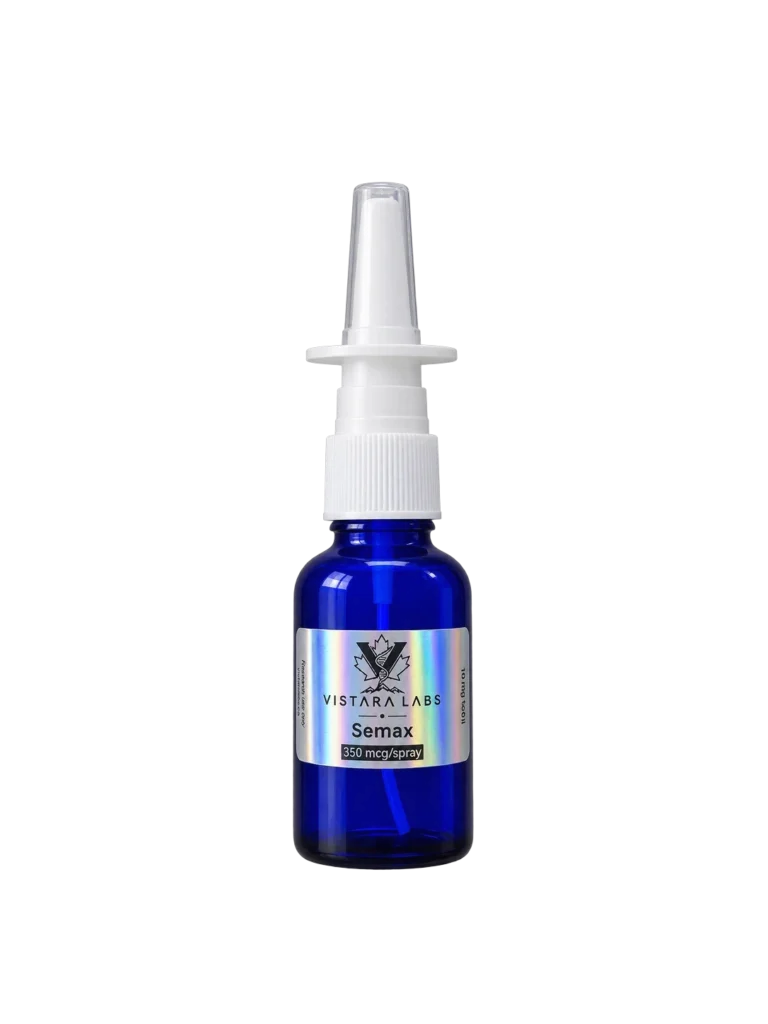
Vistara Labs offre le Semax et le Selank en poudre lyophilisée, et fournit le vaporisateur nasal de Semax et le vaporisateur nasal de Selank sous forme d’atomiseurs doseurs pour les préparations de recherche intranasales, fournis prêts à l’emploi, depuis le Canada vers toutes les provinces. Contexte sur chaque composé : ce que couvre la recherche sur le Semax et ce que couvre la recherche sur le Selank.
Questions fréquentes
Pourquoi le Semax et le Selank sont-ils étudiés par voie intranasale plutôt que par injection?
Parce que les deux sont étudiés pour leurs effets dans le cerveau, et que les peptides traversent mal la barrière hématoencéphalique. La voie nasale est étudiée comme un chemin vers le système nerveux central le long des nerfs olfactif et trijumeau, contournant en partie la circulation générale.
L’administration intranasale n’est-elle qu’une solution de rechange sans aiguille?
Non. Elle produit un profil de distribution différent plutôt que le même résultat par une voie plus facile, et c’est pourquoi elle est choisie dans la conception des études. Elle est aussi moins reproductible que l’administration sous-cutanée, puisque l’absorption nasale varie selon l’état de la muqueuse et selon la part du volume administré qui s’écoule ou est avalée.
Pourquoi les formulations de recherche nasales utilisent-elles une solution saline plutôt que de l’eau bactériostatique?
Parce que l’eau bactériostatique contient de l’alcool benzylique comme agent de conservation, et que l’alcool benzylique irrite la muqueuse nasale. Les produits nasaux homologués sont plutôt formulés comme des solutions aqueuses destinées à cette voie.
N’importe quel peptide peut-il être étudié par voie intranasale?
Non. Cette voie convient aux peptides courts, stables sur le plan enzymatique et dont la cible se trouve dans le système nerveux central. La plupart des peptides de recherche ne remplissent aucune de ces conditions, et c’est pourquoi les formulations nasales de composés comme le BPC-157 ou la tésamoréline sont absentes de la littérature.
Sous quelle forme le Semax et le Selank sont-ils fournis?
Le format en fiole est une poudre lyophilisée en fioles scellées, la norme dans toute la catégorie des peptides de recherche. Les vaporisateurs nasaux sont fournis prêts à l’emploi, dans une solution saline, en atomiseurs doseurs scellés.
Où acheter des vaporisateurs nasaux de Semax et de Selank au Canada
Les chercheurs qui souhaitent acheter un vaporisateur nasal de Semax ou de Selank au Canada peuvent se procurer les deux à partir de stocks canadiens : le vaporisateur nasal de Semax (10 mg ou 20 mg, prémélangé) et le vaporisateur nasal de Selank (10 mg ou 20 mg, prémélangé) sont expédiés depuis le Canada. Les deux sont fournis prêts à l’emploi dans une solution saline, uniquement pour la recherche en laboratoire. Pour les deux composés dans un même flacon, le vaporisateur nasal Selank + Semax contient 10 mg de chacun.
Tous les produits fournis par Vistara Labs sont destinés uniquement à la recherche en laboratoire. Ce ne sont pas des médicaments, ils ne sont pas approuvés pour un usage humain ou vétérinaire et ne sont pas destinés à diagnostiquer, traiter, guérir ou prévenir une maladie. Rien sur cette page ne constitue un avis médical ni une indication d’usage chez l’humain.