Glutathione vs L-Glutathione: Is There a Difference?
Cellular Energy & Mitochondrial Research
Glutathione and L-glutathione are the same molecule. The “L-” simply names the natural mirror-image form, the one cells make from L-glutamate, L-cysteine and glycine, so every label reading “L-glutathione”, “reduced L-glutathione” or plain “glutathione” refers to the same tripeptide. The distinction that does matter is reduced glutathione (GSH) versus oxidised glutathione (GSSG). Vistara Labs supplies glutathione as lyophilised research vials; this guide explains the naming and what human studies of each form reported.
Findings
- Glutathione is γ-L-glutamyl-L-cysteinylglycine, a tripeptide found in all mammalian tissues at 1 to 10 mM (Lu, Biochim Biophys Acta, 2013).
- The “L-” prefix refers to the natural stereochemistry of its glutamate and cysteine; it is not a different compound or a premium grade.
- Reduced glutathione (GSH) accounts for more than 98% of total glutathione in the body; the oxidised form, GSSG, is two GSH molecules joined by a disulfide bond (Lu, 2013).
- In a 6-month randomised, placebo-controlled trial in 54 adults, oral glutathione raised GSH by 30 to 35% in erythrocytes, plasma and lymphocytes in the higher-amount group (Richie et al., 2015).
 View product →
What does the “L” in L-glutathione mean?
Most amino acids are chiral: they exist as two mirror-image forms, labelled L and D. Proteins and peptides made by living cells use the L forms. Glutathione is built from three amino acids, and its full name spells this out: γ-L-glutamyl-L-cysteinylglycine (Lu, 2013; Forman et al., Mol Aspects Med, 2009). Glycine, the third building block, has no mirror-image form, so it carries no prefix.
So “L-glutathione” is simply the precise chemical name of the glutathione cells produce. PubChem lists glutathione under one entry, formula C10H17N3O6S, molecular weight 307.33, with the stereochemistry written into its systematic name. A product labelled “glutathione” and one labelled “L-glutathione” describe the same compound; the longer name is the more exact one.
The “γ” (gamma) in the name is the other unusual detail. The glutamate is joined to cysteine through its side-chain carboxyl group rather than the usual backbone link, which sets glutathione apart from ordinary dietary peptides.
Reduced vs oxidised: GSH and GSSG
Glutathione’s job depends on the sulfur (thiol) group of its cysteine. In the reduced form, GSH, that thiol is free and can donate electrons to neutralise oxidants. When glutathione peroxidases reduce hydrogen peroxide to water, two GSH molecules are used and joined into one molecule of oxidised glutathione, GSSG (Forman et al., 2009). Glutathione reductase then converts GSSG back to GSH.
GSH is by far the predominant form, making up more than 98% of total glutathione, with 80 to 85% of cellular glutathione in the cytosol and 10 to 15% in mitochondria (Lu, 2013). Because of this, researchers often track the GSSG to GSH ratio as a marker of oxidative stress: a lower ratio indicates less oxidative load.
This is what “reduced L-glutathione” on a label means: glutathione in its natural L form and its active, reduced GSH state. It is not a separate substance from L-glutathione; it adds the redox state to the name.
How do the forms compare?
| Name on a label | What it is | Notes |
|---|---|---|
| Glutathione | γ-L-glutamyl-L-cysteinylglycine | Common name; the natural form is implied |
| L-glutathione | Same molecule | Names the natural stereochemistry |
| Reduced L-glutathione (GSH) | Same molecule, free thiol | Active antioxidant form; over 98% of body glutathione |
| Oxidised glutathione (GSSG) | Two GSH joined by a disulfide bond | Molecular weight 612.6; recycled back to GSH |
| Liposomal glutathione | GSH carried in lipid vesicles | A delivery format, not a different molecule |
What have human studies of glutathione reported?
Oral glutathione
The longest controlled trial ran for six months in 54 non-smoking adults, comparing two daily amounts of oral glutathione with placebo. Blood GSH rose at 1, 3 and 6 months at both amounts. At six months the higher-amount group showed increases of 30 to 35% in erythrocytes, plasma and lymphocytes and 260% in buccal cells, and natural killer cell cytotoxicity more than doubled versus placebo at three months. The GSSG to GSH ratio in whole blood fell in both groups, indicating lower oxidative stress, and levels returned to baseline after a one-month washout (Richie et al., Eur J Nutr, 2015).
In 34 patients with non-alcoholic fatty liver disease, four months of oral glutathione following lifestyle changes significantly lowered the liver enzyme ALT, along with triglycerides, non-esterified fatty acids and ferritin (Honda et al., BMC Gastroenterol, 2017).
Skin research has used both forms. In 60 medical students, four weeks of oral glutathione lowered melanin indices at all six sites measured, significantly more than placebo on the face and sun-exposed forearm, and was very well tolerated (Arjinpathana and Asawanonda, J Dermatolog Treat, 2012). A 12-week, three-arm trial then compared reduced GSH, oxidised GSSG and placebo in healthy women: both forms trended toward lower melanin and UV spots, GSH significantly reduced wrinkles at some sites, both trended toward greater skin elasticity, and both were well tolerated (Weschawalit et al., Clin Cosmet Investig Dermatol, 2017).
Liposomal glutathione
Liposomal products wrap GSH in lipid vesicles. In a one-month pilot in 12 healthy adults, liposomal glutathione raised GSH within a week, peaking after two weeks at 40% in whole blood, 28% in plasma and 100% in peripheral blood mononuclear cells. Plasma 8-isoprostane fell 35%, the oxidised-to-reduced ratio fell 20%, and natural killer cell cytotoxicity rose by up to 400% (Sinha et al., Eur J Clin Nutr, 2018).
Intravenous and intranasal research
Glutathione has long been given by intravenous injection in clinical settings for acute poisoning and chronic liver disease (Honda et al., 2017). In a randomised, double-blind pilot in 21 people with Parkinson’s disease, intravenous glutathione three times a week for four weeks was well tolerated with no safety concerns, and motor scores improved by a mean of 2.8 units more than placebo, a trend the authors judged worth a larger study (Hauser et al., Mov Disord, 2009). An intranasal Phase IIb study in 45 participants recorded significant improvement in total and motor Parkinson’s scores over baseline in the higher-amount group (Mischley et al., J Parkinsons Dis, 2017).
The wider literature is collected in Glutathione: The Research Behind the Antioxidant, and glutathione is compared with another redox molecule in NAD+ vs Glutathione.
How is glutathione supplied for research?
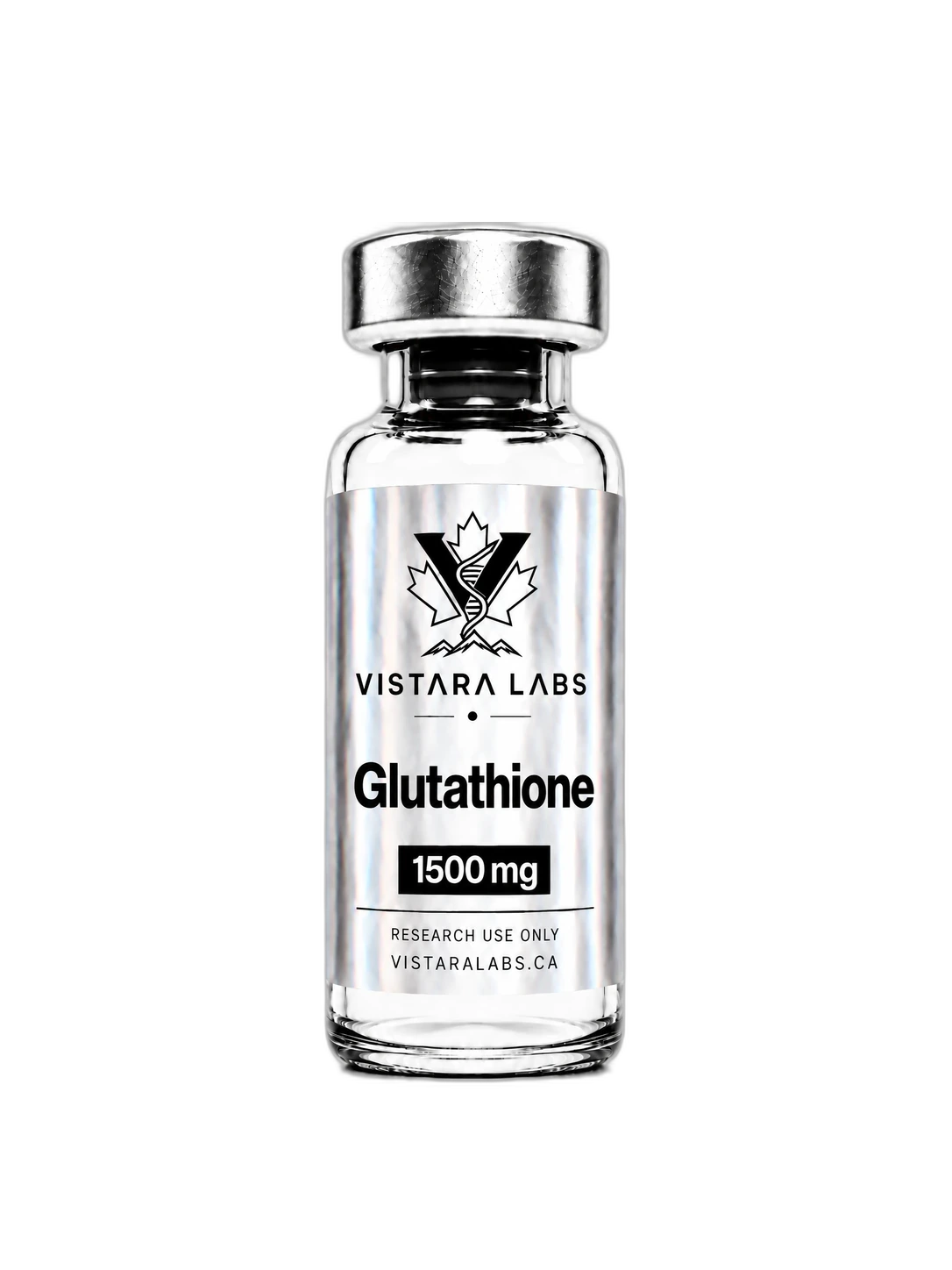
Vistara Labs supplies glutathione as lyophilised vials in 600 mg and 1500 mg sizes for laboratory work. Vials are reconstituted with bacteriostatic water (see the glutathione reconstitution guide), and storage before and after mixing is covered in How Long Does Glutathione Last? Products are third-party tested, with certificates on the lab reports page, and ship from within Canada by Canada Post Xpresspost.
Glutathione is supplied for laboratory research use only. The human studies above were clinical research using pharmaceutical or supplement preparations.
Frequently asked questions
Is there a difference between glutathione and L-glutathione?
No. L-glutathione is the precise chemical name for the glutathione cells make, γ-L-glutamyl-L-cysteinylglycine. The “L-” names the natural stereochemistry of its glutamate and cysteine, so both labels describe the same molecule.
What does reduced L-glutathione mean?
It means glutathione in its natural L form and its reduced state, GSH, with a free thiol group able to neutralise oxidants. GSH makes up more than 98% of total glutathione in the body.
What is the difference between GSH and GSSG?
GSH is reduced glutathione, a single tripeptide with a free thiol. GSSG is oxidised glutathione, two GSH molecules joined by a disulfide bond after neutralising an oxidant. Glutathione reductase converts GSSG back to GSH.
What have human studies of oral glutathione shown?
In a 6-month randomised, placebo-controlled trial of 54 adults, oral glutathione raised GSH by 30 to 35% in erythrocytes, plasma and lymphocytes in the higher-amount group, lowered the oxidised-to-reduced ratio, and more than doubled natural killer cell cytotoxicity at three months.
Where can I buy glutathione in Canada?
Vistara Labs supplies glutathione as lyophilised research vials, third-party tested and shipped from within Canada by Canada Post Xpresspost.
Product details from vistaralabs.ca, October 2026. Sources: Lu SC. Glutathione synthesis. Biochim Biophys Acta. 2013. PMID 22995213. Forman HJ, Zhang H, Rinna A. Glutathione: overview of its protective roles, measurement, and biosynthesis. Mol Aspects Med. 2009. PMID 18796312. PubChem: Glutathione, CID 124886; Glutathione disulfide, CID 65359. Richie JP Jr et al. Randomized controlled trial of oral glutathione supplementation on body stores of glutathione. Eur J Nutr. 2015. PMID 24791752. Honda Y et al. Efficacy of glutathione for the treatment of nonalcoholic fatty liver disease: an open-label, single-arm, multicenter, pilot study. BMC Gastroenterol. 2017. PMID 28789631. Arjinpathana N, Asawanonda P. Glutathione as an oral whitening agent: a randomized, double-blind, placebo-controlled study. J Dermatolog Treat. 2012. PMID 20524875. Weschawalit S et al. Glutathione and its antiaging and antimelanogenic effects. Clin Cosmet Investig Dermatol. 2017. PMID 28490897. Sinha R et al. Oral supplementation with liposomal glutathione elevates body stores of glutathione and markers of immune function. Eur J Clin Nutr. 2018. PMID 28853742. Hauser RA et al. Randomized, double-blind, pilot evaluation of intravenous glutathione in Parkinson’s disease. Mov Disord. 2009. PMID 19230029. Mischley LK et al. Phase IIb study of intranasal glutathione in Parkinson’s disease. J Parkinsons Dis. 2017. PMID 28436395.
More on this: Buy Glutathione in Canada.
All products supplied by Vistara Labs are intended for laboratory research use only. They are not drugs, are not approved for human or veterinary use, and are not intended to diagnose, treat, cure or prevent any condition. Nothing on this page constitutes medical advice or guidance for use in humans.
References
Glutathione has several human trials. Skin findings are endpoint-specific and a systematic review judged the overall evidence inconclusive; an intravenous Parkinson's pilot found no significant benefit.
- Glutathione as an oral whitening agent: a randomized, double-blind, placebo-controlled studyRandomised, double-blind, placebo-controlled trial; 60 healthy participants, oral glutathione, 4 weeks. Significant between-group differences at only two of the measured sites.
- The clinical effect of glutathione on skin color and other related skin conditions: A systematic reviewSystematic review of four clinical skin studies including three placebo-controlled randomised trials; authors concluded the evidence remains inconclusive.
- Randomized, double-blind, pilot evaluation of intravenous glutathione in Parkinson's diseaseRandomised, double-blind pilot; 21 patients, intravenous glutathione in Parkinson's disease. No statistically significant improvement in UPDRS outcomes versus placebo.
Links open the study record on PubMed so the source can be checked directly. Listing a study is not a claim that its findings apply to any other use, product or route of administration. Research use only.