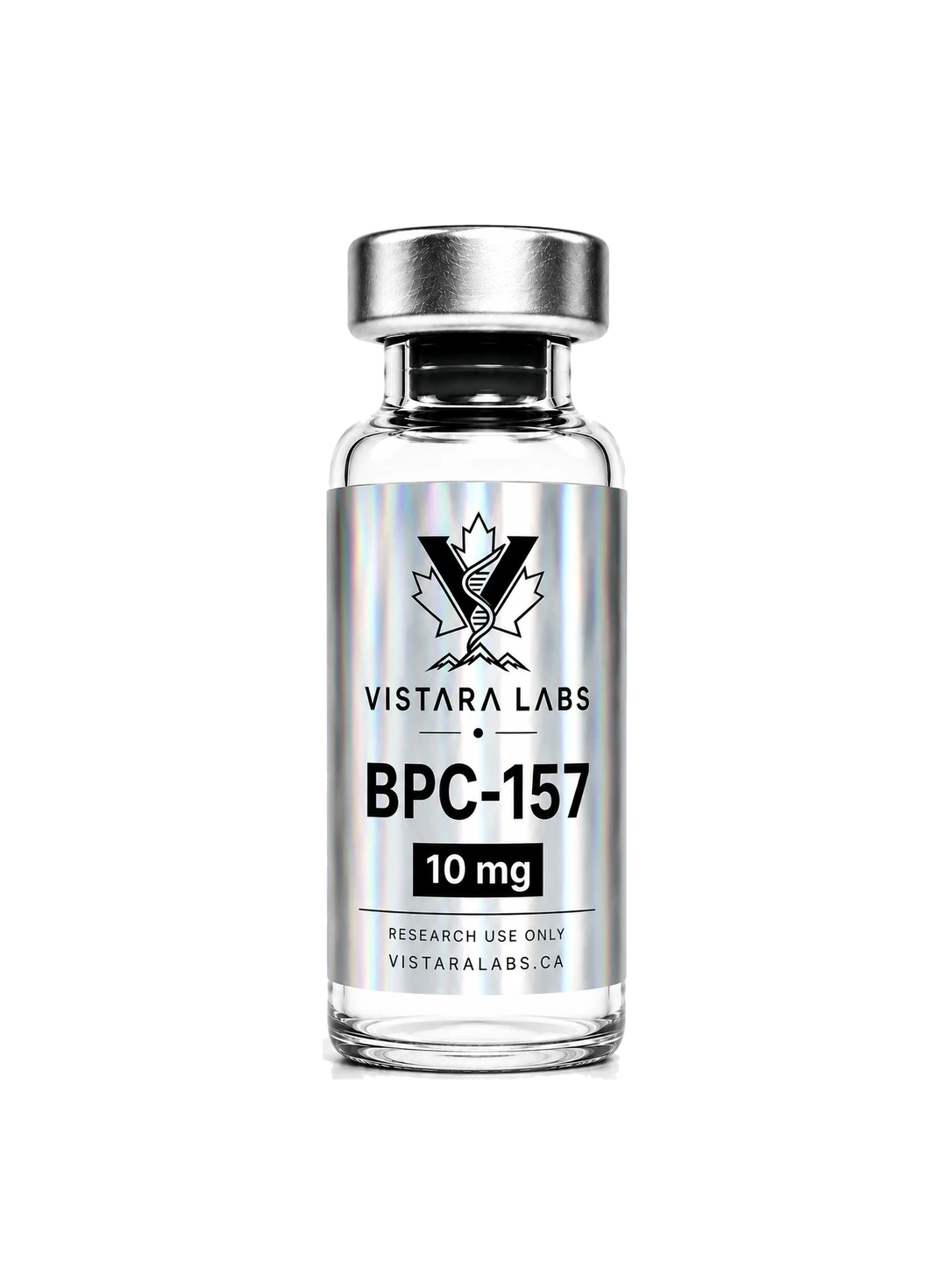
BPC-157 myths: what the research does not show
BPC-157 has a large body of animal research on tendon, muscle, ligament and gut healing, and only three small uncontrolled human pilot studies. This page goes through the popular claims one by one and shows which part of that record each claim rests on.
Findings
- In rats, BPC-157 improved the strength, function and tissue structure of cut Achilles tendons (J Orthop Res, 2003), with similar results for muscle and ligament injuries.
- In a retrospective chart review, 11 of 12 adults given BPC-157 alone for knee pain reported significant improvement when surveyed by phone (2021).
- In an uncontrolled pilot in 12 women with interstitial cystitis, 10 reported complete symptom resolution (2024).
- The biggest gap: a 2025 systematic review found 35 laboratory and animal studies and 1 human study in orthopaedics, and no randomized controlled human trial of BPC-157 has been published.
 View product →
Myth: BPC-157 heals any injury in days
The claim grows out of real rat studies. In a 2003 study, rats with a cut Achilles tendon that received BPC-157 showed higher load to failure, better walking function and better collagen formation than controls over 14 days. Later rat studies reported similar gains for a cut quadriceps muscle (2006) and a cut knee ligament (2010). These are surgical injury models in rats, not people, and “any injury in days” is not something any of them tested.
Myth: human trials have proved BPC-157 works
False. A 2025 review counted only three human pilot studies of BPC-157: a knee pain chart review, an interstitial cystitis pilot and a two-person intravenous safety study. None had a placebo group. A separate 2025 systematic review in orthopaedic sports medicine screened 544 articles and found 35 laboratory and animal studies and a single human one. Small uncontrolled reports can justify a proper trial. They cannot prove an effect.
Myth: BPC-157 fixes knee pain
Partly true, as a signal worth testing. In the 2021 chart review, 16 adults who had been given BPC-157 into the knee joint, some with thymosin beta-4 added, were phoned months later. Of the 12 who had BPC-157 alone, 11 rated their pain as significantly improved. There was no comparison group, no imaging and no standard scoring of function, and the people had different causes of knee pain. A placebo effect cannot be ruled out from a design like this.
Myth: BPC-157 cures gut and bladder conditions
The gut claim comes from rat models and from inflammatory bowel disease trials that a 2003 paper described as under way under a code name. We found no peer-reviewed results from those trials on PubMed. The bladder claim comes from the 2024 pilot, where 10 of 12 women with interstitial cystitis reported complete resolution after one procedure. It is an encouraging case series, but it had no control group and used self-reported outcomes. “Cure” is not a word the published data can carry.
Myth: BPC-157 is proven safe in humans
Not proven either way. The rat studies reported no toxicity, and the human pilots reported no adverse events. But the only study designed to measure human safety had two participants, and the 2025 orthopaedic review stated it found no human safety data. Absence of reported harm in tiny studies is not the same as demonstrated safety.
Myth: BPC-157 is a natural substance from your stomach
Partly true. Its 15-amino-acid sequence was first identified in human gastric juice, which is why it is often called a stomach peptide. The material used in research is a synthetic peptide made in a laboratory. “Derived from a natural sequence” is accurate; “natural supplement” is not.
What BPC-157 cannot promise
The animal record is broad and consistent, and many of the rat papers share the same senior authors, which makes independent replication all the more important. On the human side, the record is three small reports.
- It cannot promise faster healing in people; that has not been tested in a controlled trial.
- It cannot promise relief from knee, gut or bladder symptoms; the human reports were uncontrolled.
- It cannot promise a known safety profile in humans; the data are too small.
- It cannot promise that rat results carry over to human tissue.
Where the evidence stands
BPC-157 is not an approved medicine in Canada for any use. Its research record is overwhelmingly laboratory and animal work, with a handful of small human pilot reports. Both recent reviews call for well-designed human trials. Until those exist, it remains a compound for laboratory research.
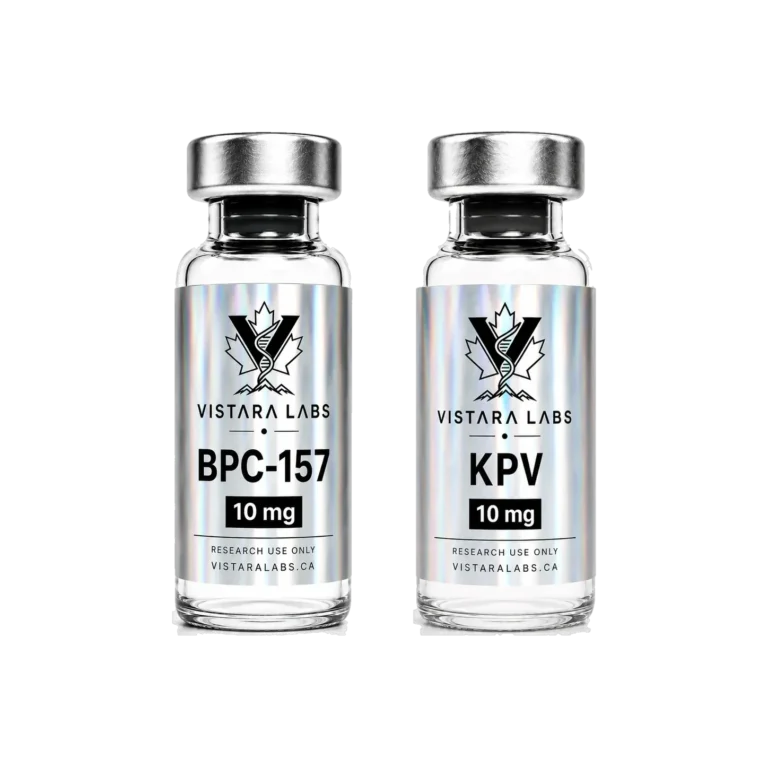
Vistara Labs supplies BPC-157 as a laboratory research material. The page above is about the published research, not a claim about our product.
Frequently asked questions
Did BPC-157 trials in humans show healing?
No controlled human trial of BPC-157 has been published. Three small pilot reports exist, on knee pain, interstitial cystitis and intravenous safety, and none had a placebo group.
Where does the BPC-157 healing research come from?
Mostly from rats. Studies reported better healing of cut tendons, muscles and ligaments in rats given BPC-157 compared with controls.
Is BPC-157 approved in Canada?
No. BPC-157 is not an approved medicine in Canada and is supplied for laboratory research.
Sources: Staresinic M, Sebecic B, Patrlj L, et al. Gastric pentadecapeptide BPC 157 accelerates healing of transected rat Achilles tendon and in vitro stimulates tendocytes growth. J Orthop Res. 2003. PMID 14554208. Staresinic M, Petrovic I, Novinscak T, et al. Effective therapy of transected quadriceps muscle in rat: gastric pentadecapeptide BPC 157. J Orthop Res. 2006. PMID 16609979. Cerovecki T, Bojanic I, Brcic L, et al. Pentadecapeptide BPC 157 (PL 14736) improves ligament healing in the rat. J Orthop Res. 2010. PMID 20225319. Lee E, Padgett B. Intra-articular injection of BPC 157 for multiple types of knee pain. Altern Ther Health Med. 2021. PMID 34324435. Lee E, Walker C, Ayadi B. Effect of BPC-157 on symptoms in patients with interstitial cystitis: a pilot study. Altern Ther Health Med. 2024. PMID 39325560. Lee E, Burgess K. Safety of intravenous infusion of BPC157 in humans: a pilot study. Altern Ther Health Med. 2025. PMID 40131143. Vasireddi N, Hahamyan H, Salata MJ, et al. Emerging use of BPC-157 in orthopaedic sports medicine: a systematic review. HSS J. 2025. PMID 40756949. McGuire FP, Martinez R, Lenz A, et al. Regeneration or risk? A narrative review of BPC-157 for musculoskeletal healing. Curr Rev Musculoskelet Med. 2025. PMID 40789979.
All products supplied by Vistara Labs are intended for laboratory research use only. They are not drugs, are not approved for human or veterinary use, and are not intended to diagnose, treat, cure or prevent any condition. Nothing on this page constitutes medical advice or guidance for use in humans.
References
Most published BPC-157 work is preclinical. A 2025 systematic review screened 544 records and included 36 studies — 35 preclinical and one clinical. The human reports below are small and uncontrolled, and all three appear in the same journal.
- Emerging Use of BPC-157 in Orthopaedic Sports Medicine: A Systematic ReviewSystematic review; 544 records screened, 36 studies included — 35 preclinical and 1 clinical.
- Intra-Articular Injection of BPC 157 for Multiple Types of Knee PainRetrospective chart review, 17 patients (16 followed up by telephone); no control group, no blinding, no validated outcome instrument.
- Effect of BPC-157 on Symptoms in Patients with Interstitial Cystitis: A Pilot StudyUncontrolled pilot, 12 women with interstitial cystitis; no placebo group or blinding.
- Safety of Intravenous Infusion of BPC157 in Humans: A Pilot StudySafety pilot, 2 adults given intravenous BPC-157; preliminary tolerability observations only.
Links open the study record on PubMed so the source can be checked directly. Listing a study is not a claim that its findings apply to any other use, product or route of administration. Research use only.