BPC-157 Research and the Knee-Pain Data
BPC-157 is the best-known recovery-focused compound in the research-peptide catalogue, and in 2021 a clinical paper finally put human numbers behind that reputation. In a retrospective study of knee-pain patients, 87.5% reported relief after an intra-articular injection of BPC-157, given alone or alongside TB-500. It is a key data point in the BPC-157 literature, and we break it down in full in our BPC-157 and TB-500 knee-pain study analysis. This guide covers what BPC-157 is and what the research describes.
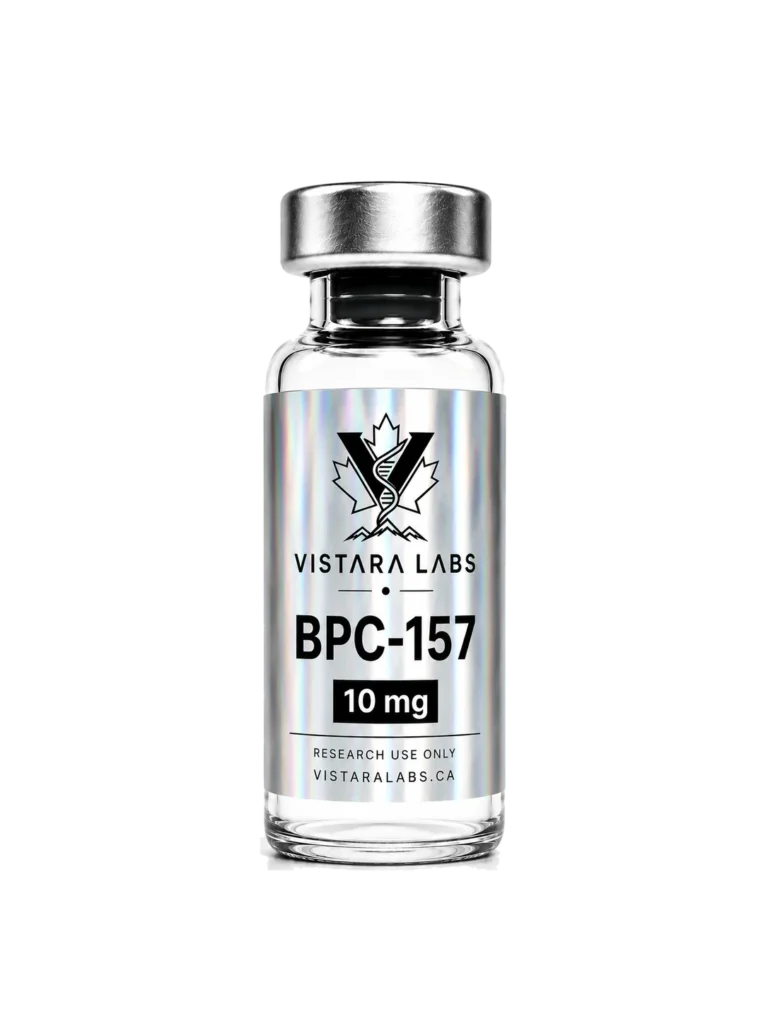 View product →
Findings
- BPC-157 is a synthetic fragment of a protein found naturally in human gastric juice.
- In a 2021 study of knee-pain patients, 87.5% reported relief after BPC-157 injections into the knee, alone or with TB-500.
- The wider research literature centres on soft-tissue repair: muscle, tendon, ligament and gut.
- BPC-157 is stable in gastric acid, which is why much of the research uses oral administration.
What BPC-157 is
BPC stands for Body Protection Compound. It is a fifteen amino acid sequence derived from a protein found naturally in human gastric juice, produced synthetically rather than extracted. The 157 is a laboratory designation, not a dose, a strength, or a concentration.
One property stands out: it is stable in gastric acid. Most peptides are destroyed there, which is why so many are studied by injection. BPC-157’s stability is why a large share of the published work uses oral administration, and it follows directly from where the parent protein was found in the first place.
The 2021 knee-pain study
The most-cited human report on BPC-157 is a 2021 retrospective chart review from a clinic in Orlando, Florida. Sixteen patients who had received intra-articular BPC-157 for knee pain were followed up:
- BPC-157 alone (12 patients): 91.6% reported significant improvement.
- BPC-157 + TB-500 (4 patients): 75% reported significant improvement.
- Overall: 87.5% reported relief of their knee pain.
The authors called for larger imaging-backed follow-up studies. Our full analysis of the study covers the numbers and the context.
What the wider research describes
Beyond that clinical report, the BPC-157 literature is unusually broad for a peptide this small. The research spans several areas:
- Soft-tissue repair. The largest and most cited group of work, examining healing rates and cell migration after induced injury.
- Gastrointestinal research. The oldest strand, following from the compound’s origin in gastric juice, covering ulcer and mucosal-injury research.
- Vascular and signalling work. Blood-vessel formation and inflammatory signalling.
Much of the early literature uses oral administration, a detail a great deal of online writing gets wrong.
BPC-157 with TB-500
BPC-157 is frequently paired with TB-500, a combination the research community nicknamed the Wolverine stack or Healing Blend. In the knee-pain study above, the four patients who received both still reported a 75% improvement rate. Our BPC-157 + TB-500 guide covers why the two are studied together.
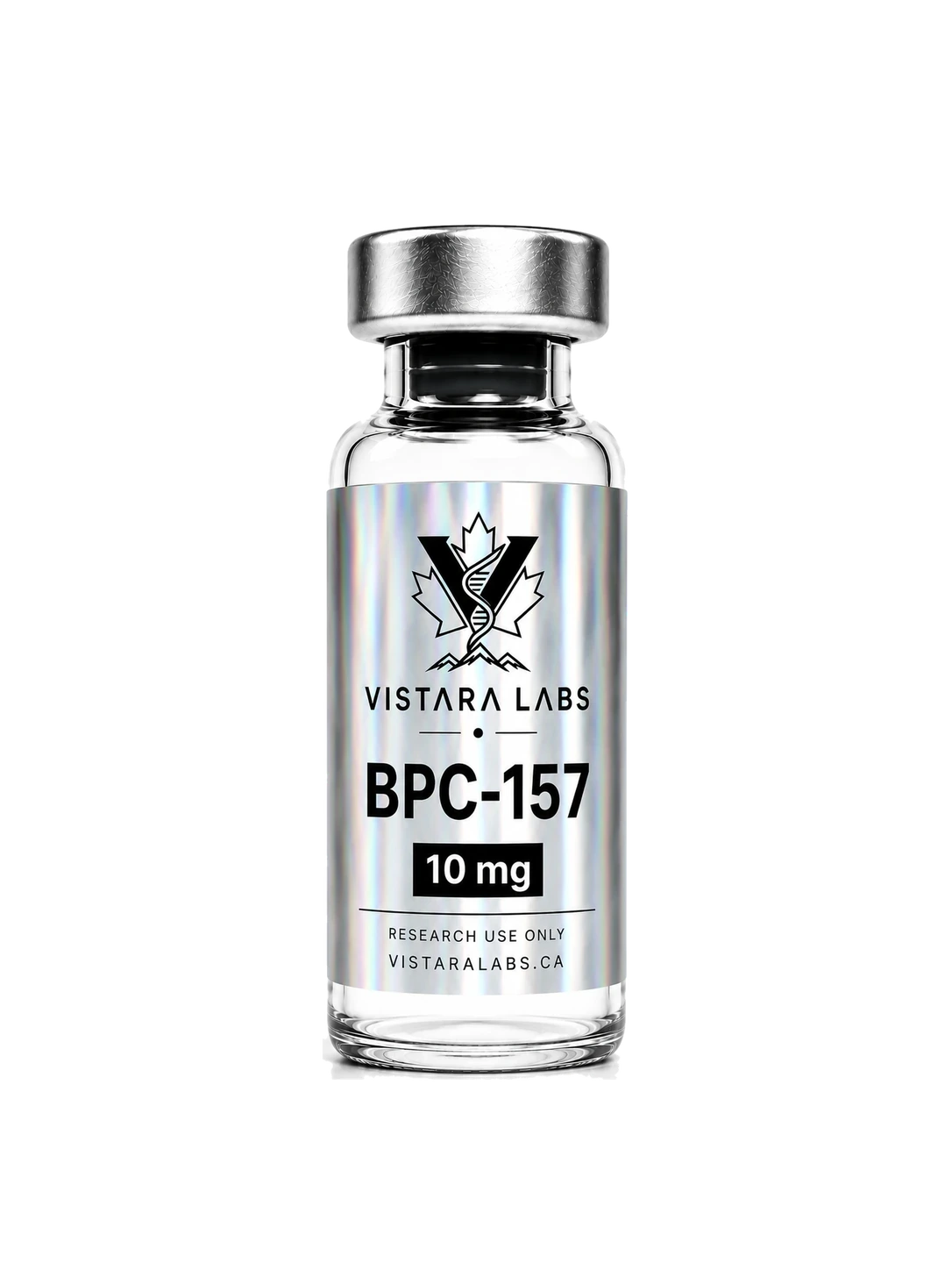
Vistara Labs stocks BPC-157, TB-500 and a BPC-157 + TB-500 blend as lyophilised research materials, shipped from within Canada to every province.
Frequently asked questions
What does the human research on BPC-157 show?
The main human report is a 2021 retrospective study in which 87.5% of knee-pain patients reported relief after intra-articular BPC-157, alone or with TB-500. The authors recommended larger imaging-backed follow-up studies.
What does BPC-157 stand for?
Body Protection Compound. The 157 is a laboratory designation rather than a dose or strength.
Why is BPC-157 studied orally when most peptides are not?
Because it is stable in gastric acid, which destroys most peptides. That stability follows from its origin in a protein found in gastric juice.
References
Most published BPC-157 work is preclinical. A 2025 systematic review screened 544 records and included 36 studies — 35 preclinical and one clinical. The human reports below are small and uncontrolled, and all three appear in the same journal.
- Emerging Use of BPC-157 in Orthopaedic Sports Medicine: A Systematic ReviewSystematic review; 544 records screened, 36 studies included — 35 preclinical and 1 clinical.
- Intra-Articular Injection of BPC 157 for Multiple Types of Knee PainRetrospective chart review, 17 patients (16 followed up by telephone); no control group, no blinding, no validated outcome instrument.
- Effect of BPC-157 on Symptoms in Patients with Interstitial Cystitis: A Pilot StudyUncontrolled pilot, 12 women with interstitial cystitis; no placebo group or blinding.
- Safety of Intravenous Infusion of BPC157 in Humans: A Pilot StudySafety pilot, 2 adults given intravenous BPC-157; preliminary tolerability observations only.
Links open the study record on PubMed so the source can be checked directly. Listing a study is not a claim that its findings apply to any other use, product or route of administration. Research use only.