BPC-157 and TB-500 for Knee Pain
Most of what has been written about BPC-157 and TB-500 comes from early-stage laboratory research — which is what makes a 2021 paper out of Orlando stand out: it reports on real patients. Published in Alternative Therapies in Health and Medicine, the study reviewed the charts of people who had received BPC-157 — alone or together with thymosin beta-4 — injected directly into painful knees at a primary-care clinic. It is a published report in this pair’s literature, and the numbers it recorded are worth knowing.
 View product →
Findings
- A 2021 clinic study followed 16 patients who received BPC-157 injected directly into the knee for knee pain.
- 11 of 12 patients on BPC-157 alone reported significant relief.
- 3 of 4 who received BPC-157 together with TB-500 reported the same.
- Overall, 87.5% of patients said their knee pain improved.
- The authors recommend larger follow-up studies with before-and-after imaging.
- A 2026 ten-author review, including pain-medicine specialists, independently examined the same series and reached the same reading of the results.
The study, plainly stated
Lee and Padgett performed a retrospective chart review at the Institute for Hormonal Balance in Orlando, Florida, covering one year of records from 2019 to 2020. Seventeen patients had received an intra-articular injection of BPC-157 for knee pain — from osteoarthritis, meniscus tears, tendinosis, ligament injuries and other causes — and sixteen of them could be reached by phone, most between six months and a year after their injection. Patients were asked to rate their pain before the injection, how long the relief lasted, and how much the injection helped.
What it reported
- BPC-157 alone (12 patients): 11 of 12 — 91.6% — reported significant improvement in knee pain. One reported no improvement.
- BPC-157 + thymosin beta-4 (4 patients): 3 of 4 — 75% — reported significant improvement. One reported no relief.
- Overall: 14 of 16 patients — 87.5% — reported relief of their knee pain.
The authors concluded that the study “suggests that intra-articular injection of BPC-157 helps with multiple types of knee pain,” and called for future studies with follow-up MRI imaging to document the change behind the reported relief.
The authors frame it as grounds for larger imaging-backed follow-up studies. As published data on this pair goes, it is a rare and noteworthy entry.
What is thymosin beta-4 — and what is TB-500?
Thymosin beta-4 (Tβ4) is a 43-amino-acid protein found in nearly every cell in the body, with especially high concentrations in blood platelets and in the fluid of healing wounds. Its day job is binding actin — the structural protein cells use to move, divide and rebuild — which is why so much of its research literature sits in tissue-repair and cell-migration models. TB-500 is the research name for the synthetic version of thymosin beta-4 used in laboratory settings; when the Orlando paper says “TB4,” it is describing the same molecule researchers buy as TB-500. Our TB-500 guide covers the compound in more depth.
Why the two are studied together
BPC-157 — a fragment of a protein in gastric juice — and thymosin beta-4 come at tissue repair from different angles: BPC-157’s literature centres on blood-vessel formation and tendon-to-bone healing, while Tβ4’s centres on actin dynamics and cell migration. The overlap without redundancy is why the research community so often pairs them (the Wolverine or Healing Blend), a combination covered in our BPC-157 + TB-500 guide.
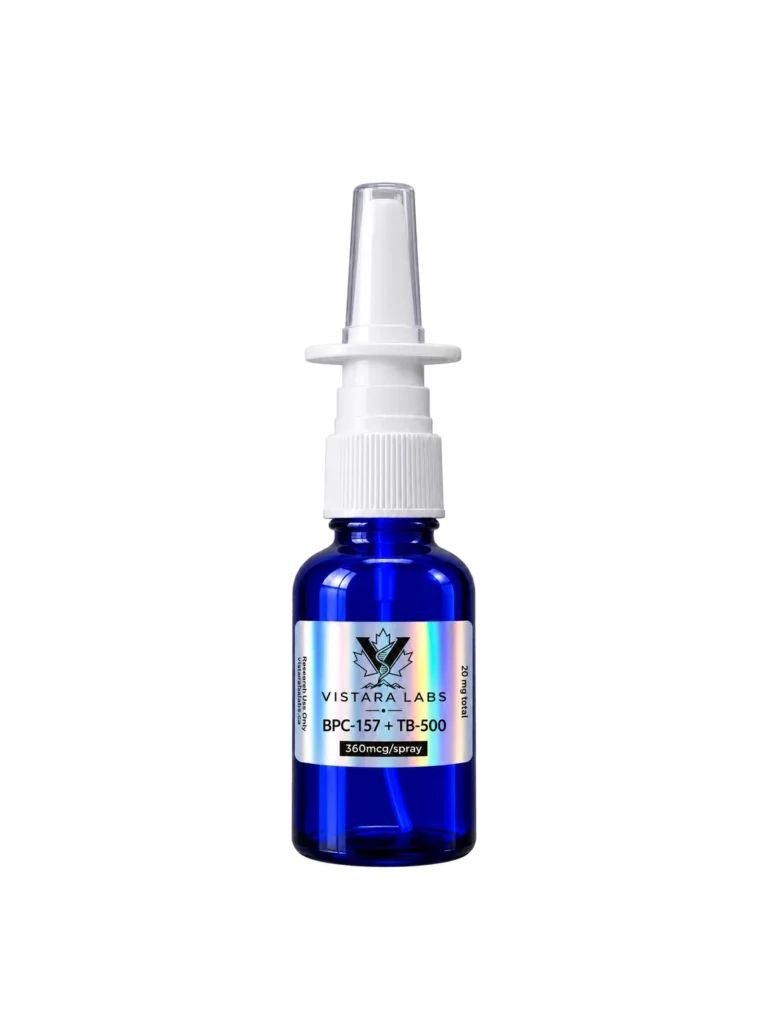
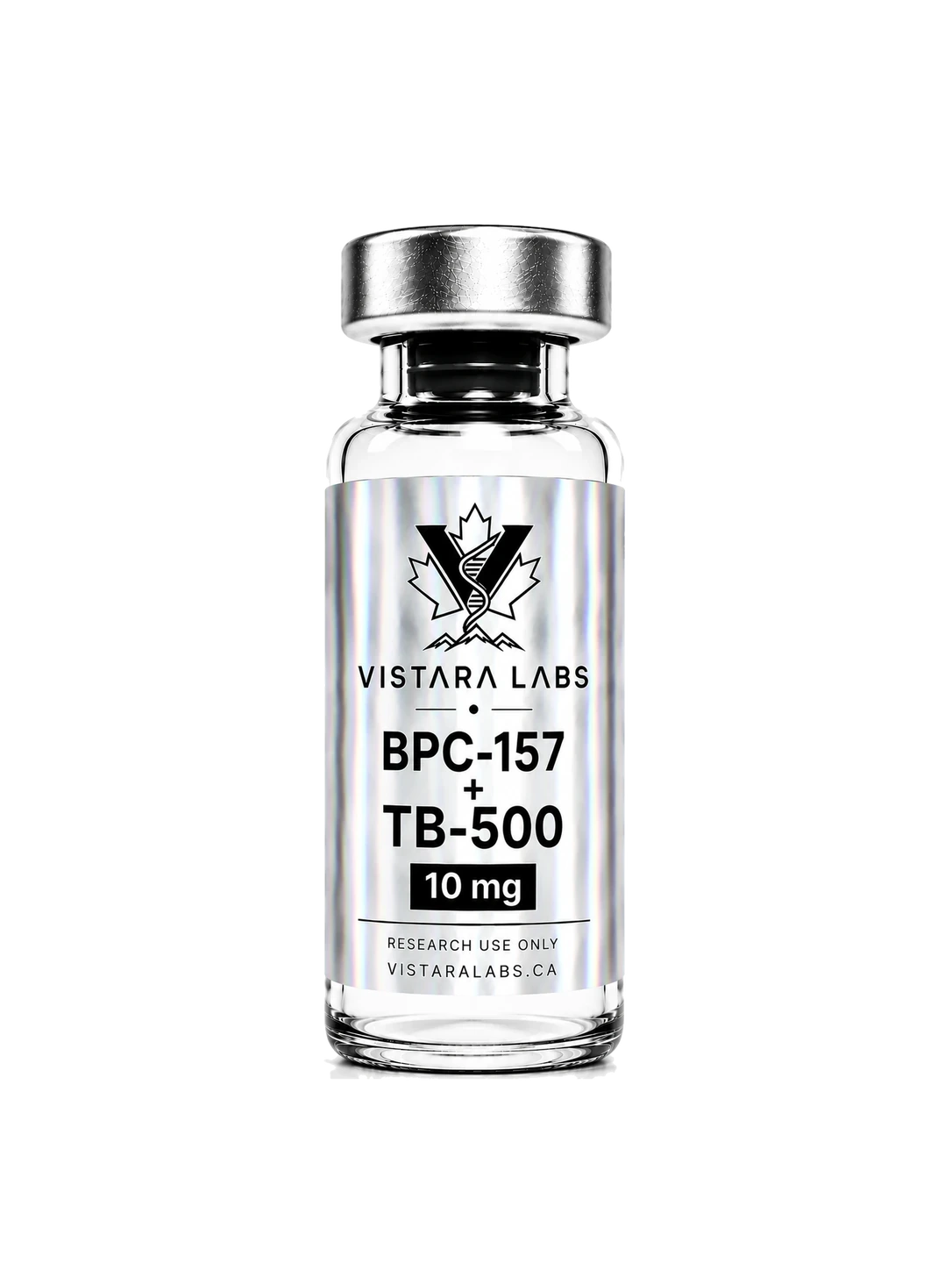
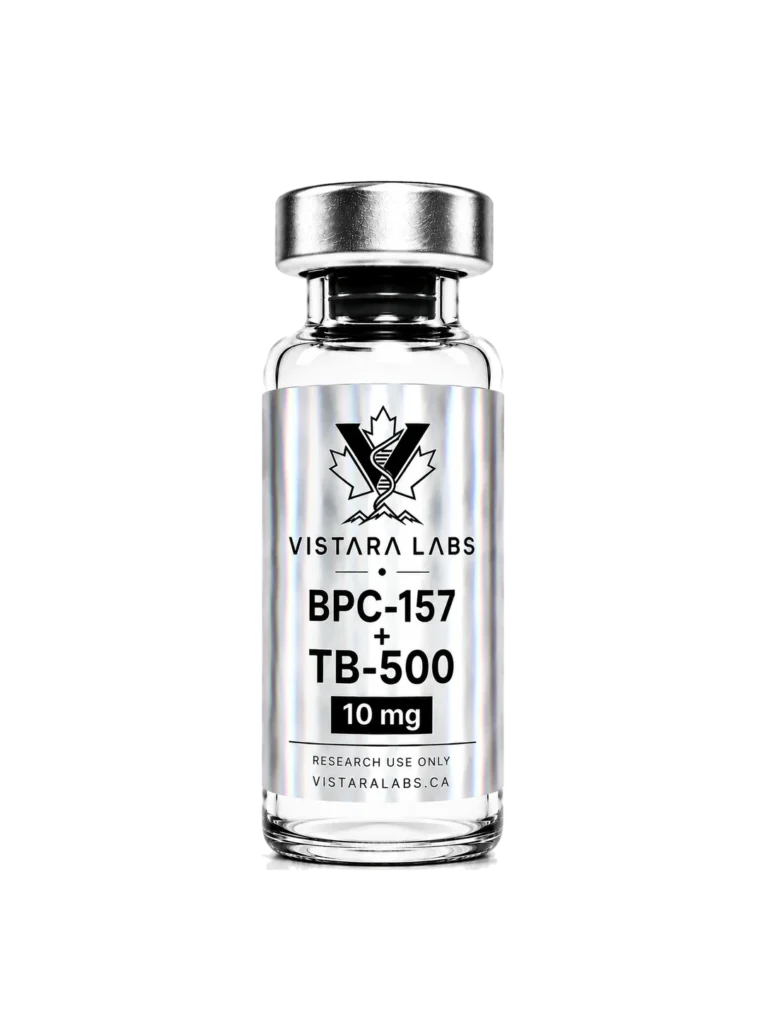
Vistara Labs stocks BPC-157, TB-500 and a BPC-157 + TB-500 blend as lyophilised research materials, shipped from within Canada to every province.
A 2026 review reaches the same reading
In 2026, a peer-reviewed survey of the BPC-157 literature — written by ten authors, including pain-medicine specialists (From Regeneration to Analgesia) — worked through the same knee series discussed above, alongside every other human data point that exists for this peptide. Its reading matches this article’s: relief lasting more than six months for 11 of 12 patients on BPC-157 alone, and significant improvement in 3 of the 4 patients whose injections combined BPC-157 with thymosin beta-4, the protein TB-500 is derived from.
The review also collects the wider human picture: a 12-patient bladder-pain pilot in which 10 reported total symptom relief after a single dose, and a small intravenous safety study that found no measurable effects on heart, kidney, liver or thyroid markers at doses up to 20 mg, with the compound clearing from plasma within 24 hours. Its conclusion is the field’s familiar one — consistent signals across small studies, with larger controlled trials still to come.
Frequently asked questions
What did the 2021 knee-pain study actually find?
In a 16-patient retrospective chart review, 87.5% of patients reported relief of knee pain after intra-articular injection of BPC-157, alone or with thymosin beta-4. The authors recommend larger imaging-backed follow-up studies.
Is TB-500 the same thing as thymosin beta-4?
TB-500 is the research name for the synthetic version of thymosin beta-4, the actin-binding protein found in nearly all cells. Research papers typically write Tβ4 or TB4; supplier catalogues write TB-500.
Source: Lee E, Padgett B. Intra-Articular Injection of BPC 157 for Multiple Types of Knee Pain. Altern Ther Health Med. 2021 Jul;27(4):8-13. PMID 34324435.