BPC-157 and TB-500 for Shoulder and Back Pain: What the Research Shows
In animal research, BPC-157 restored shoulder function after a rotator cuff tear and motor function after a lower-spine cord injury, and thymosin beta-4, the repair protein TB-500 is derived from, improved movement and protected nerve cells after spinal cord compression. The human studies so far cover knee pain rather than the shoulder or back, and a placebo-controlled human trial in muscle injury is now recruiting. Each study is summarised below, with links to the full write-ups.
Findings
- BPC-157, shoulder: in an animal rotator cuff model with two cuff tendons detached, treated animals regained function close to healthy animals, with tendon healing (FASEB Journal, 2014).
- BPC-157, lower spine: a single dose given 10 minutes after a lower-spine cord injury produced consistent motor improvement and resolved spasticity by day 15, with gains tracked for a full year (Journal of Orthopaedic Surgery and Research, 2019).
- BPC-157, nerve: after a cut sciatic nerve, treated animals showed faster nerve regeneration, stronger muscle signals and better walking recovery (Regulatory Peptides, 2010).
- Thymosin beta-4, spinal cord: every movement measure improved, more nerve cells survived, myelin protein was 57.8% higher and activated inflammatory cells 36.9% lower than in untreated animals (Neuropharmacology, 2014).
- Human data: in a 2021 knee-pain review, 14 of 16 patients reported relief, including 3 of 4 given BPC-157 together with thymosin beta-4.
Shoulder and back research at a glance
| Peptide | Model | Result |
|---|---|---|
| BPC-157 | Rotator cuff tear, animal (2014) | Function close to healthy, tendon healing |
| BPC-157 | Lower-spine cord injury, animal (2019) | Spasticity resolved by day 15, one-year follow-up |
| BPC-157 | Cut sciatic nerve, animal (2010) | Faster regeneration, better walking |
| Thymosin beta-4 | Spinal cord compression, animal (2014) | Movement improved, inflammation down 36.9% |
| BPC-157 (+ thymosin beta-4) | Knee pain, 16 patients (2021) | 14 of 16 reported relief |
What has BPC-157 research shown for the shoulder?
The shoulder result comes from a rotator cuff study by the Zagreb group that has published most of the BPC-157 literature. In an animal model, two of the four rotator cuff tendons, the supraspinatus and infraspinatus, were detached, and BPC-157 was given by injection. Treated animals recovered function close to that of healthy animals, and the tendons showed healing, leading the authors to conclude that BPC-157 could be used in the healing and functional recovery of rotator cuff tears. The work was published as a conference abstract in the FASEB Journal in 2014, so the full methods have not appeared in a longer paper.
It fits a wider tendon literature. In tendon cells, BPC-157 raised the expression of the growth hormone receptor (Molecules, 2014), and a review of 36 studies found that, in early-stage research, it improved functional, structural and biomechanical outcomes in muscle, tendon, ligament and bone injury models (HSS Journal). The broader picture is in peptides for injury recovery.
What has BPC-157 research shown for the back and spine?
The closest back research is a 2019 spinal cord study in the Journal of Orthopaedic Surgery and Research. The cord was compressed at the lower-spine level (L2 to L3), and a single dose of BPC-157 was injected 10 minutes later. Every treated animal showed consistent clinical improvement, increasingly better motor function, no self-injury behaviour and resolved spasticity by day 15, and the animals were followed for 360 days. Under the microscope, BPC-157 largely counteracted the loss of axons and motor neurons, swelling, and cyst formation, and the authors concluded that it can act on every stage of the secondary injury that follows the initial trauma.
A 2010 nerve study in Regulatory Peptides adds the nerve side of back pain research. After the sciatic nerve, the large nerve that runs from the lower back down the leg, was cut, BPC-157 given by injection, by mouth or at the repair site produced faster axonal regeneration, thicker myelin, stronger electrical muscle signals and better walking recovery. Both studies model nerve and cord injury; disc and back-muscle injuries have not yet been studied.
What has TB-500 (thymosin beta-4) research shown for the spine?
TB-500 is a fragment of thymosin beta-4, a repair protein found throughout the body. In a 2014 study in Neuropharmacology, thymosin beta-4 was injected after a mild spinal cord compression. All movement assessments were markedly improved, more nerve cells and myelin-making cells survived, myelin basic protein was 57.8% higher and activated inflammatory cells were 36.9% lower than in saline-treated animals. Inflammatory signalling fell, the anti-inflammatory signal IL-10 rose, and the damaged cavity in the cord was markedly smaller, and the authors described thymosin beta-4 as a good candidate for spinal cord injury.
Cell studies from 2019 and 2022 found that it protected stem cells taken from the spinal cord against oxidative damage. A 2026 scoping review of thymosin beta-4 and TB-500 in musculoskeletal repair notes that tendon and spine studies are still few, with spine and disc work so far in cell culture. The rest of the thymosin beta-4 research, including its human trials, is in TB-500 and thymosin beta-4: the repair research.
What about human studies?
The human pain data for these peptides comes from the knee. In a 2021 chart review at a primary-care clinic, 16 patients who had received BPC-157 injected into the knee were followed up: 11 of 12 given BPC-157 alone and 3 of 4 given BPC-157 with thymosin beta-4 reported relief, 14 of 16 overall. The full breakdown is in BPC-157 and TB-500 for knee pain.
A 2026 review in the International Journal of Molecular Sciences, written with pain-medicine physicians, describes BPC-157 as supporting healing of muscle, tendon, ligament and bone in preclinical models and as having beneficial effects on pain modulation through peripheral and dopaminergic mechanisms. It calls BPC-157 a promising candidate for regenerative medicine and calls for controlled trials. The first of those is under way: a randomised, placebo-controlled, quadruple-blind phase 2 trial of BPC-157 in acute hamstring strain, enrolling an estimated 120 participants, has been recruiting since February 2026.
BPC-157 alone or with TB-500?
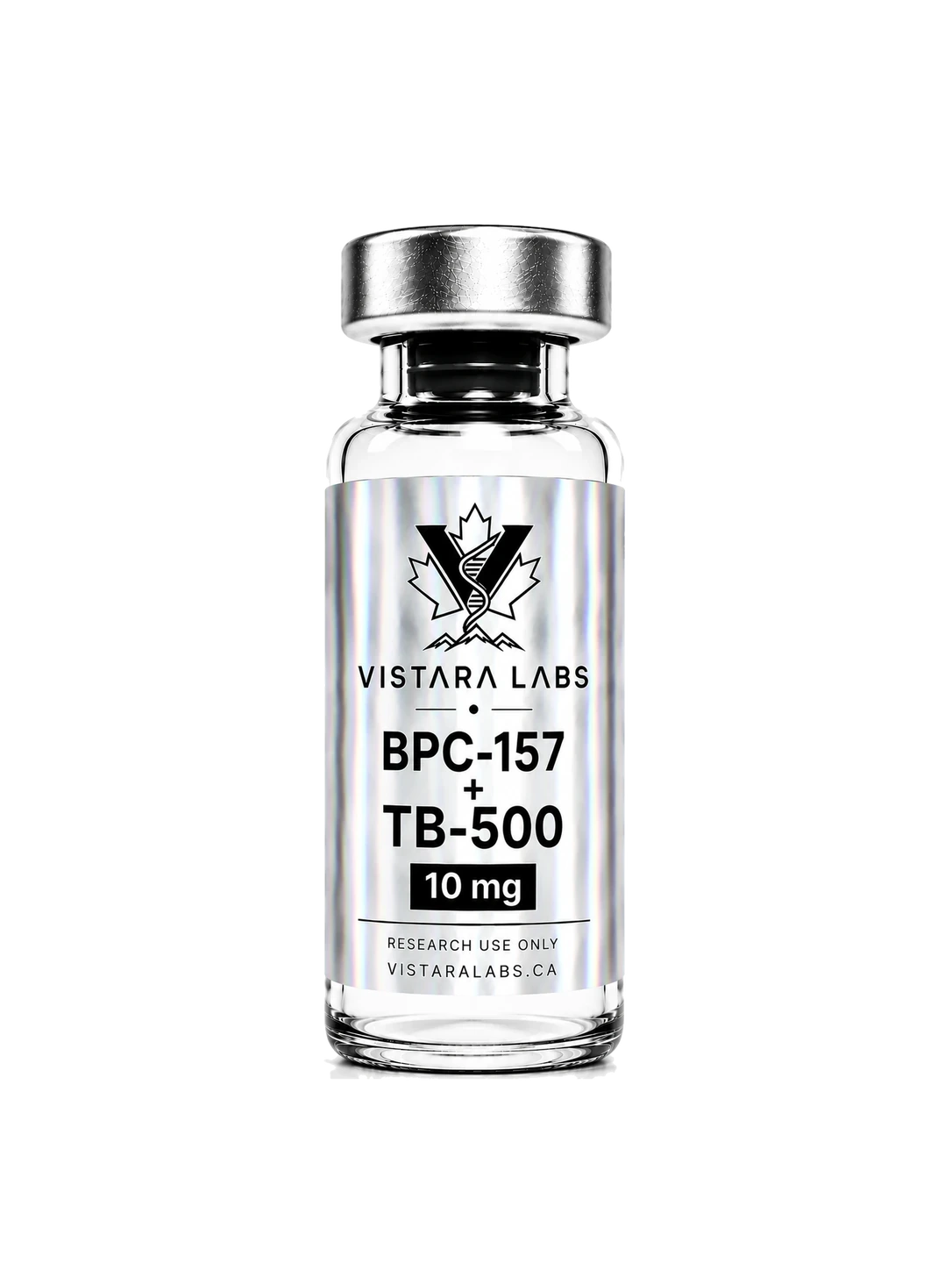
The two are often studied and bought together, because their animal research overlaps on tendon, ligament and nerve repair. The only data on the combination is the knee review above. Researchers can choose separate vials or the pre-blended BPC-157 + TB-500 blend; the trade-offs are set out in blend or separate vials and the Wolverine Stack.
Formats
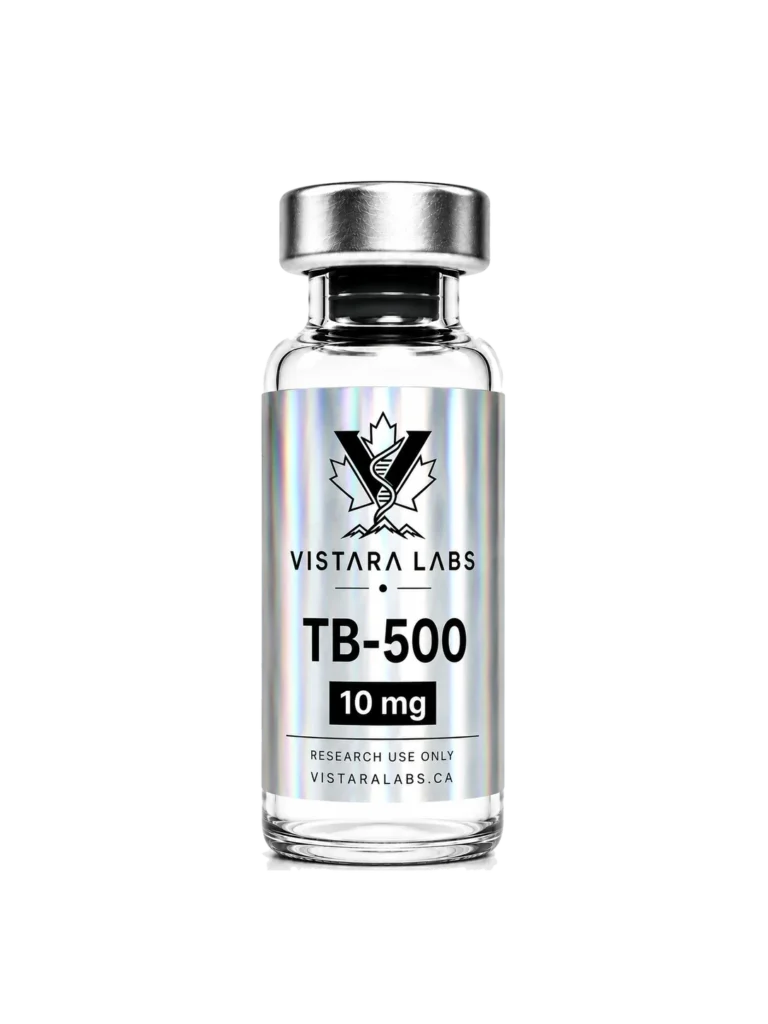
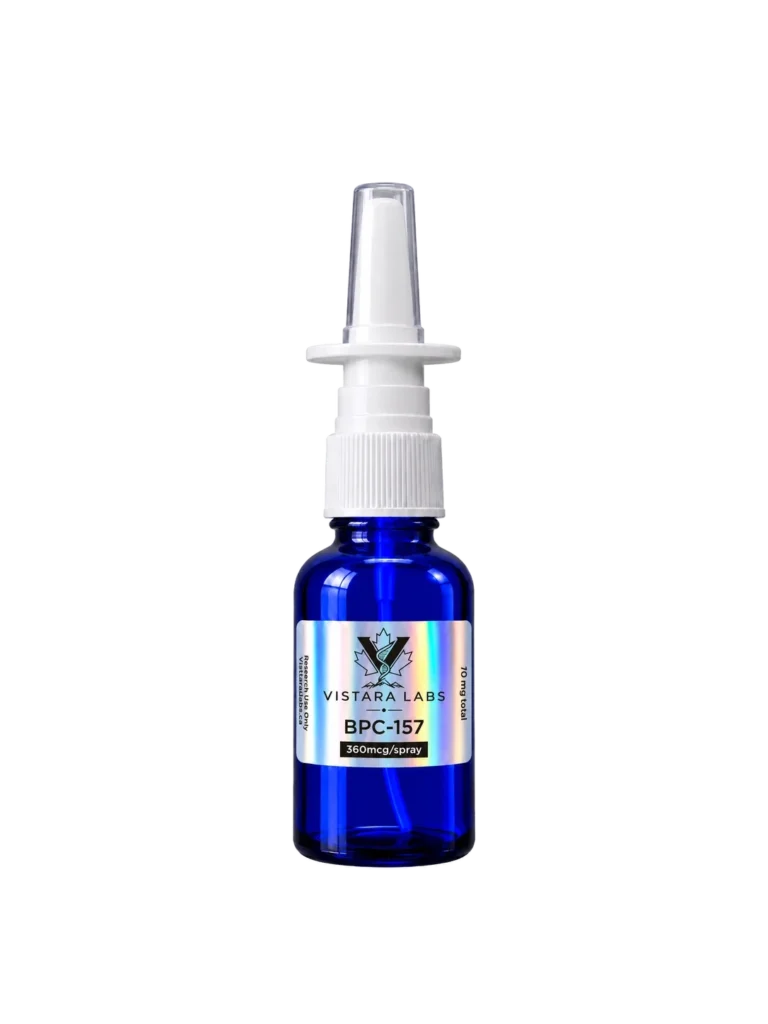
Vistara Labs supplies BPC-157, TB-500 and the BPC-157 + TB-500 blend as lyophilised vials, as ready-mixed BPC-157, TB-500 and BPC-157 + TB-500 nasal sprays, and in the Repair & Recovery stacks. Every order ships from within Canada, and purity results are on our lab reports page.
Frequently asked questions
What has BPC-157 research shown for shoulder injuries?
In an animal rotator cuff model with the supraspinatus and infraspinatus tendons detached, animals given BPC-157 recovered function close to healthy animals, with tendon healing (2014). In tendon cells it raised growth hormone receptor expression (2014).
What has BPC-157 research shown for back and spine injuries?
After a lower-spine cord injury, a single dose produced consistent motor improvement and resolved spasticity by day 15, with gains tracked for a year (2019). After a cut sciatic nerve, it produced faster nerve regeneration and better walking recovery (2010).
What has TB-500 research shown for the spine?
Thymosin beta-4, which TB-500 is derived from, improved every movement measure after spinal cord compression, raised nerve-cell survival and lowered activated inflammatory cells by 36.9% (2014).
Have BPC-157 and TB-500 been studied together?
Yes, in knee pain: in a 2021 chart review, 3 of 4 patients given BPC-157 with thymosin beta-4 reported relief, and 14 of 16 across the whole review.
Where can I buy BPC-157 and TB-500 in Canada?
Vistara Labs supplies BPC-157, TB-500 and the BPC-157 + TB-500 blend as vials and ready-mixed nasal sprays, shipped from within Canada by Canada Post Xpresspost.
More on this: Peptides for Injury Recovery: What the Research Shows.
All products supplied by Vistara Labs are intended for laboratory research use only. They are not drugs, are not approved for human or veterinary use, and are not intended to diagnose, treat, cure or prevent any condition. Nothing on this page constitutes medical advice or guidance for use in humans.