

Combien d'eau bactériostatique pour un flacon de BPC-157 de 10 mg?
A 10 mg vial of BPC-157 reconstituted with 2 mL of bacteriostatic water gives a concentration of 5 mg/mL; with 1 mL it gives 10 mg/mL. The same figures apply to a 10 mg TB-500 vial and to the 10 mg BPC-157 + TB-500 blend, because the calculation depends only on the quantity of peptide in the vial and the volume of water added. For the 20 mg blend vial, 2 mL gives 10 mg/mL and 4 mL gives 5 mg/mL.
There is no single correct volume. Adding more water does not change how much peptide is in the vial. It spreads the same quantity through a larger volume, which changes how many syringe units correspond to a given mass. The tables on this page use 2 mL for a 10 mg vial because it produces round numbers on a U-100 syringe; 1 mL, 3 mL or 5 mL work identically as long as the resulting concentration is written on the vial.
Concentration by water volume
Concentration is peptide mass divided by water volume. A 10 mg vial holds 10 mg whether it receives 1 mL or 5 mL; only the mg/mL figure moves. The right-hand column converts each concentration into the number of U-100 units that contain 1 mg.
| Vial | Bacteriostatic water added | Concentration | Units containing 1 mg |
|---|---|---|---|
| 10 mg (BPC-157, TB-500 or 10 mg blend) | 1 mL | 10 mg/mL | 10 units |
| 10 mg | 2 mL | 5 mg/mL | 20 units |
| 10 mg | 3 mL | 3.33 mg/mL | 30 units |
| 10 mg | 5 mL | 2 mg/mL | 50 units |
| 20 mg (BPC-157 + TB-500 blend) | 1 mL | 20 mg/mL | 5 units |
| 20 mg | 2 mL | 10 mg/mL | 10 units |
| 20 mg | 3 mL | 6.67 mg/mL | 15 units |
| 20 mg | 4 mL | 5 mg/mL | 20 units |
If you are working from a 5 mg vial, halve the concentration in every row: 5 mg in 1 mL is 5 mg/mL, 5 mg in 2 mL is 2.5 mg/mL, and 1 mg then occupies 20 and 40 units respectively. Before choosing a larger volume, check that the peptide vial has headspace for it; a 10 mL vial of bacteriostatic water holds enough to reconstitute five 10 mg vials at 2 mL each.
Reading the concentration on a U-100 syringe
A U-100 insulin syringe is graduated in units, and 100 units equal 1 mL. Units are therefore millilitres multiplied by 100: 0.1 mL is 10 units and 0.25 mL is 25 units. A 0.5 mL syringe carries 50 units and a 0.3 mL syringe carries 30 units on the same scale, with finer markings that make small volumes easier to read.
To find the volume that contains a given mass, divide the mass by the concentration. At 5 mg/mL (a 10 mg vial with 2 mL of water), the volume that contains 1 mg is 1 divided by 5, which is 0.2 mL, or 20 units. The table below runs the same calculation for four arbitrary amounts. They illustrate the arithmetic and nothing else.
| Mass (illustrative) | Volume at 5 mg/mL | U-100 units |
|---|---|---|
| 0.25 mg | 0.05 mL | 5 units |
| 0.5 mg | 0.1 mL | 10 units |
| 1 mg | 0.2 mL | 20 units |
| 2 mg | 0.4 mL | 40 units |
At 10 mg/mL, which is what the 20 mg blend gives with 2 mL of water, every volume in the table halves: a 1 mg draw measures 10 units and a 0.5 mg draw measures 5 units. Volumes below about 0.1 mL are hard to read accurately on a 1 mL syringe. Either move to a 0.3 mL or 0.5 mL syringe, or reconstitute with more water so that the same mass occupies a larger, more legible volume.
BPC-157, TB-500 and the BPC-157 + TB-500 blend are supplied by Vistara Labs as lyophilised materials for research use. The quantities on this page illustrate the arithmetic of dilution and measurement only.
TB-500 and the BPC-157 + TB-500 blend
TB-500 is supplied in 10 mg vials, so every figure above for BPC-157 applies to it unchanged. The BPC-157 + TB-500 blend is supplied in 10 mg and 20 mg vials. The mass on the label is the total lyophilised peptide in the vial, and the calculation treats it as one quantity: a 20 mg blend vial with 2 mL of water is 10 mg/mL of combined peptide. The composition of the blend is described on its product page. Certificates of analysis are published on the Résultats de laboratoire page.
The same arithmetic covers our other 10 mg vials, including CJC-1295 + Ipamorelin (sans DAC): the 10 mg rows in the first table apply as written.
BPC-157 is a 15-amino-acid sequence taken from a larger protein found in gastric juice, which is where the name, body protection compound, comes from. Most of its literature comes from one research group in Zagreb and is laboratory and animal work, with a small amount of human data such as a knee-pain chart review. One property sets it apart from most peptides: it is unusually stable in gastric juice, which is why it appears in oral as well as injectable research models. The research is summarised in BPC-157: what the research shows and the knee study in the BPC-157 knee-pain study.
Reconstitution technique
Let the vial reach room temperature, swab both stoppers, and run the measured water slowly down the inside wall of the vial rather than onto the powder. Swirl or tilt gently until the cake dissolves, never shake, and give any remaining powder a few minutes to settle into solution. Label the vial with the date and the concentration, then keep it refrigerated at 2 to 8 °C and protected from light. The full method, with the reason behind each step, is in l'achat d'eau bactériostatique au Canada.
Why the solution should look clear
Properly reconstituted BPC-157 and TB-500 form a clear, colourless solution. Cloudiness, visible strands or a gel that will not disperse often point to water being added too fast or the vial being shaken, both of which can cause the peptide to aggregate. Turbidity that appears after a period of storage can mean the solution has been kept too warm or exposed to light. The causes are covered in more detail in why peptides gel or go cloudy.
Bacteriostatic water, not sterile water
Bacteriostatic water is sterile water with 0.9% benzyl alcohol, a preservative that allows a refrigerated vial to be accessed more than once; plain sterile water is intended for single access. The difference is explained in bacteriostatic water explained.
Questions fréquentes
How much bacteriostatic water do I add to a 10 mg vial of BPC-157?
There is no single correct volume. With 2 mL of bacteriostatic water a 10 mg vial of BPC-157 gives 5 mg/mL; with 1 mL it gives 10 mg/mL. Adding more water does not change the quantity in the vial, it spreads it through a larger volume, so write the concentration you chose on the vial.
How many units on a U-100 syringe contain 1 mg at 5 mg/mL?
At 5 mg/mL (a 10 mg vial with 2 mL of water), the volume that contains 1 mg is 1 divided by 5, which is 0.2 mL, or 20 units. Units are millilitres multiplied by 100, so 0.1 mL is 10 units. The amounts on this page illustrate the arithmetic only.
What should reconstituted BPC-157 look like?
Properly reconstituted BPC-157 and TB-500 form a clear, colourless solution. Cloudiness, visible strands or a gel that will not disperse often point to water being added too fast or the vial being shaken, both of which can cause the peptide to aggregate. Turbidity that appears after a period of storage can mean the solution has been kept too warm or exposed to light. More on the causes in why peptides gel or go cloudy.
Can I use sterile water instead of bacteriostatic water?
Only for a vial that will be accessed once. Bacteriostatic water is sterile water with 0.9% benzyl alcohol, a preservative that allows a refrigerated vial to be accessed more than once; plain sterile water is intended for single access. Details in bacteriostatic water explained.
How should a reconstituted BPC-157 vial be stored?
Refrigerated at 2 to 8 °C, protected from light and labelled with the date and the concentration. Unopened lyophilised vials are kept cold and dark until they are needed. The full storage guide is how to store research peptides.
Work it out for a different vial or concentration
Our calculateur de peptides opens pre-set for a 10 mg vial with 2 mL of water and marks the 0.5 mg draw of 10 units on a syringe diagram. Change the vial size, water volume, mass or syringe and it recalculates. The 20 mg blend preset shows 1 mg at 10 units on the same 2 mL of water.
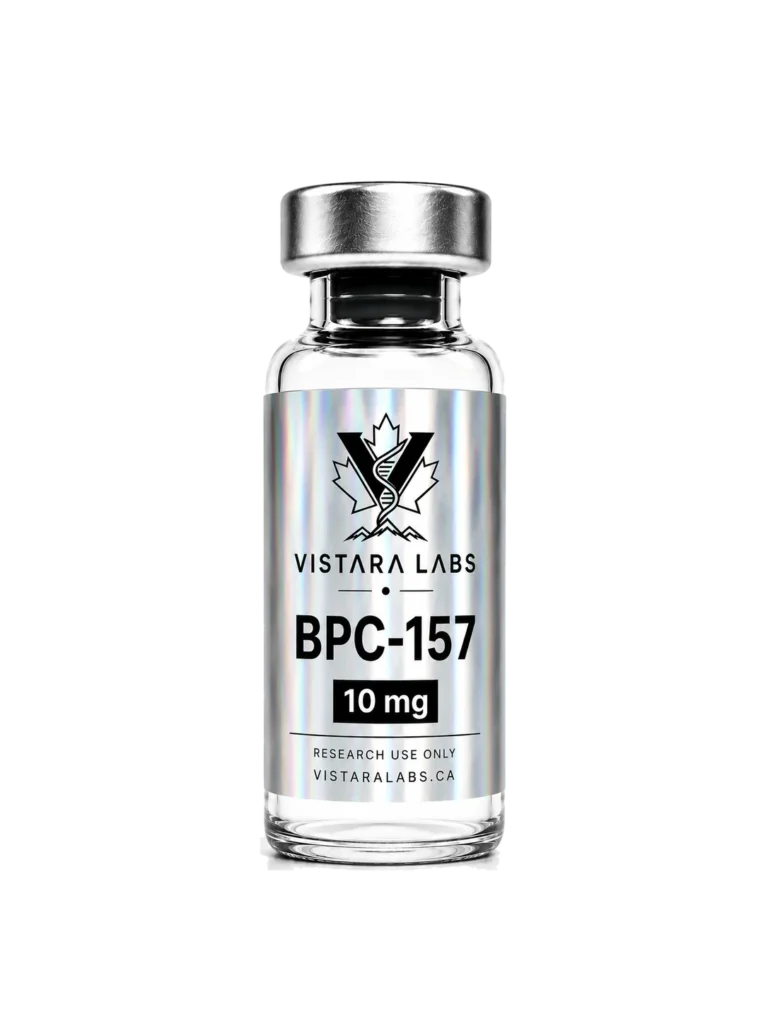
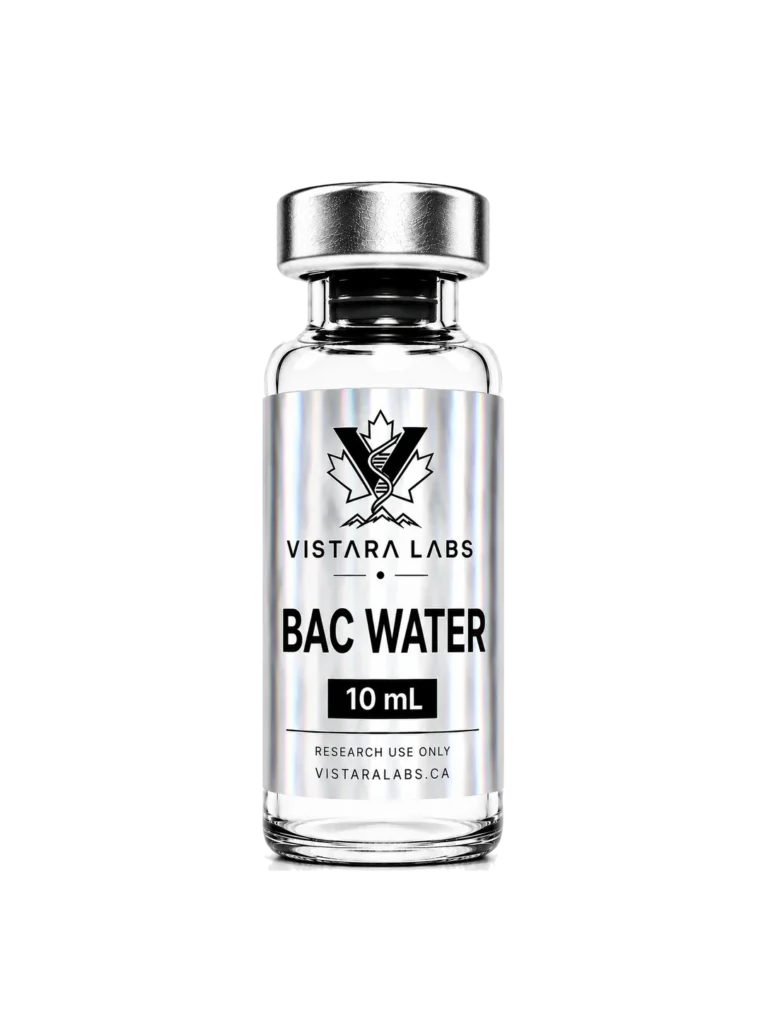
Products: BPC-157 10 mg, TB-500 10 mg, Mélange BPC-157 + TB-500 et bacteriostatic water 10 mL.