What Is Glutathione? The Cell’s Master Antioxidant
Cellular Energy & Mitochondrial Research
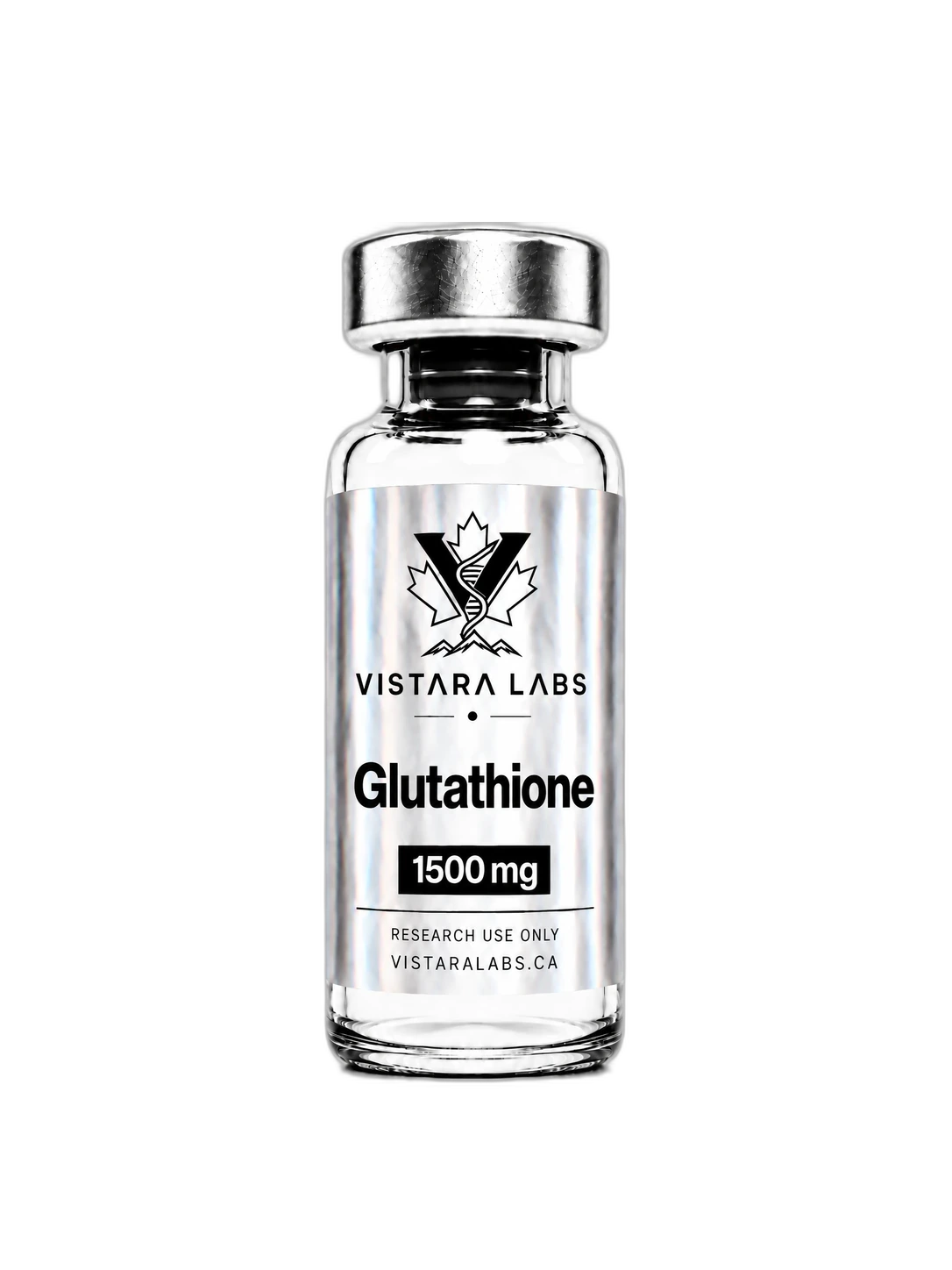
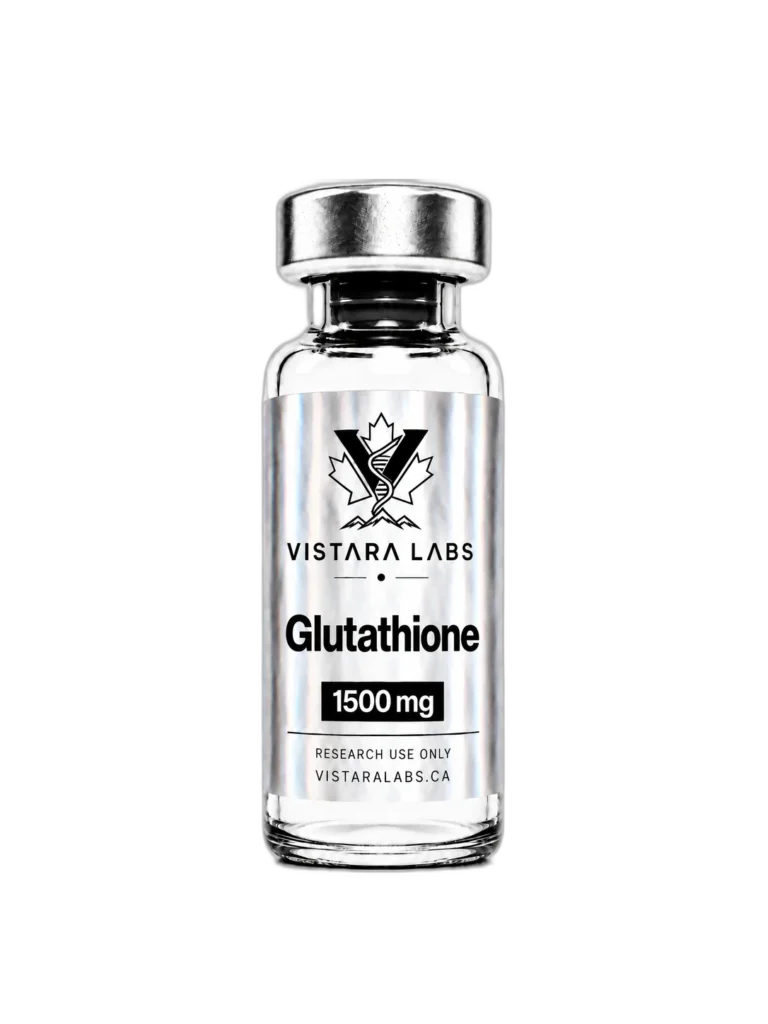
Glutathione is a tripeptide, a three-amino-acid molecule made from glutamate, cysteine and glycine, that every human cell produces as its main defence against oxidative damage and as a tool for neutralising toxins. It is the most abundant low-molecular-weight thiol (sulphur-containing compound) in cells, and human trials have shown that supplementation can raise the body’s glutathione stores by 30-35% in blood. Vistara Labs supplies it as Glutathione lyophilised vials in 600 mg and 1500 mg sizes.
Findings
- Glutathione is the most abundant low-molecular-weight thiol in cells, central to limiting oxidative damage and detoxifying reactive compounds (Forman et al., 2009).
- In a 6-month randomised trial of 54 adults, glutathione raised stores in red cells, plasma and lymphocytes by 30-35% and more than doubled natural killer cell activity (2015).
- In 60 adults, 4 weeks of glutathione lowered the skin’s melanin index at all six sites measured, significantly more than placebo at two (2012).
- Older adults made less glutathione than younger ones, and two weeks of its building blocks raised red-cell glutathione by 94.6% (2011).
- In 9 patients with early Parkinson’s disease, intravenous glutathione reduced disability by 42% in an open-label study (1996).
 View product →
What is glutathione?
Glutathione is a tripeptide: glutamic acid, cysteine and glycine joined in a chain. Two features make it unusual. First, the glutamate is attached through its side chain (the gamma carbon) rather than the usual backbone link, so ordinary protein-digesting enzymes cannot break it down; only one enzyme, gamma-glutamyl transpeptidase, can start its breakdown under normal conditions (Ballatori et al., Biol Chem, 2009). Second, the cysteine carries a thiol group, a sulphur-hydrogen pair that readily gives up electrons, and that group does almost all of glutathione’s protective work.
Where it came from
Glutathione was isolated and named in 1921 by the Cambridge biochemist Frederick Gowland Hopkins, who described it as an “autoxidisable constituent of the cell” in yeast and animal tissues (Hopkins, Biochem J, 1921). Unlike most research compounds on our site, it was not designed in a laboratory: it is a natural molecule that cells make for themselves, and the version researchers work with is the same molecule.
How the body makes it
Cells build glutathione in the cytosol, the fluid inside the cell, in two steps. Glutamate-cysteine ligase joins glutamate to cysteine, and glutathione synthetase adds glycine. The first enzyme sets the pace, so it is described as the rate-limiting step (Ballatori et al., 2009). Neurons hold about 2.5 mM glutathione and astrocytes, their support cells, about 3.8 mM, and bile carries 8-10 mM (Ballatori et al., 2009).
How glutathione works
Glutathione exists in two forms: reduced glutathione (GSH), the active form with a free thiol, and oxidised glutathione (GSSG), two molecules joined after they have done their work. The ratio between them is one of the most widely used indicators of a cell’s oxidative state (Ballatori et al., 2009).
Neutralising oxidants
Normal metabolism produces reactive oxygen species such as hydrogen peroxide. Glutathione peroxidases use GSH to convert these into water, turning GSH into GSSG in the process, and a second enzyme, glutathione reductase, recycles it back (Ballatori et al., 2009; Forman et al., Mol Aspects Med, 2009).
Detoxifying reactive compounds
Glutathione S-transferases attach glutathione to reactive chemicals, including drug breakdown products and environmental toxins, making them water-soluble so they can be exported from the cell and cleared (Ballatori et al., 2009).
Supporting immune cells
Immune cells depend on their own glutathione supply. In the human trial described below, higher glutathione stores went with more than double the activity of natural killer cells, the immune cells that destroy infected and abnormal cells (Richie et al., 2015).
What the research has shown
Raising the body’s glutathione stores
At Penn State, 54 non-smoking adults took glutathione or placebo by mouth for six months in a randomised, double-blind trial. Glutathione stores rose in a dose- and time-dependent way, by 30-35% in red cells, plasma and lymphocytes at the higher dose and by 260% in cheek cells. The ratio of oxidised to reduced glutathione in blood fell, a sign of a less oxidised state, and natural killer cell activity, a measure of immune function, was more than twice that of placebo at three months (Richie et al., Eur J Nutr, 2015).
Skin tone and skin ageing
In a randomised, double-blind, placebo-controlled study of 60 medical students in Bangkok, four weeks of oral glutathione lowered the melanin index at all six skin sites measured, significantly more than placebo on the right face and sun-exposed left forearm, and was well tolerated (Arjinpathana and Asawanonda, J Dermatolog Treat, 2012). A later 12-week study compared reduced and oxidised glutathione: both tended to lower melanin and UV spots, reduced glutathione significantly reduced wrinkles at some sites, and both showed a trend toward better skin elasticity (Weschawalit et al., Clin Cosmet Investig Dermatol, 2017).
Ageing and glutathione synthesis
At Baylor College of Medicine, researchers compared 8 older and 8 younger adults and found that older adults synthesised less glutathione, which tracked with higher oxidative stress. Two weeks of its building blocks, cysteine and glycine, raised red-cell glutathione concentration by 94.6% and its synthesis rate by 78.8%, and brought oxidative stress markers down toward the levels of the younger group (Sekhar et al., Am J Clin Nutr, 2011).
Liver and brain research
In an open-label pilot of 29 patients with non-alcoholic fatty liver disease, four months of oral glutathione significantly lowered the liver enzyme ALT, along with triglycerides and ferritin (Honda et al., BMC Gastroenterol, 2017). In an earlier open-label study, 9 patients with early, untreated Parkinson’s disease received intravenous glutathione for 30 days; all improved significantly, disability fell by 42%, and the effect lasted 2-4 months after the course ended (Sechi et al., Prog Neuropsychopharmacol Biol Psychiatry, 1996).
More trials are reviewed on Glutathione: The Research Behind the Antioxidant, and tolerability is covered in Glutathione Side Effects.
Glutathione at a glance
| Question | Answer |
|---|---|
| Type | Natural tripeptide (gamma-Glu-Cys-Gly) |
| First isolated | 1921, Hopkins |
| Made by | Every human cell, in two enzyme steps |
| Main roles | Antioxidant defence, detoxification |
| Strongest human data | Stores up 30-35% in a 6-month trial (2015) |
How glutathione compares with related compounds
Glutathione is the cell’s main antioxidant, while NAD+ powers its energy chemistry and repair enzymes (NAD+ vs Glutathione; What Is NAD+?). “L-glutathione” is simply the natural form’s full name (Glutathione vs L-Glutathione: Is There a Difference?). For a mitochondrial compound that works on oxidative stress from another angle, see What Is SS-31?.
Forms we stock
Glutathione comes as lyophilised vials (freeze-dried powder for laboratory reconstitution) in 600 mg and 1500 mg sizes. Concentration arithmetic for both is in How Much Bacteriostatic Water for a Glutathione 600 mg or 1500 mg Vial?, and storage in How Long Does Glutathione Last?. Certificates of analysis are on the lab reports page, and orders ship from within Canada by Canada Post Xpresspost (see Buy Glutathione in Canada).
Glutathione is supplied by Vistara Labs for laboratory research use only. The human studies above are described as published research findings.
Frequently asked questions
What is glutathione?
Glutathione is a tripeptide made from glutamate, cysteine and glycine. Every human cell makes it, and it is the most abundant low-molecular-weight thiol in cells, used to neutralise oxidants and detoxify reactive compounds.
Is glutathione a peptide?
Yes, a very small one: three amino acids. Its glutamate is joined through the side chain rather than the usual backbone link, which protects it from ordinary protein-digesting enzymes.
What has glutathione research shown?
A 6-month trial of 54 adults found it raised glutathione stores in blood by 30-35% and more than doubled natural killer cell activity. Other human studies found lower skin melanin in 4 weeks, lower liver enzymes in fatty liver disease and reduced disability in early Parkinson’s disease.
What is the difference between GSH and GSSG?
GSH is reduced glutathione, the active form with a free thiol group. GSSG is oxidised glutathione, two molecules joined after neutralising an oxidant. Cells recycle GSSG back to GSH, and the ratio between them is a standard measure of oxidative stress.
Does glutathione decline with age?
A 2011 study found that older adults synthesised less glutathione than younger adults, which went with higher oxidative stress. Two weeks of its building blocks, cysteine and glycine, raised red-cell glutathione by 94.6%.
Product details from vistaralabs.ca, October 2026. Sources: Hopkins FG. On an autoxidisable constituent of the cell. Biochem J. 1921. PMC1258982. Sechi G et al. Reduced intravenous glutathione in the treatment of early Parkinson’s disease. Prog Neuropsychopharmacol Biol Psychiatry. 1996. PMID 8938817. Ballatori N et al. Glutathione dysregulation and the etiology and progression of human diseases. Biol Chem. 2009. PMC2756154. Forman HJ et al. Glutathione: overview of its protective roles, measurement, and biosynthesis. Mol Aspects Med. 2009. PMID 18796312. Sekhar RV et al. Deficient synthesis of glutathione underlies oxidative stress in aging and can be corrected by dietary cysteine and glycine supplementation. Am J Clin Nutr. 2011. PMID 21795440. Arjinpathana N, Asawanonda P. Glutathione as an oral whitening agent: a randomized, double-blind, placebo-controlled study. J Dermatolog Treat. 2012. PMID 20524875. Richie JP Jr et al. Randomized controlled trial of oral glutathione supplementation on body stores of glutathione. Eur J Nutr. 2015. PMID 24791752. Honda Y et al. Efficacy of glutathione for the treatment of nonalcoholic fatty liver disease: an open-label, single-arm, multicenter, pilot study. BMC Gastroenterol. 2017. PMID 28789631. Weschawalit S et al. Glutathione and its antiaging and antimelanogenic effects. Clin Cosmet Investig Dermatol. 2017. PMID 28490897.
More on this: Cellular Energy & Mitochondrial Research.
All products supplied by Vistara Labs are intended for laboratory research use only. They are not drugs, are not approved for human or veterinary use, and are not intended to diagnose, treat, cure or prevent any condition. Nothing on this page constitutes medical advice or guidance for use in humans.
References
Glutathione has several human trials. Skin findings are endpoint-specific and a systematic review judged the overall evidence inconclusive; an intravenous Parkinson's pilot found no significant benefit.
- Glutathione as an oral whitening agent: a randomized, double-blind, placebo-controlled studyRandomised, double-blind, placebo-controlled trial; 60 healthy participants, oral glutathione, 4 weeks. Significant between-group differences at only two of the measured sites.
- The clinical effect of glutathione on skin color and other related skin conditions: A systematic reviewSystematic review of four clinical skin studies including three placebo-controlled randomised trials; authors concluded the evidence remains inconclusive.
- Randomized, double-blind, pilot evaluation of intravenous glutathione in Parkinson's diseaseRandomised, double-blind pilot; 21 patients, intravenous glutathione in Parkinson's disease. No statistically significant improvement in UPDRS outcomes versus placebo.
Links open the study record on PubMed so the source can be checked directly. Listing a study is not a claim that its findings apply to any other use, product or route of administration. Research use only.