What Is TB-500? The Thymosin Beta-4 Fragment Explained
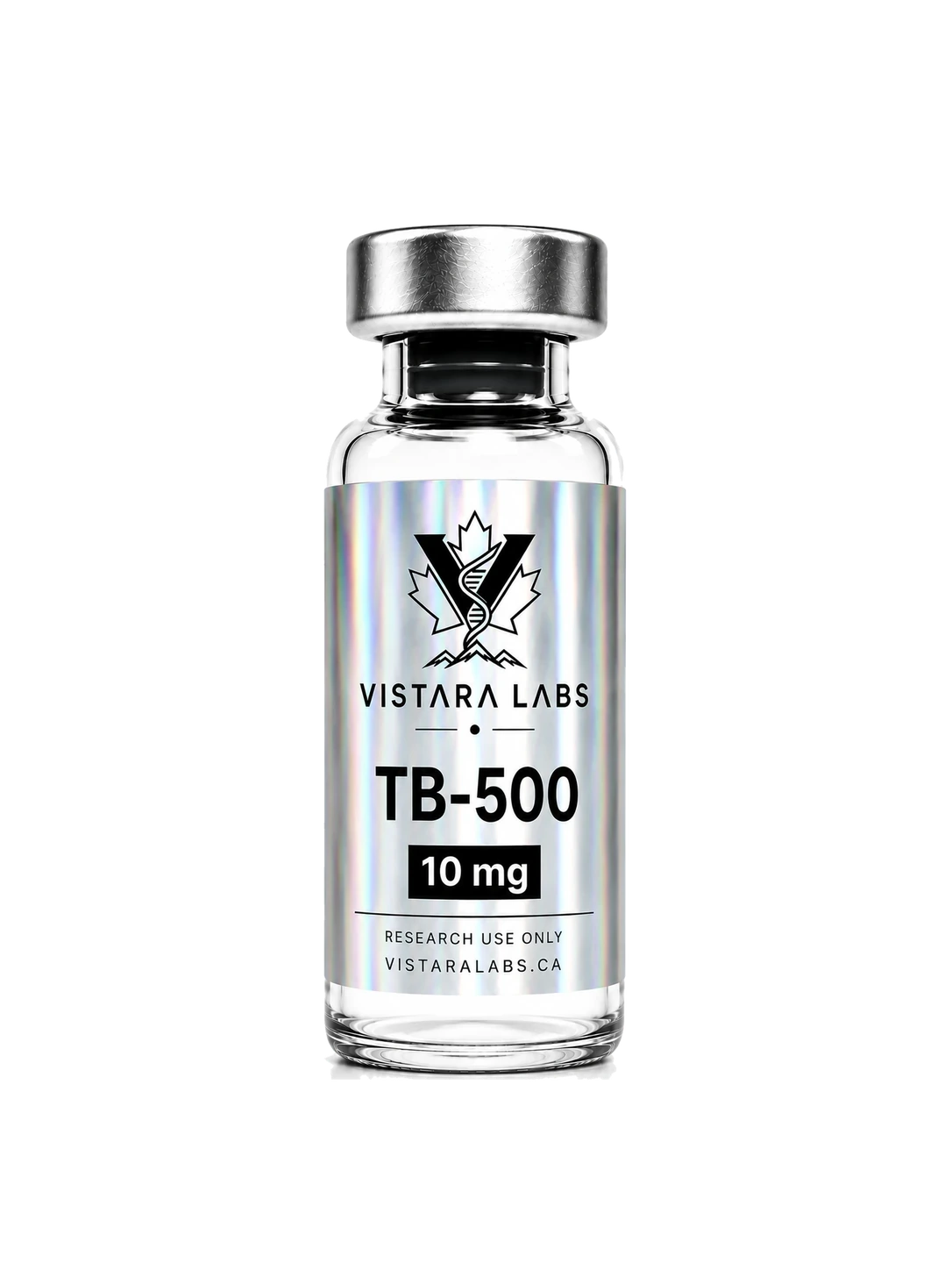
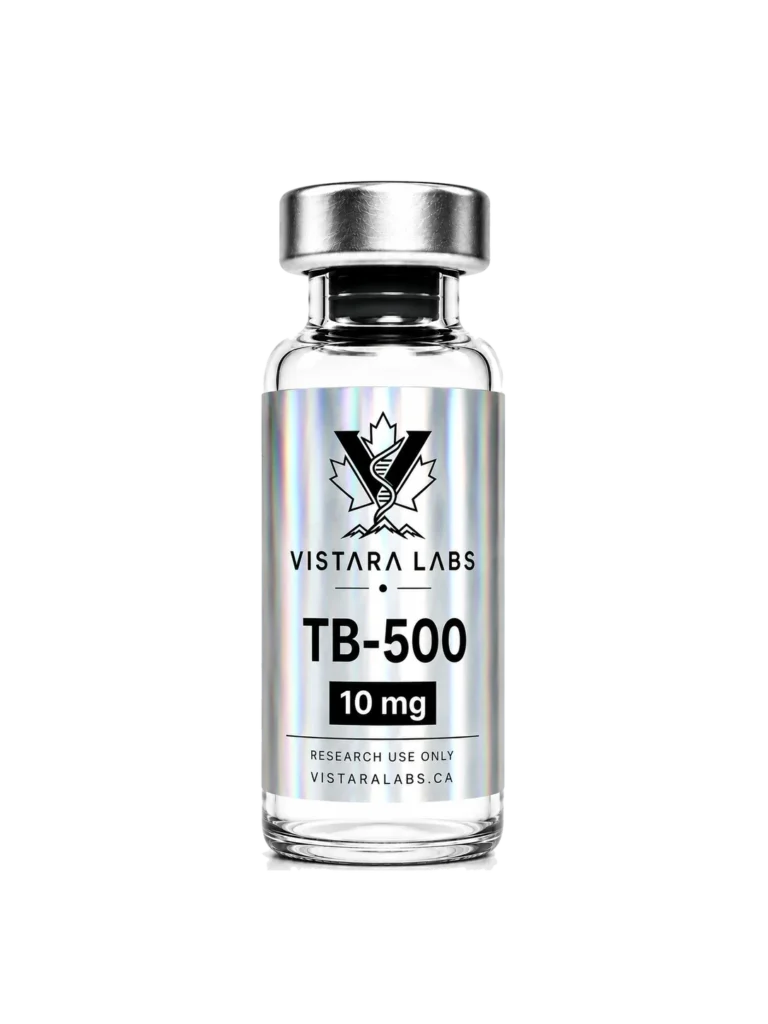
TB-500 is a synthetic peptide built from the actin-binding region of thymosin beta-4, a 43-amino-acid protein found in almost every cell in the body. Its key ingredient is the seven-residue sequence LKKTETQ, positions 17 to 23 of thymosin beta-4, with an acetyl group added to the front (Ho, Journal of Chromatography A, 2012). That short stretch is the part of the parent protein that research links to cell migration, blood-vessel growth and wound healing. Vistara Labs supplies TB-500 as a 10 mg lyophilised vial and as a ready-mixed TB-500 Nasal Spray. This guide covers what TB-500 is, how it relates to thymosin beta-4, and what the research recorded.
Findings
- Thymosin beta-4 is a 43-amino-acid protein with a molecular weight of 4,982, first sequenced from animal thymus in 1981 (Low, PNAS, 1981).
- Its central actin-binding domain, LKKTETQ (residues 17 to 23), promotes angiogenesis, wound healing and cell migration; TB-500 is the acetylated form of that sequence (Sosne, FASEB Journal, 2010).
- In an animal wound model, thymosin beta-4 increased wound re-epithelialisation by 42% at day 4 and up to 61% at day 7 compared with saline (Malinda, J Invest Dermatol, 1999).
- In a phase 2 human trial in severe dry eye, thymosin beta-4 eye drops cut ocular discomfort by 35.1% and corneal staining by 59.1% versus vehicle (Sosne, Cornea, 2015).
 View product →
Thymosin beta-4 and TB-500: protein and fragment
Thymosin beta-4 was isolated from animal thymus tissue and sequenced in 1981. It is 43 amino acids long, with an acetyl group blocking its starting end (Low, PNAS, 1981). It turned out to be far more than a thymus hormone: it is the main actin-sequestering molecule in eukaryotic cells and is found in essentially all cells and body fluids (Sosne, FASEB Journal, 2010).
Researchers later mapped which short stretches of the protein carry which activities. The 2010 review by Sosne and colleagues describes three:
- Ac-SDKP (residues 1 to 4). Generally blocks inflammation and reduces fibrosis.
- The first 15 residues. Promote cell survival and block apoptosis.
- LKKTETQ (residues 17 to 23). The central actin-binding domain, which promotes angiogenesis, wound healing and cell migration.
TB-500 takes that third site. It first appeared as a veterinary preparation, and its key ingredient is LKKTETQ with an acetylated N-terminus, often written Ac-LKKTETQ. Veterinary doping-control researchers developed a test that detects it at 0.02 ng/mL in animal plasma (Ho, J Chromatogr A, 2012). Our page on TB-500 vs thymosin beta-4 compares the two in more depth.
| Thymosin beta-4 | TB-500 | |
|---|---|---|
| Length | 43 amino acids | 7 amino acids |
| Sequence | Full protein | Ac-LKKTETQ (residues 17 to 23) |
| Source | Naturally occurring, also made synthetically | Synthetic |
| Main research focus | Wound, cardiac and eye repair | Actin binding, cell migration, wound healing |
Why actin binding matters
Actin is the protein that forms the internal scaffolding of cells. When a cell moves, for example a skin cell crawling across a wound, it builds and dismantles actin filaments at its leading edge. Thymosin beta-4 binds the single (G-actin) units and holds them in reserve, which is why it is described as G-actin sequestering (Bock-Marquette, Nature, 2004).
The effect on movement is measurable. In a Boyden chamber migration assay, thymosin beta-4 stimulated keratinocyte migration two to three times above medium alone after 4 to 5 hours, with as little as 10 pg added (Malinda, 1999). Because the actin-binding activity sits in LKKTETQ, this is the property TB-500 was designed around.
What has thymosin beta-4 research shown?
Wound healing
In an animal full-thickness wound model, thymosin beta-4 given topically or into the abdominal cavity increased re-epithelialisation by 42% over saline at day 4 and by as much as 61% at day 7. Treated wounds contracted at least 11% more by day 7 and showed more collagen deposition and new blood vessels (Malinda, J Invest Dermatol, 1999). A later review records faster dermal healing in normal, steroid-treated, diabetic and aged animal models, and notes that the protein is released by platelets at the site of injury (Treadwell, Ann N Y Acad Sci, 2012).
Cardiac research
Two papers in Nature made thymosin beta-4 a heart-repair research topic. The first showed that it formed a complex with PINCH and integrin-linked kinase, activating the survival kinase Akt; after coronary artery ligation in an animal model, treatment enhanced early heart-muscle cell survival and improved cardiac function (Bock-Marquette, Nature, 2004). The second found it essential for coronary vessel development in animal studies and showed it could reactivate quiescent adult epicardial cells into new vascular cells (Smart, Nature, 2007).
Eye research
Corneal repair is a major clinical research area. In a randomised, double-masked phase 2 trial in nine patients with severe dry eye, thymosin beta-4 eye drops reduced ocular discomfort by 35.1% and total corneal staining by 59.1% versus vehicle at day 56, with longer tear film breakup time and more tear volume (Sosne, Cornea, 2015).
Human trials of thymosin beta-4
The human work uses the full 43-residue protein rather than the TB-500 fragment, but it is the clinical foundation the fragment’s reputation rests on. Highlights:
- Safety in healthy volunteers. A randomised, placebo-controlled study gave intravenous thymosin beta-4 to four cohorts of 10 healthy adults, as single doses and then daily for 14 days, across a thirty-fold dose range. It was well tolerated, with no dose-limiting toxicity or serious adverse events (Ruff, Ann N Y Acad Sci, 2010).
- Venous leg ulcers. A double-blind, placebo-controlled phase 2 study at eight European sites, in Italy and Poland, randomised 73 patients to topical thymosin beta-4 or placebo; safety was comparable to placebo and the findings pointed to faster healing, especially in small to moderate wounds (Guarnera, Ann N Y Acad Sci, 2010).
- Stasis and pressure ulcers. Across two phase 2 trials, thymosin beta-4 accelerated healing by almost a month in patients whose wounds healed (Treadwell, 2012).
- Severe dry eye. The phase 2 eye-drop trial described above.
Our article on the TB-500 and thymosin beta-4 trial goes through the clinical record in detail.
Research on the TB-500 fragment itself
Work on TB-500 as a separate molecule is newer. A 2024 study tracked how it is broken down in human serum, enzyme systems and an animal model. Ac-LK was the main early metabolite, Ac-LKK remained detectable for up to 72 hours, none of the compounds were toxic to fibroblasts, and the metabolite Ac-LKKTE showed significant wound-healing activity in cell culture (Rahaman, J Chromatogr B, 2024).
TB-500 with BPC-157
TB-500 is most often studied alongside BPC-157, a pairing nicknamed the Wolverine stack. The two come from unrelated sources (BPC-157 from a gastric protein, TB-500 from thymosin beta-4), which is why they are treated as complementary research tools. See BPC-157 vs TB-500 for the differences and the Wolverine stack guide for the combination, which we also supply as a BPC-157 + TB-500 blend.
TB-500 for research in Canada
Vistara Labs supplies TB-500 as a 10 mg lyophilised vial and as a ready-mixed metered nasal spray delivering 0.175 mL per press, both shipped from within Canada by Canada Post Xpresspost. Storage before and after mixing is covered in How Long Does TB-500 Last? Products are third-party tested, with certificates on the lab reports page.
TB-500 is supplied for laboratory research use only. The human studies above used pharmaceutical thymosin beta-4 preparations under medical supervision.
Frequently asked questions
What is TB-500?
TB-500 is a synthetic seven-amino-acid peptide, Ac-LKKTETQ, copied from residues 17 to 23 of thymosin beta-4. That region is the protein’s actin-binding site, linked in research to cell migration, blood-vessel growth and wound healing.
What is the difference between TB-500 and thymosin beta-4?
Thymosin beta-4 is the full 43-amino-acid protein found in nearly all cells. TB-500 is a short synthetic fragment of it, containing only the central actin-binding sequence with an acetyl group added.
What has thymosin beta-4 research shown in humans?
Intravenous thymosin beta-4 was well tolerated in healthy volunteers with no dose-limiting toxicity. Phase 2 trials reported faster healing of venous, stasis and pressure ulcers, and a dry-eye trial recorded 35.1% less discomfort and 59.1% less corneal staining than vehicle.
What does TB-500 do in laboratory research?
Research on its parent sequence links it to actin binding, cell migration and wound healing. A 2024 study mapped how TB-500 is metabolised and found its breakdown product Ac-LKKTE showed significant wound-healing activity in cell culture.
Where can I buy TB-500 in Canada?
Vistara Labs supplies TB-500 as a 10 mg lyophilised vial and a ready-mixed nasal spray, shipped from within Canada by Canada Post Xpresspost, with certificates on the lab reports page.
Product details from vistaralabs.ca, October 2026. Sources: Low TL, Hu SK, Goldstein AL. Complete amino acid sequence of bovine thymosin beta 4. Proc Natl Acad Sci U S A. 1981. PMID 6940133. Sosne G et al. Biological activities of thymosin beta4 defined by active sites in short peptide sequences. FASEB J. 2010. PMID 20179146. Ho EN et al. Doping control analysis of TB-500 in equine urine and plasma. J Chromatogr A. 2012. PMID 23084823. Malinda KM et al. Thymosin beta4 accelerates wound healing. J Invest Dermatol. 1999. PMID 10469335. Treadwell T et al. Ann N Y Acad Sci. 2012. PMID 23050815. Bock-Marquette I et al. Nature. 2004. PMID 15565145. Smart N et al. Nature. 2007. PMID 17108969. Sosne G, Dunn SP, Kim C. Thymosin beta4 significantly improves signs and symptoms of severe dry eye in a phase 2 randomized trial. Cornea. 2015. PMID 25826322. Ruff D et al. Ann N Y Acad Sci. 2010. PMID 20536472. Guarnera G et al. The effect of thymosin treatment of venous ulcers. Ann N Y Acad Sci. 2010. PMID 20536470. Rahaman KA et al. J Chromatogr B. 2024. PMID 38382158.
More on this: Buy TB-500 in Canada and Buy TB-500 Nasal Spray in Canada.
All products supplied by Vistara Labs are intended for laboratory research use only. They are not drugs, are not approved for human or veterinary use, and are not intended to diagnose, treat, cure or prevent any condition. Nothing on this page constitutes medical advice or guidance for use in humans.
References
TB-500 and thymosin β4 are not the same molecule. TB-500 is a thymosin β4-derived fragment (Ac-LKKTETQ); the human trials below studied full-length thymosin β4 and are related research rather than trials of TB-500 itself.
- Synthesis and characterization of the N-terminal acetylated 17-23 fragment of thymosin beta 4 identified in TB-500, a product suspected to possess doping potentialAnalytical chemistry: characterises TB-500 as the N-terminally acetylated 17-23 fragment of thymosin β4 (Ac-LKKTETQ), not the intact 43-amino-acid protein.
- A first-in-human, randomized, double-blind, single- and multiple-dose, phase I study of recombinant human thymosin β4 in healthy Chinese volunteersFirst-in-human randomised, double-blind phase 1; 54 single-dose and 30 multiple-dose subjects; recombinant human thymosin β4.
- The effect of thymosin treatment of venous ulcersRandomised, double-blind, placebo-controlled phase 2 trial; 73 patients, eight European centres; topical full-length thymosin β4.
- Thymosin beta 4 ophthalmic solution for dry eye: a randomized, placebo-controlled, Phase II clinical trial conducted using the controlled adverse environment (CAE™) modelRandomised, double-masked, placebo-controlled phase 2 trial; 72 subjects; thymosin β4 ophthalmic solution.
- Thymosin β4 significantly improves signs and symptoms of severe dry eye in a phase 2 randomized trialRandomised phase 2 trial in severe dry eye; 9 patients.
Links open the study record on PubMed so the source can be checked directly. Listing a study is not a claim that its findings apply to any other use, product or route of administration. Research use only.