Kisspeptin Half-Life: How Long It Stays Active
Sexual Health & Intimacy Research
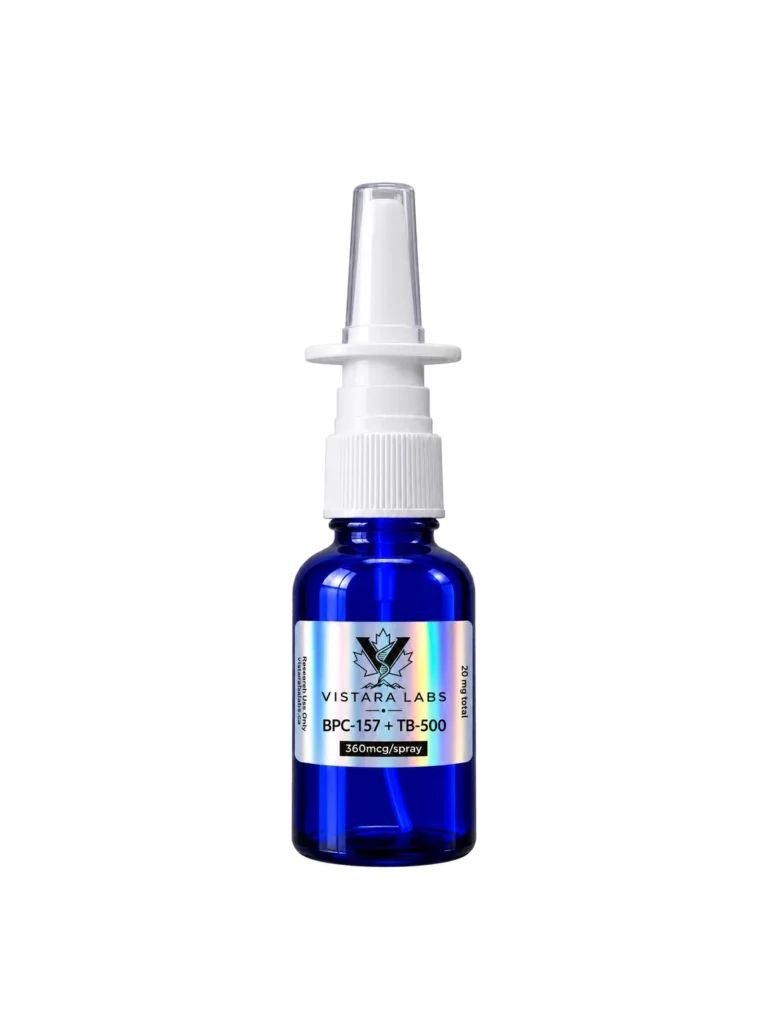
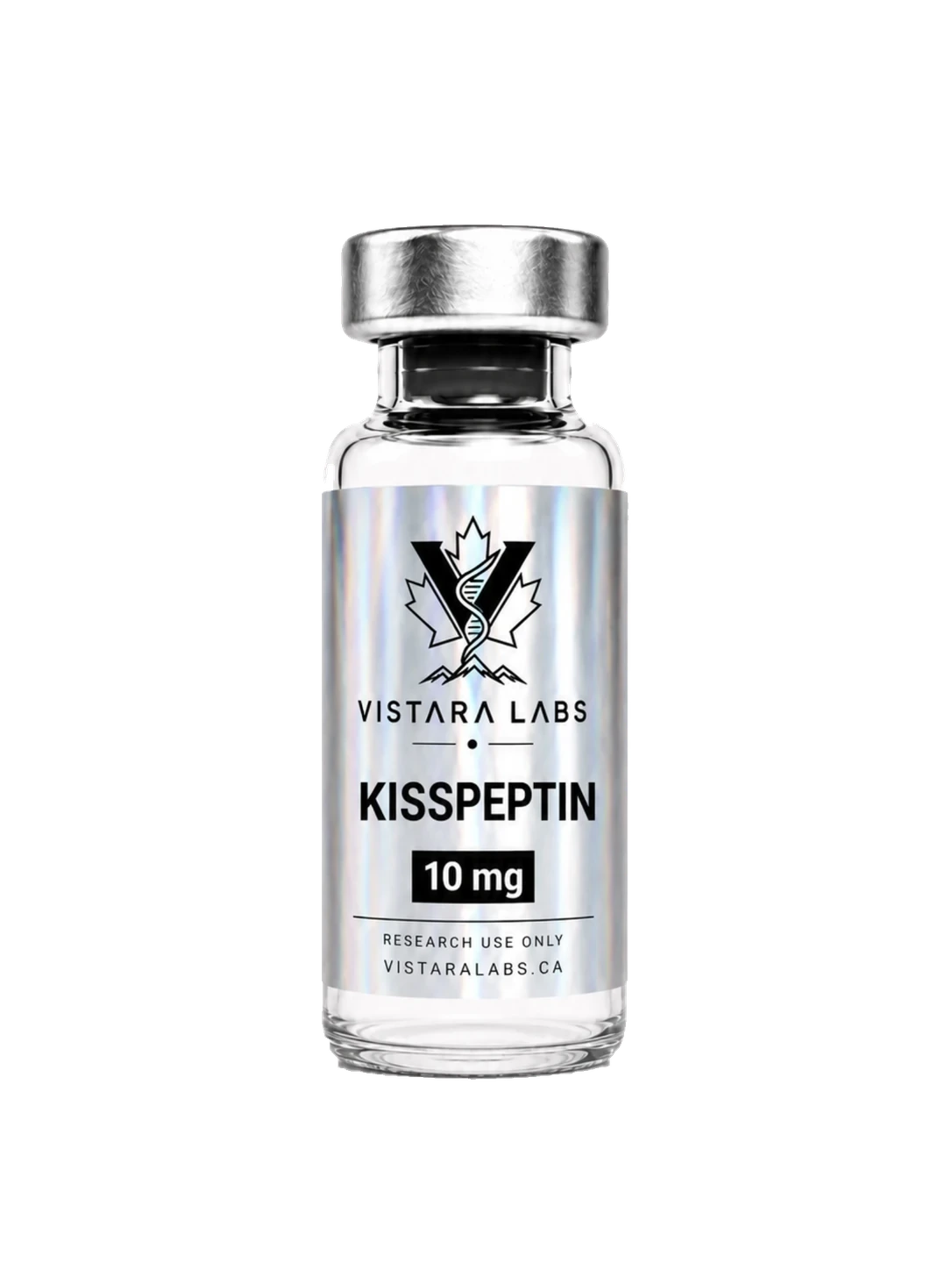
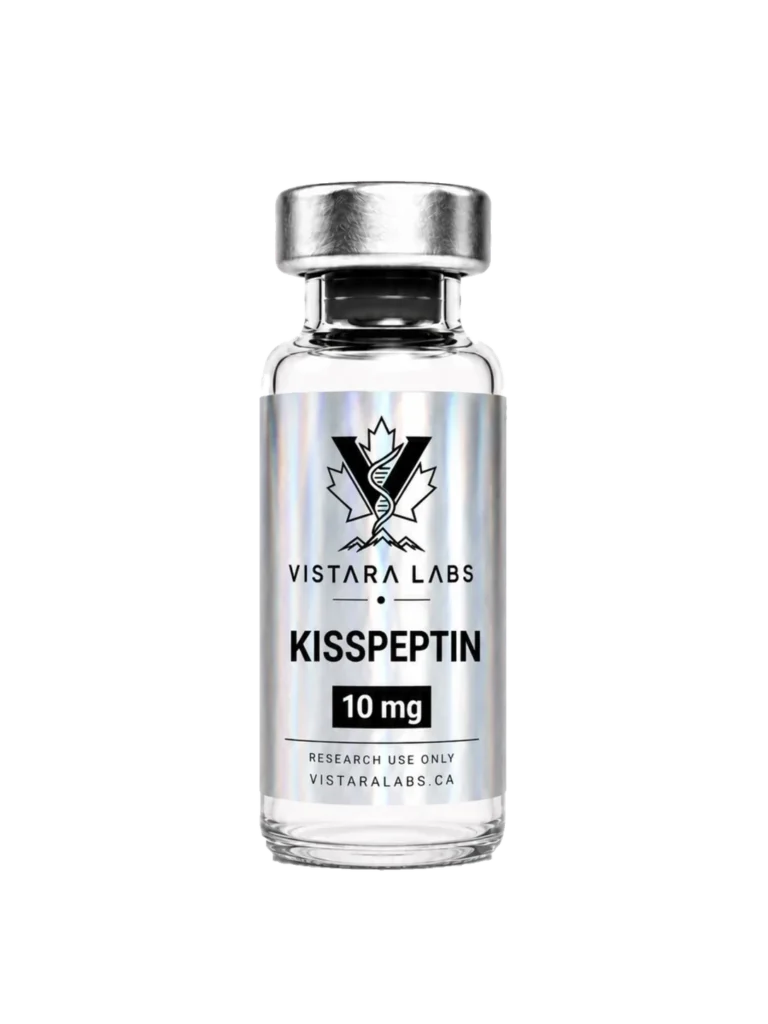
Kisspeptin’s half-life depends on which form is measured: in human infusion studies, kisspeptin-54 had a plasma half-life of 27.6 minutes in men (Dhillo et al., J Clin Endocrinol Metab, 2005), while the shorter kisspeptin-10 had a half-life of about 3.8 minutes in men after intravenous administration (Jayasena et al., J Clin Endocrinol Metab, 2011). Despite that gap, a direct comparison in healthy men found the two forms produced similar reproductive hormone release at the doses tested (Jayasena et al., Hum Reprod, 2015). This guide explains the figures, why the two forms differ, and how half-life differs from how long a Kisspeptin vial or Kisspeptin Nasal Spray keeps.
Findings
- During a 90-minute intravenous infusion in 6 men, kisspeptin-54 had a plasma half-life of 27.6 ± 1.1 minutes and raised LH, FSH and testosterone against saline (Dhillo et al., 2005).
- Kisspeptin-10 had a plasma half-life of about 3.8 minutes in men after intravenous administration (Jayasena et al., 2011).
- In a direct comparison of 3-hour intravenous infusions in healthy men, kisspeptin-10 and kisspeptin-54 produced similar gonadotrophin secretion at the doses tested (Jayasena et al., 2015).
- Mouse measurements closely matched the human ones: about 32 minutes for kisspeptin-54 and about 4 minutes for kisspeptin-10 (d’Anglemont de Tassigny et al., 2017).
 View product →
What is kisspeptin?
Kisspeptins are a family of peptides of 54, 14, 13 or 10 amino acids, all sharing the same C-terminal sequence of ten amino acids (d’Anglemont de Tassigny et al., PLoS One, 2017). They act on the kisspeptin receptor (once called GPR54) to stimulate release of GnRH, the hypothalamic hormone that drives LH and FSH from the pituitary and, downstream, testosterone and oestrogen. Kisspeptin-10 is that shared C-terminal decapeptide, the shortest active form. The background is in What is kisspeptin?
What does half-life mean?
A half-life is the time it takes for the concentration of a compound in the blood to fall by half. For kisspeptin-54, about half of a plasma level is gone after 27.6 minutes; for kisspeptin-10, after about 4 minutes. After five half-lives, roughly 3% remains. These figures are specific to the route (intravenous) and species (humans) in which they were measured.
The human infusion studies
Kisspeptin-54 in men (2005)
A 2005 double-blind, placebo-controlled, crossover study at Imperial College London raised circulating kisspeptin in healthy men. Six men each received a 90-minute intravenous infusion of kisspeptin-54 and, on another day, saline. Kisspeptin-54 significantly raised mean LH over 90 minutes (10.8 against 4.2 U/L with saline), FSH, and testosterone at 180 minutes (24.9 against 21.7 nmol/L). Its plasma half-life was 27.6 ± 1.1 minutes, its metabolic clearance rate 3.2 mL/kg per minute, and its volume of distribution 128.9 mL/kg (Dhillo et al., J Clin Endocrinol Metab, 2005). The testosterone research is in Kisspeptin and testosterone.
Kisspeptin-10 in men and women (2011)
The same group gave kisspeptin-10 to healthy men and women. In men, LH and FSH rose after intravenous bolus administration; in women, gonadotrophins rose in the preovulatory phase of the cycle (Jayasena et al., J Clin Endocrinol Metab, 2011). The plasma half-life of kisspeptin-10 in men was 3.8 minutes, a figure later cited alongside the mouse data (d’Anglemont de Tassigny et al., 2017).
The head-to-head comparison (2015)
In a single-blinded, placebo-controlled study, healthy men received kisspeptin-10, kisspeptin-54 and GnRH as 3-hour intravenous infusions at three rates, five men per group. At the doses tested, the two kisspeptin forms were associated with similar levels of gonadotrophin secretion (Jayasena et al., Hum Reprod, 2015). In other words, a sevenfold shorter half-life did not translate into a smaller hormone response under continuous infusion.
Why does kisspeptin-10 clear faster?
Kisspeptin-10 is a short linear peptide that breaks down quickly in blood. A rat study using mass spectrometry found kisspeptin-10 broke down in rat plasma with decomposition half-lives of 6.8 minutes at 4 °C, 2.9 minutes at 25 °C and 1.7 minutes at 37 °C; the main product was kisspeptin-10 missing its first amino acid, tyrosine. After an intravenous bolus in rats, it was undetectable by 30 minutes (Liu et al., J Chromatogr B, 2013). Kisspeptin-54 is 44 amino acids longer and circulated far longer in both mice and men; the mouse researchers noted that the immunoassay used for kisspeptin-54 may also detect its shorter breakdown fragments (d’Anglemont de Tassigny et al., 2017).
How does kisspeptin compare with related peptides?
| Peptide | Route and species | Published half-life |
|---|---|---|
| Kisspeptin-54 | Intravenous infusion, men | 27.6 minutes |
| Kisspeptin-10 | Intravenous, men | About 3.8 minutes |
| PT-141 (bremelanotide) | Subcutaneous, humans | About 2.7 hours |
The PT-141 figure is from its FDA prescribing information (2019). PT-141 works on melanocortin receptors in the brain rather than on the reproductive hormone axis; see PT-141 half-life and PT-141 vs Kisspeptin.
What does this mean for study design?
Three points follow from the published work. First, a short half-life puts a premium on sample handling: kisspeptin-10 broke down in rat plasma within minutes, faster at warmer temperatures, so prompt cooling and processing of samples matter; the rat study added acetonitrile immediately after spiking plasma to stop decomposition. Second, the assay matters, because an immunoassay may count breakdown fragments as kisspeptin; the rat study used mass spectrometry for that reason. Third, kisspeptin’s effect is read through downstream hormones (LH, FSH, testosterone) that persist far longer than kisspeptin itself, so sampling schedules usually track those hormones over hours. The published human pharmacokinetic work used intravenous and subcutaneous routes, and other routes, including intranasal, are research questions in their own right.
Half-life in the body vs how long a vial or spray keeps
Half-life describes kisspeptin inside a living system. Shelf life describes the product: how long a lyophilised (freeze-dried) vial keeps before and after mixing, and how long a ready-mixed nasal spray keeps once opened, which depends on temperature, light and handling. Those are covered in How long do peptides last after mixing?, How to store research peptides and How to store a peptide nasal spray. Vials are reconstituted with bacteriostatic water (see the kisspeptin reconstitution guide), and certificates for every product are on the lab reports page.
Kisspeptin is supplied for laboratory research use only. The human studies above were clinical research using research preparations given under medical supervision.
Frequently asked questions
What is the half-life of kisspeptin?
It depends on the form. In human infusion studies, kisspeptin-54 had a plasma half-life of 27.6 minutes in men, and kisspeptin-10 a half-life of about 3.8 minutes in men after intravenous administration.
What did research show when kisspeptin-10 and kisspeptin-54 were compared?
In a 2015 study of 3-hour intravenous infusions in healthy men, the two forms were associated with similar levels of gonadotrophin secretion at the doses tested.
Why is kisspeptin-10’s half-life shorter?
Kisspeptin-10 is a short linear peptide. In rat plasma it broke down within minutes, mainly by losing its first amino acid, tyrosine. Kisspeptin-54 carries 44 more amino acids and circulates longer.
Do animal and human half-lives agree?
Closely. Mice gave about 32 minutes for kisspeptin-54 and about 4 minutes for kisspeptin-10, against 27.6 and about 3.8 minutes in men.
Is half-life the same as how long kisspeptin lasts in the vial?
No. Half-life describes the peptide in the body. How long a vial or ready-mixed nasal spray keeps depends on storage temperature, light and handling, covered in the peptide storage guides.
Sources: Dhillo WS et al. Kisspeptin-54 stimulates the hypothalamic-pituitary gonadal axis in human males. J Clin Endocrinol Metab. 2005. PMID 16174713. Jayasena CN et al. The effects of kisspeptin-10 on reproductive hormone release show sexual dimorphism in humans. J Clin Endocrinol Metab. 2011. PMID 21976724. Jayasena CN et al. Direct comparison of the effects of intravenous kisspeptin-10, kisspeptin-54 and GnRH on gonadotrophin secretion in healthy men. Hum Reprod. 2015. PMID 26089302. d’Anglemont de Tassigny X et al. Mechanistic insights into the more potent effect of KP-54 compared to KP-10 in vivo. PLoS One. 2017. PMID 28464043. Liu Z et al. LC-MS/MS quantification of a neuropeptide fragment kisspeptin-10 and characterization of its decomposition product and pharmacokinetics in rats. J Chromatogr B. 2013. PMID 23524040. Bremelanotide injection, full prescribing information. US Food and Drug Administration, 2019. FDA label.
More on this: Buy Kisspeptin in Canada: Vial and Nasal Spray and Kisspeptin Side Effects.
All products supplied by Vistara Labs are intended for laboratory research use only. They are not drugs, are not approved for human or veterinary use, and are not intended to diagnose, treat, cure or prevent any condition. Nothing on this page constitutes medical advice or guidance for use in humans.