


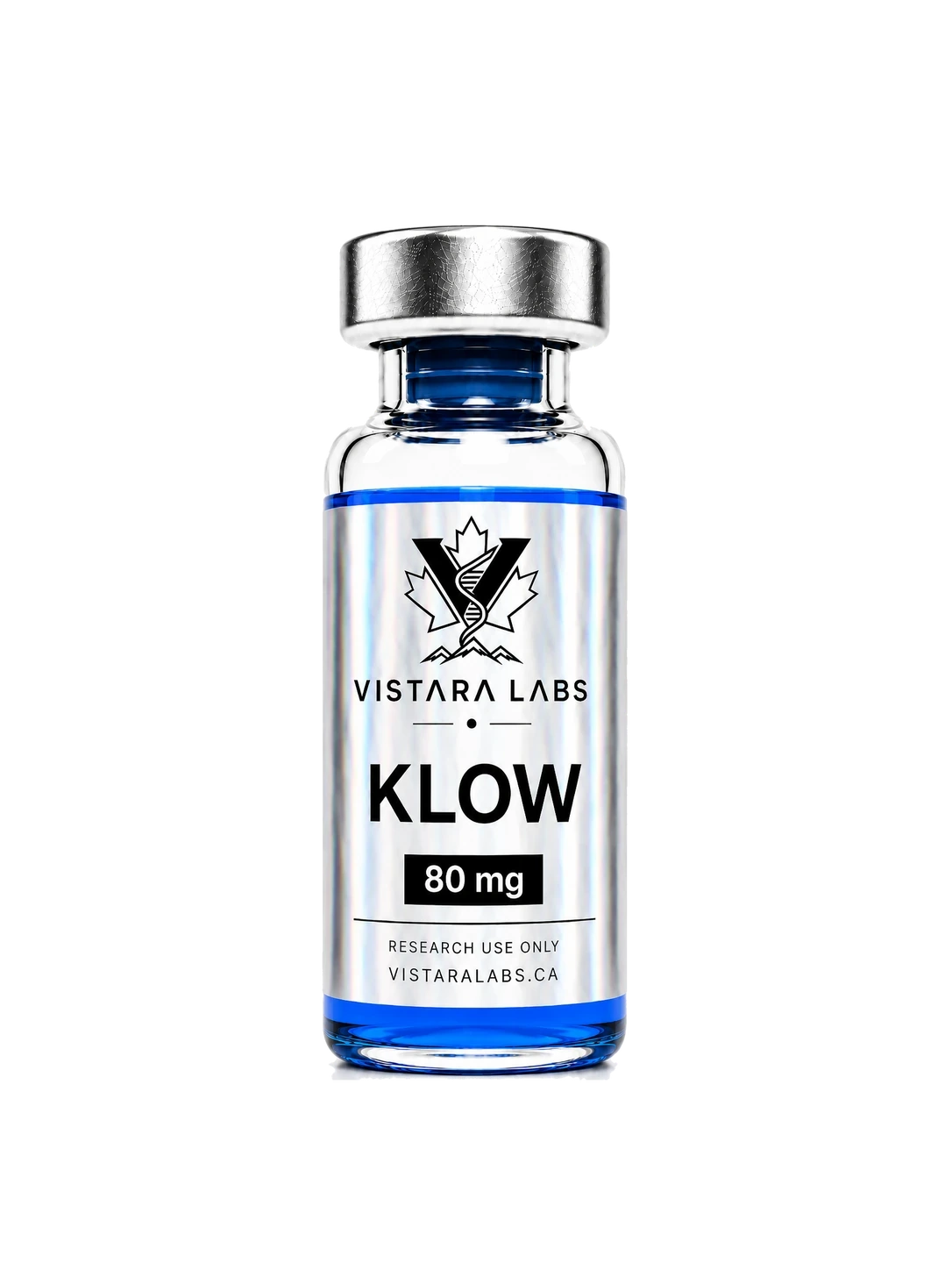
KLOW vs GLOW: One Peptide Apart
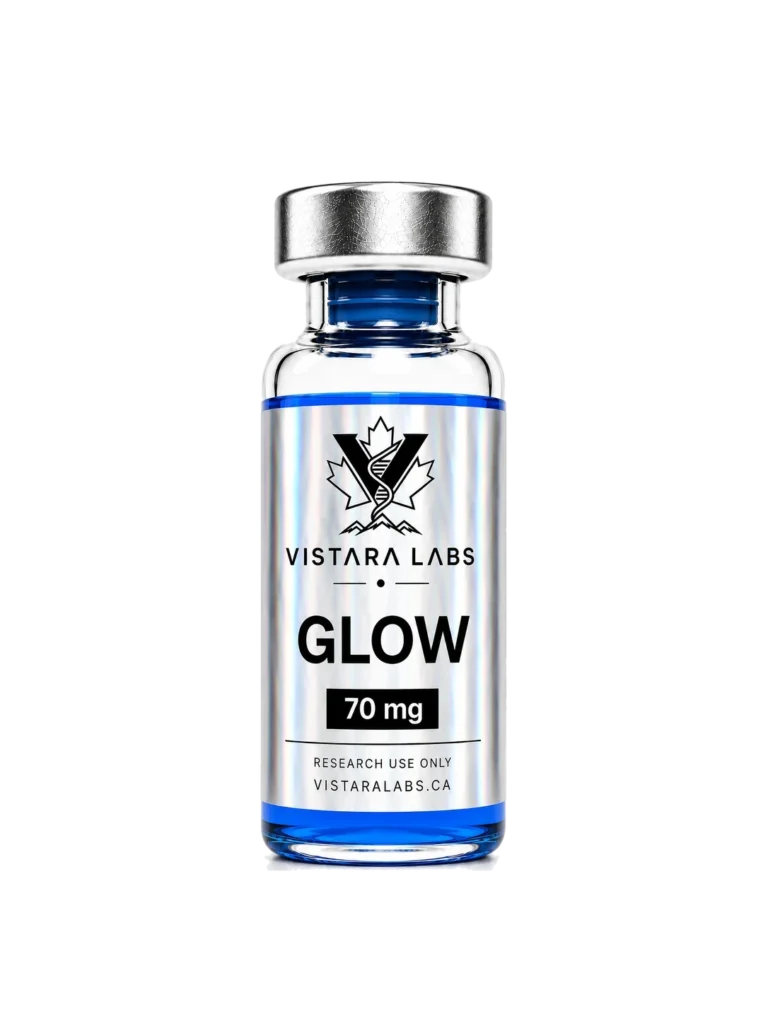
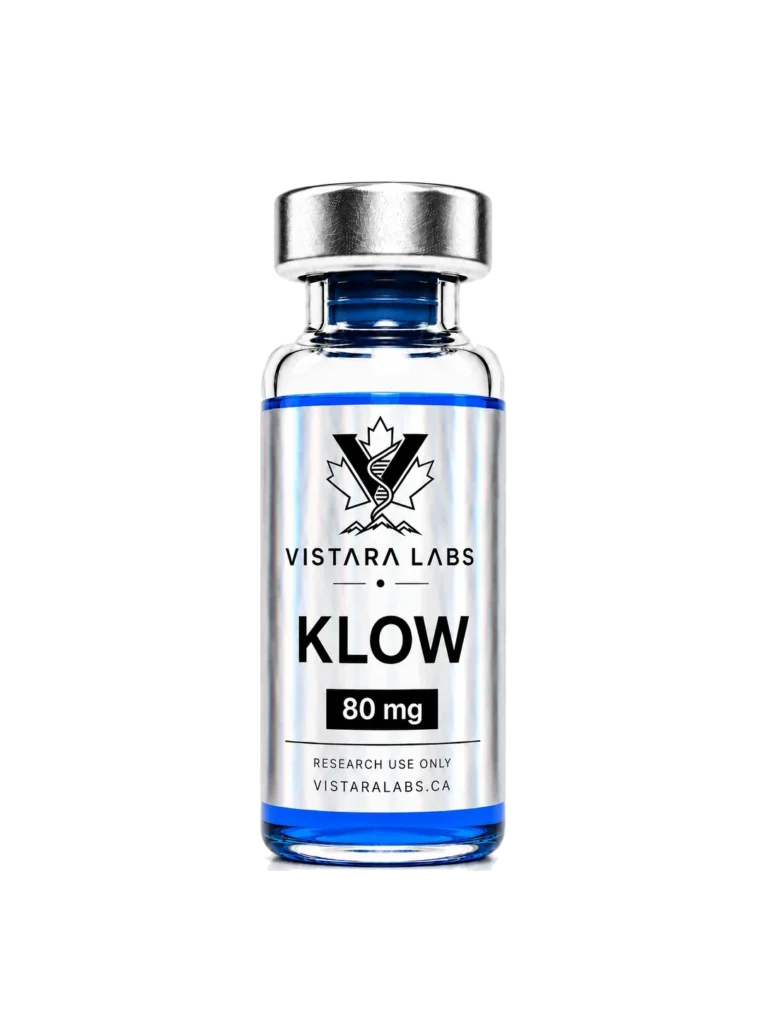
The difference between GLOW and KLOW is exactly one peptide. Both blends are built on the same three-part core — GHK-Cu, BPC-157 and TB-500. KLOW adds a fourth, KPV. Choosing between them is really one question: does that fourth peptide belong in your research or not?
The shared core
Three peptides appear in both blends, and each carries its own research literature:
- GHK-Cu — the copper-binding tripeptide, studied in skin and connective-tissue biology, extracellular matrix components such as collagen and elastin, and copper-dependent enzymatic processes. It is also the reason both blends have a blue cast: the colour comes from the bound copper ion.
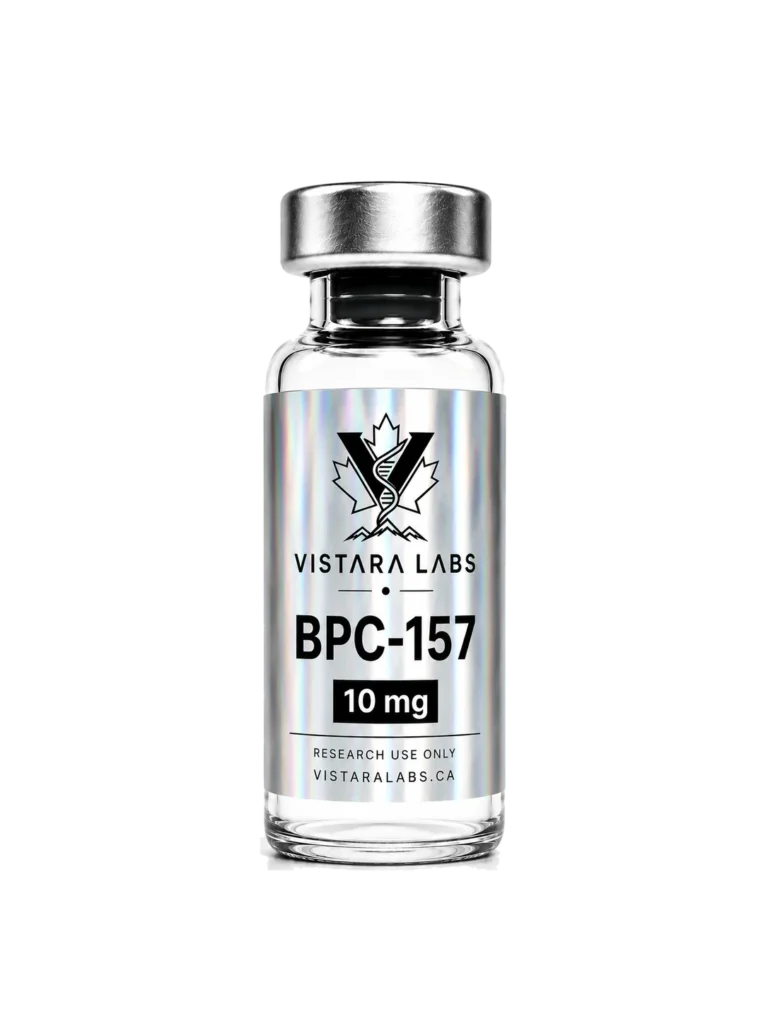
- BPC-157 — a synthetic fragment studied extensively in preclinical soft-tissue models: muscle, tendon, ligament, and the gastrointestinal lining.
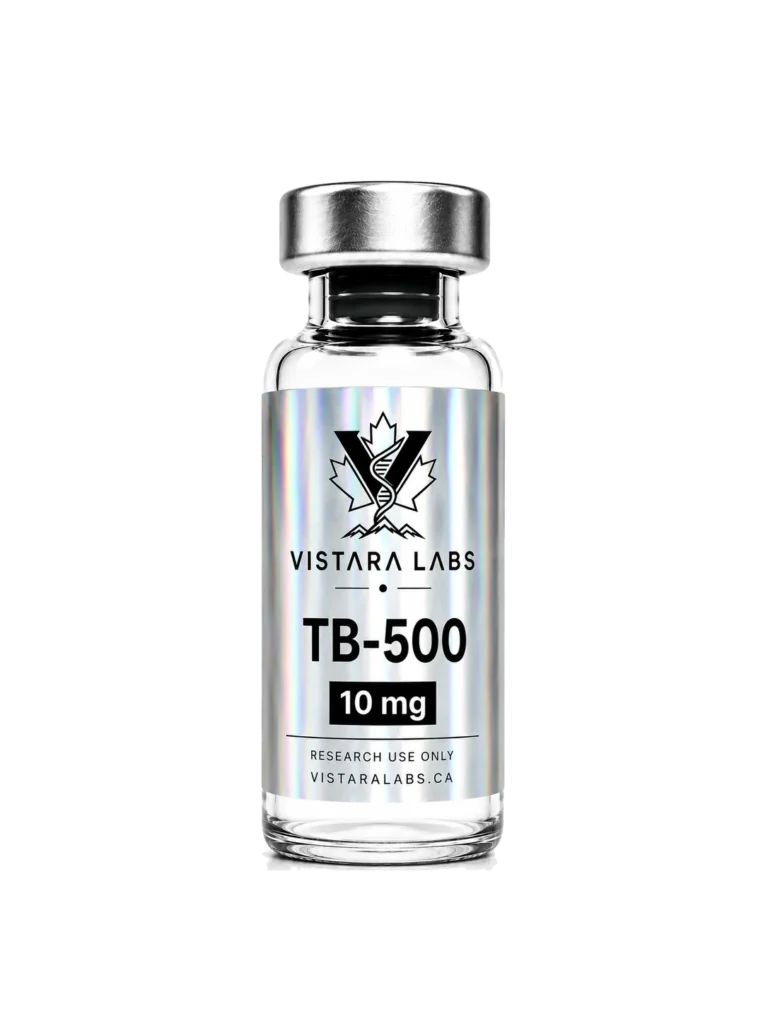
- TB-500 — studied in connection with cellular migration and tissue-repair processes, including the movement of repair cells toward damaged tissue in research models.
On this shared foundation, the two blends are the same material. A study designed around the three-peptide core could use either.
What KPV adds
KPV is a tripeptide — the three terminal amino acids of alpha-MSH, a naturally occurring signalling hormone. It is small, but it is studied in its own right, principally in models of inflammatory signalling, and in gut and skin tissue research.
That is the entire difference. KLOW is GLOW plus a fourth research axis: where GLOW’s components cluster around skin and soft-tissue questions, KPV extends the blend into inflammation and gut-lining territory.
A useful way to frame the choice: GLOW is the narrower, more skin-centred formulation. KLOW is the broader one. Neither is an upgrade of the other — they answer differently shaped research questions.
Blend or single peptides?
The honest caveat that applies to both: a blend is the right material when the research question concerns the components together. When the question is about one peptide’s behaviour in isolation, a blend adds variables you then have to control for — the single peptide is the cleaner tool.
All four components are available individually: GHK-Cu, BPC-157, TB-500 and KPV. For more on why the copper complex matters in the first place, see our note on GHK-Cu.
Form and handling
Both blends are supplied as lyophilised powder in sealed vials — GLOW at 70 mg and KLOW at 80 mg total peptide content. As with any copper-peptide material, protection from light is a standard handling consideration, and reconstitution in a research setting is typically performed with bacteriostatic water, with vials kept cold thereafter.
Verifying a blend
Blends put more weight on documentation than single peptides, for an obvious reason: there are more things in the vial to confirm. A certificate of analysis records the identity and purity of the material. Vistara Labs material is third-party tested, with COAs available on request.
Buying GLOW or KLOW in Canada
Vistara Labs ships both blends domestically across Canada, with free shipping on orders over $150 — no customs crossing, and less transit time for light- and temperature-sensitive material. Current pricing is on the GLOW and KLOW product pages.
All products supplied by Vistara Labs are intended for laboratory research use only. They are not drugs, are not approved for human or veterinary use, and are not intended to diagnose, treat, cure or prevent any condition. Nothing on this page constitutes medical advice or guidance for use in humans.
References
No study of the KLOW blend as a complete formulation was identified. The references below cover its individual components.
- Enhanced healing of ulcers in patients with diabetes by topical treatment with glycyl-l-histidyl-l-lysine copperMulticentre randomised, evaluator-blinded, placebo-controlled trial; topical GHK-Cu in diabetic neuropathic ulcers.
- Intra-Articular Injection of BPC 157 for Multiple Types of Knee PainRetrospective chart review, 17 patients (16 followed up by telephone); no control group, no blinding, no validated outcome instrument.
- Synthesis and characterization of the N-terminal acetylated 17-23 fragment of thymosin beta 4 identified in TB-500, a product suspected to possess doping potentialAnalytical chemistry: characterises TB-500 as the N-terminally acetylated 17-23 fragment of thymosin β4 (Ac-LKKTETQ), not the intact 43-amino-acid protein.
- PepT1-mediated tripeptide KPV uptake reduces intestinal inflammationPreclinical: human intestinal epithelial cells, human T cells and mouse colitis models; no human exposure.
Links open the study record on PubMed so the source can be checked directly. Listing a study is not a claim that its findings apply to any other use, product or route of administration. Research use only.