Peptide Nasal Spray vs Vial: How the Two Formats Differ
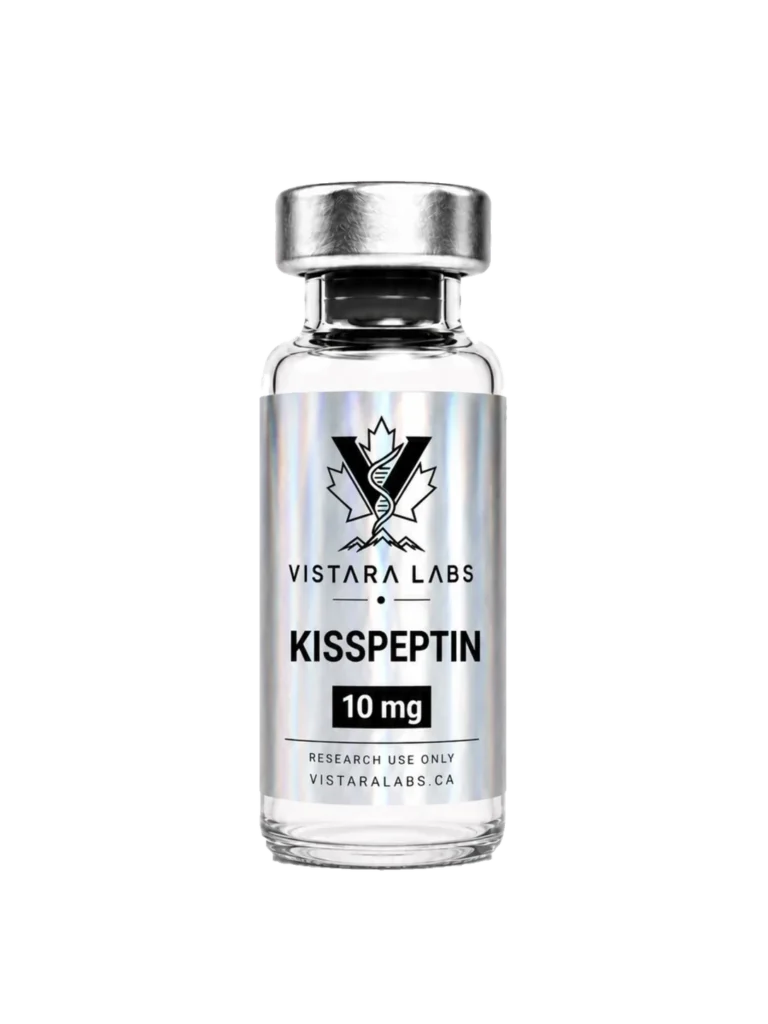
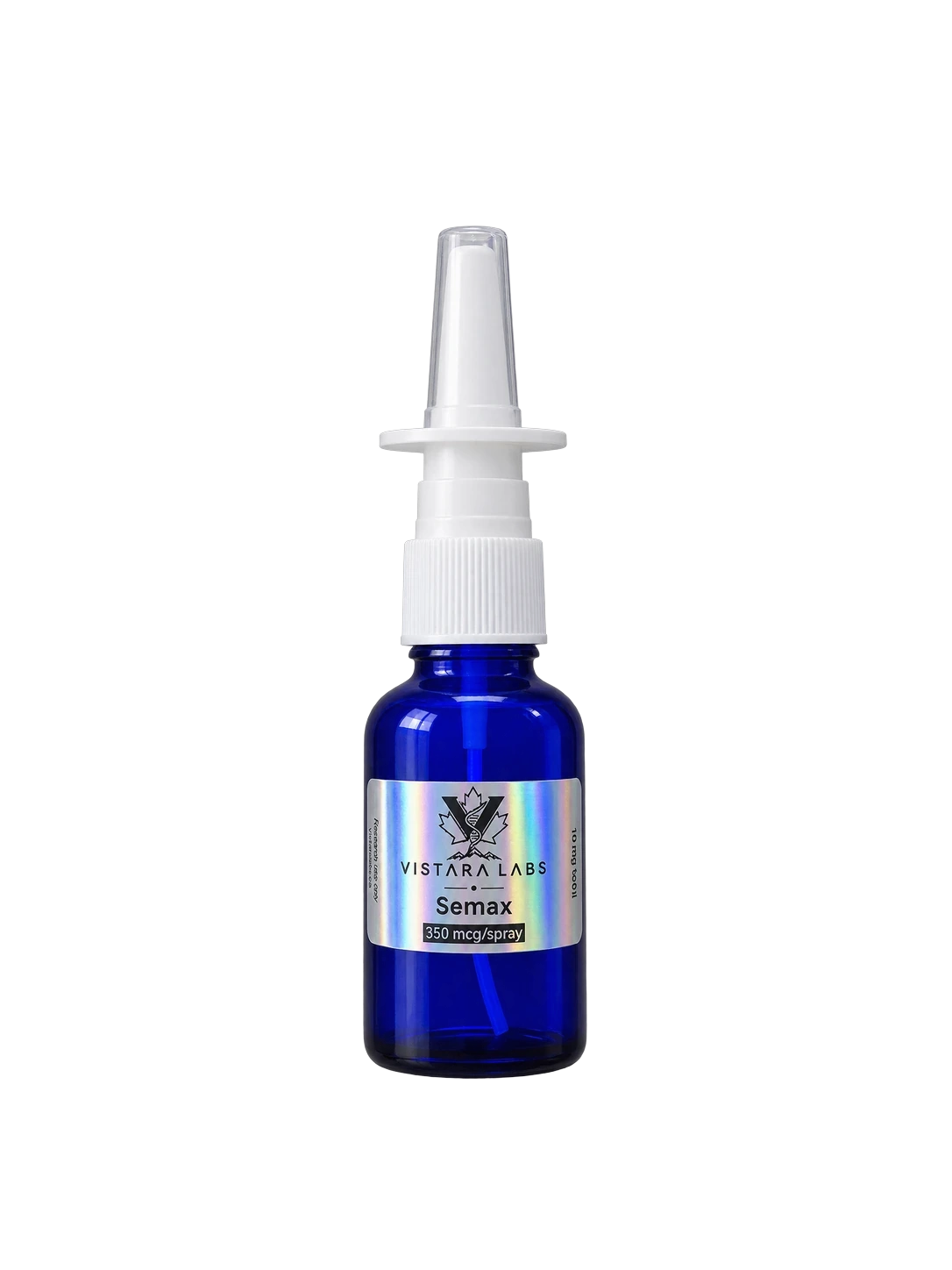
A lyophilised vial and a ready-mixed peptide nasal spray hold the same kind of compound in two different states: a freeze-dried powder that the researcher dissolves and measures, or a solution already sealed in a metered pump that delivers 0.175 mL per press. The vial offers long dry-state stability and a concentration of your choosing; the spray removes mixing altogether and matches the intranasal route used across a large body of neuropeptide research. Here is how the two formats differ, what the intranasal literature describes, and how to choose between them. The full range is in our peptide nasal sprays guide.
Findings
- Freeze-drying is the most commonly used method for giving proteins an acceptable shelf life as pharmaceutical products, which is why research peptides ship as lyophilised powder (Wang, 2000).
- A vial lets the researcher set the concentration by choosing how much bacteriostatic water to add.
- A ready-mixed spray needs no reconstitution and delivers a fixed 0.175 mL per press from a metered pump.
- In a 2002 study of 36 volunteers, three neuropeptides given intranasally reached the cerebrospinal fluid within 30 minutes (Born et al., Nat Neurosci).
- Intranasal oxytocin raised concentrations in both blood and cerebrospinal fluid in a 2013 study with combined sampling (Striepens et al., Sci Rep).
How a lyophilised vial works
Peptides in solution are vulnerable to the same chemistry that limits any protein: hydrolysis, oxidation and aggregation. Removing the water stops most of it. A 2000 review of solid protein pharmaceuticals describes lyophilisation (freeze-drying) as the most commonly used method for reaching an acceptable shelf life, and explains why formulators make proteins into solid forms to overcome their instability in solution (Wang, Int J Pharm, 2000). The result is the white cake or powder at the bottom of a research vial, which is kept cold and dark until needed (see how to store research peptides).
Reconstitution sets the concentration
Before use, the powder is dissolved in bacteriostatic water, sterile water with 0.9% benzyl alcohol that allows a refrigerated vial to be accessed more than once. The volume of water decides the concentration: a 10 mg vial gives 5 mg/mL with 2 mL of water and 10 mg/mL with 1 mL. That flexibility is the vial’s main advantage. A protocol that needs very small amounts can use more water for a more legible volume on the syringe, and the same vial can serve studies with different concentration requirements. The method is in how to reconstitute peptides with bacteriostatic water, and the peptide calculator converts any vial and water volume into syringe units.
The trade-off is handling. Reconstitution takes a few minutes, needs syringes and swabs, and introduces a step where technique matters: water run too fast onto the powder, or a shaken vial, can leave a cloudy or gelled solution (covered in why peptides gel or go cloudy).
How a ready-mixed nasal spray works
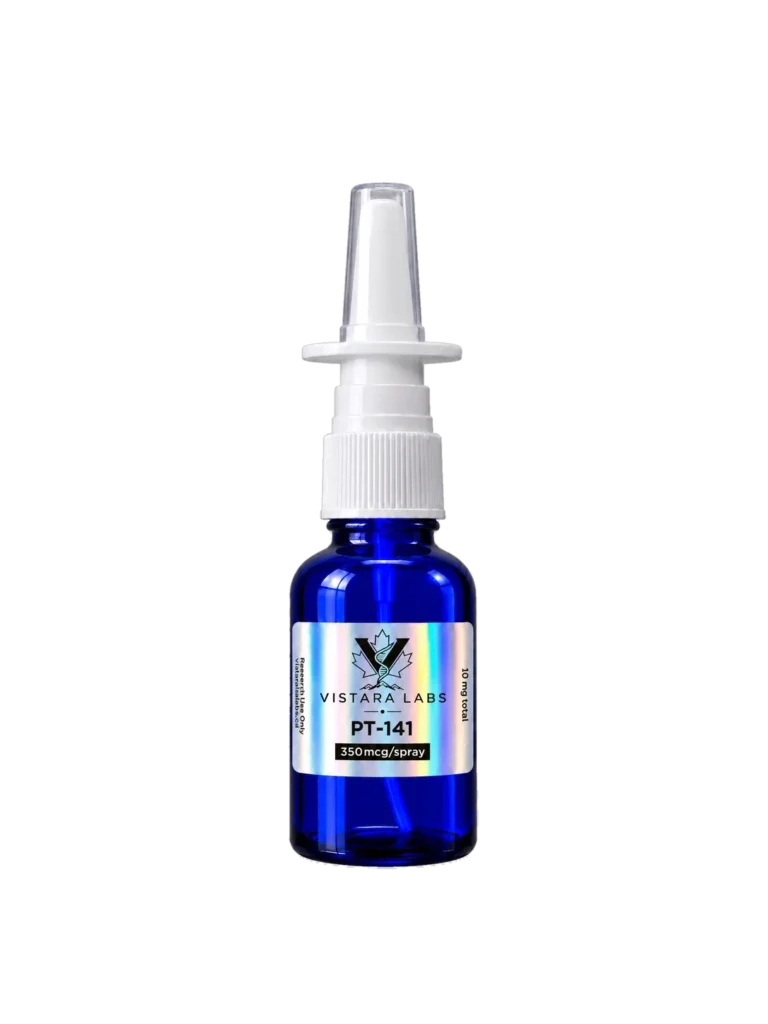
A ready-mixed spray arrives with the peptide already in solution in sterile saline, sealed in a metered pump. Every press delivers the same 0.175 mL, so the amount per press is fixed by the bottle’s concentration rather than by the researcher’s measuring. There is nothing to mix, no syringe, and no reconstitution step to get wrong. Once opened, the bottle is kept in the fridge; the details are in how to store a peptide nasal spray, and the number of presses per bottle is worked out in how many sprays in a peptide nasal spray.
The trade-off runs the other way: the concentration is set at the point of manufacture, so a spray suits research designs that work with a consistent, repeatable volume per administration rather than ones that need to vary the concentration.
What the intranasal research describes
The nasal route matters most for peptides studied for their effects on the brain. The blood-brain barrier keeps out all but small, non-polar molecules, and a 2012 review describes intranasal administration as a non-invasive method that may bypass it, with transport from the nasal epithelium along olfactory and trigeminal pathways (Lochhead and Thorne, Adv Drug Deliv Rev, 2012).
The study that put this route on the map was published in 2002. Researchers in Lübeck gave three neuropeptides, a melanocortin fragment (MSH/ACTH 4-10), vasopressin and insulin, intranasally to 36 volunteers and sampled cerebrospinal fluid: all three reached it within 30 minutes (Born et al., Nat Neurosci, 2002).
Oxytocin
Oxytocin is the most studied intranasal peptide. A 2005 study in Nature found that intranasal oxytocin caused a substantial increase in trust between people, specifically their willingness to accept social risk, not a general appetite for risk (Kosfeld et al., 2005). A 2013 study then confirmed with combined sampling that intranasal oxytocin raises concentrations in both blood and cerebrospinal fluid, with plasma levels peaking at 15 minutes and cerebrospinal fluid levels becoming significant by 75 minutes (Striepens et al., Sci Rep, 2013). The comparison with injected oxytocin is in Oxytocin nasal spray vs injection, and the product is the Oxytocin Nasal Spray.
Semax and Selank
Semax, a seven-amino-acid analogue of the ACTH(4-10) fragment, has been studied mainly by the intranasal route. In animal studies, intranasal Semax rapidly increased levels of brain-derived neurotrophic factor (BDNF) in the basal forebrain, and the researchers found specific binding sites for the peptide in that region (Dolotov et al., J Neurochem, 2006); a single administration also raised hippocampal BDNF and its receptor’s activation (Dolotov et al., Brain Res, 2006). Its sister peptide Selank shares that research tradition. The two routes are compared in Semax and Selank: intranasal vs subcutaneous research routes, and both come as sprays: the Semax Nasal Spray, the Selank Nasal Spray and the combined Selank + Semax Nasal Spray.
Vial and spray side by side
| Question | Lyophilised vial | Ready-mixed nasal spray |
|---|---|---|
| State on arrival | Freeze-dried powder | Solution in sterile saline |
| Preparation | Reconstitute with bacteriostatic water | None |
| Concentration | Chosen by the researcher | Fixed per bottle |
| Volume per administration | Measured on a syringe | 0.175 mL per press |
| Equipment | Bacteriostatic water, syringes, swabs | The pump itself |
| Storage | Cold and dark dry; refrigerated once mixed | Refrigerated once opened |
| Research route it matches | Injection studies | Intranasal studies |
Which format fits which research question?
- Studies built on the intranasal literature, such as oxytocin, Semax and Selank research: the spray matches the route those papers used.
- Studies that need a variable concentration or very small measured amounts: the vial, because the water volume can be chosen.
- Studies where consistency and simple handling come first: the spray, with a fixed volume per press and no mixing.
- Longer timelines: the vial, which can stay in its dry, lyophilised state until the work begins.
Several compounds come in both formats, including the Kisspeptin Nasal Spray, the DSIP Nasal Spray and the PT-141 Nasal Spray. For designs that pair two or three compounds, the peptide nasal spray stacks group complementary sprays together.
Both formats are supplied by Vistara Labs for laboratory research use only, shipped from within Canada. Certificates of analysis are on the lab reports page. The studies above were clinical and laboratory research using pharmaceutical or research preparations.
Frequently asked questions
What is the difference between a peptide nasal spray and a vial?
A vial holds the peptide as a freeze-dried powder that is reconstituted with bacteriostatic water to a concentration the researcher chooses. A ready-mixed nasal spray holds it already dissolved in sterile saline in a metered pump that delivers 0.175 mL per press, with no mixing.
Why are peptides supplied as lyophilised powder?
Freeze-drying is the most common way to give proteins and peptides an acceptable shelf life, because removing the water slows the chemical and physical changes that happen in solution. The powder is reconstituted shortly before use.
What has intranasal peptide research shown?
In a 2002 study of 36 volunteers, three neuropeptides given intranasally reached the cerebrospinal fluid within 30 minutes. Intranasal oxytocin increased trust in a 2005 study and raised both blood and cerebrospinal fluid concentrations in a 2013 study, and intranasal Semax increased brain BDNF levels in animal studies.
Does a nasal spray need bacteriostatic water?
No. A ready-mixed spray arrives already in solution and needs no reconstitution. Bacteriostatic water is only needed for lyophilised vials.
How should a peptide nasal spray be stored?
Refrigerated once opened. A ready-mixed spray is already in solution, so it is kept cold from the first press onward. The full guide is how to store a peptide nasal spray.
Product details from vistaralabs.ca, October 2026. Sources: Wang W. Lyophilization and development of solid protein pharmaceuticals. Int J Pharm. 2000. PMID 10967427. Lochhead JJ, Thorne RG. Intranasal delivery of biologics to the central nervous system. Adv Drug Deliv Rev. 2012. PMID 22119441. Born J et al. Sniffing neuropeptides: a transnasal approach to the human brain. Nat Neurosci. 2002. PMID 11992114. Kosfeld M et al. Oxytocin increases trust in humans. Nature. 2005. PMID 15931222. Striepens N et al. Elevated cerebrospinal fluid and blood concentrations of oxytocin following its intranasal administration in humans. Sci Rep. 2013. PMID 24310737. Dolotov OV et al. Semax, an analogue of adrenocorticotropin (4-10), binds specifically and increases levels of brain-derived neurotrophic factor protein in rat basal forebrain. J Neurochem. 2006. PMID 16635254. Dolotov OV et al. Semax, an analog of ACTH(4-10) with cognitive effects, regulates BDNF and trkB expression in the rat hippocampus. Brain Res. 2006. PMID 16996037.
More on this: Buy Peptide Nasal Sprays in Canada: The Complete Guide.
All products supplied by Vistara Labs are intended for laboratory research use only. They are not drugs, are not approved for human or veterinary use, and are not intended to diagnose, treat, cure or prevent any condition. Nothing on this page constitutes medical advice or guidance for use in humans.