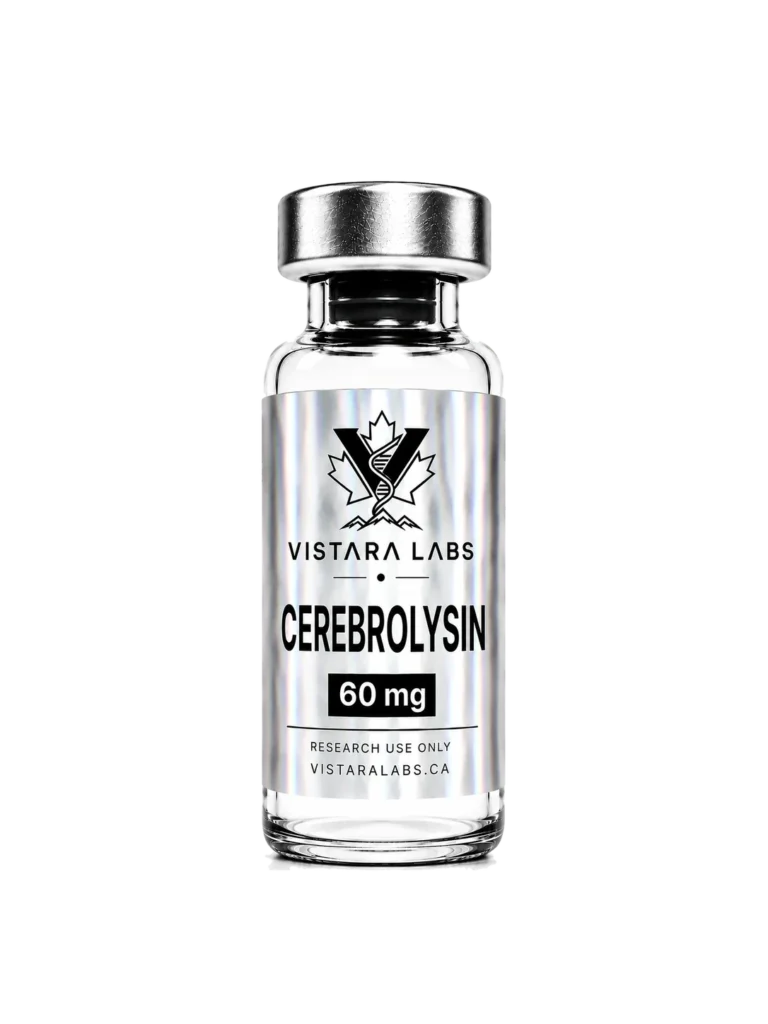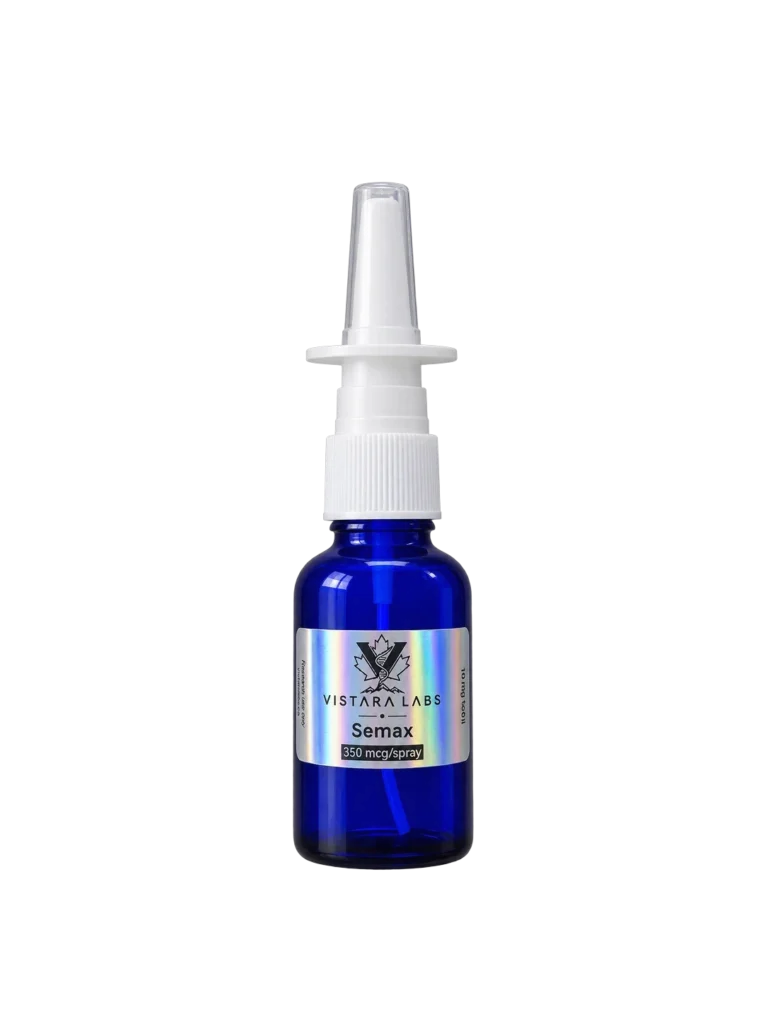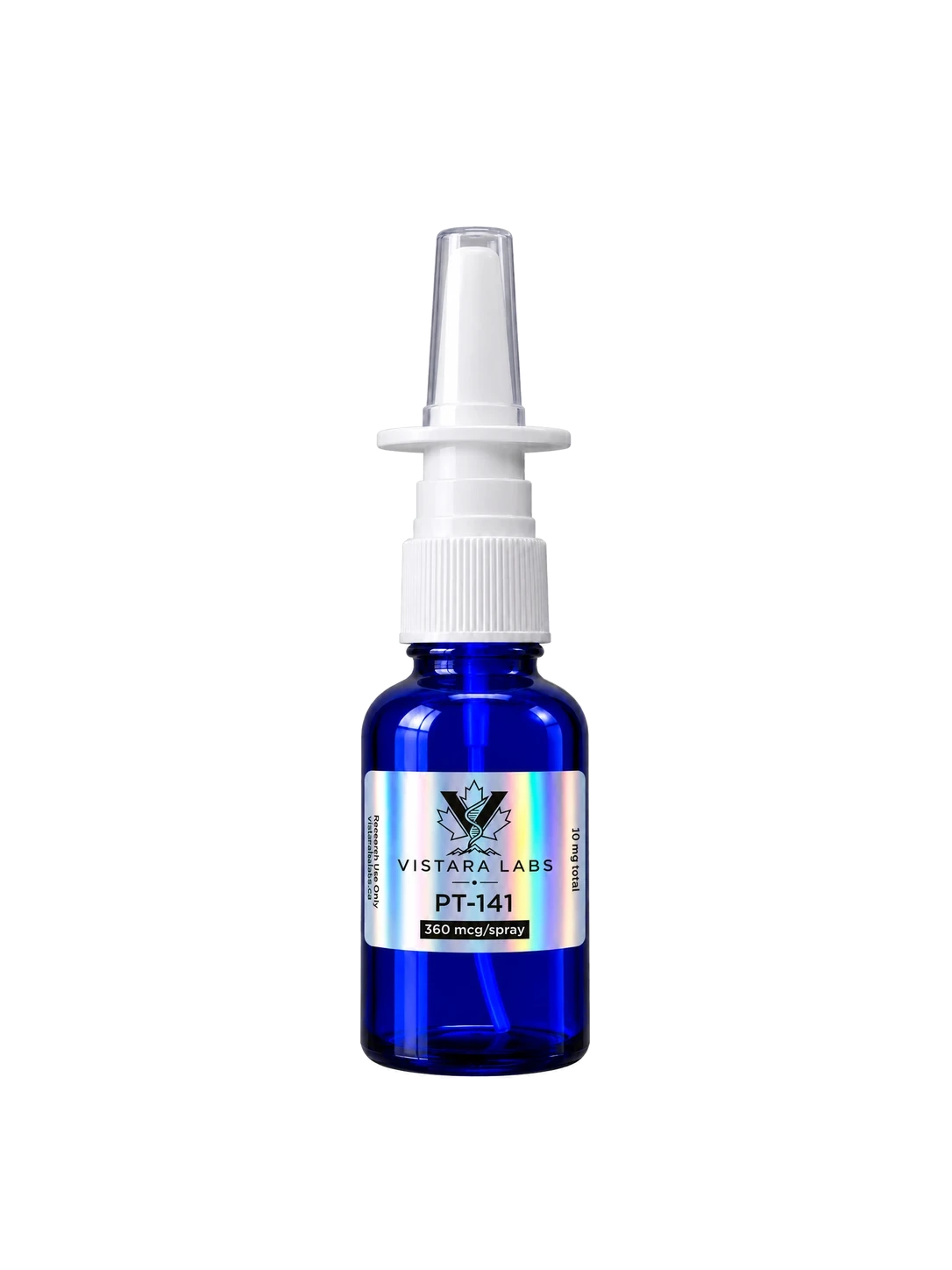
Peptides for Libido: What the Research Shows
Hormonal, Growth Hormone & Body Composition Research
Among peptides for libido, PT-141 (bremelanotide) has the strongest research: in two 2019 phase 3 trials of 1,267 premenopausal women with low sexual desire, it raised desire scores and lowered distress about low desire compared with placebo over 24 weeks. Oxytocin, the hormone released at orgasm, has a smaller body of intranasal research on sexual experience and pair bonding, and Melanotan II is the peptide whose early trials in men led to PT-141. Below: what each line of research found, and how the PT-141 and oxytocin sprays fit together.
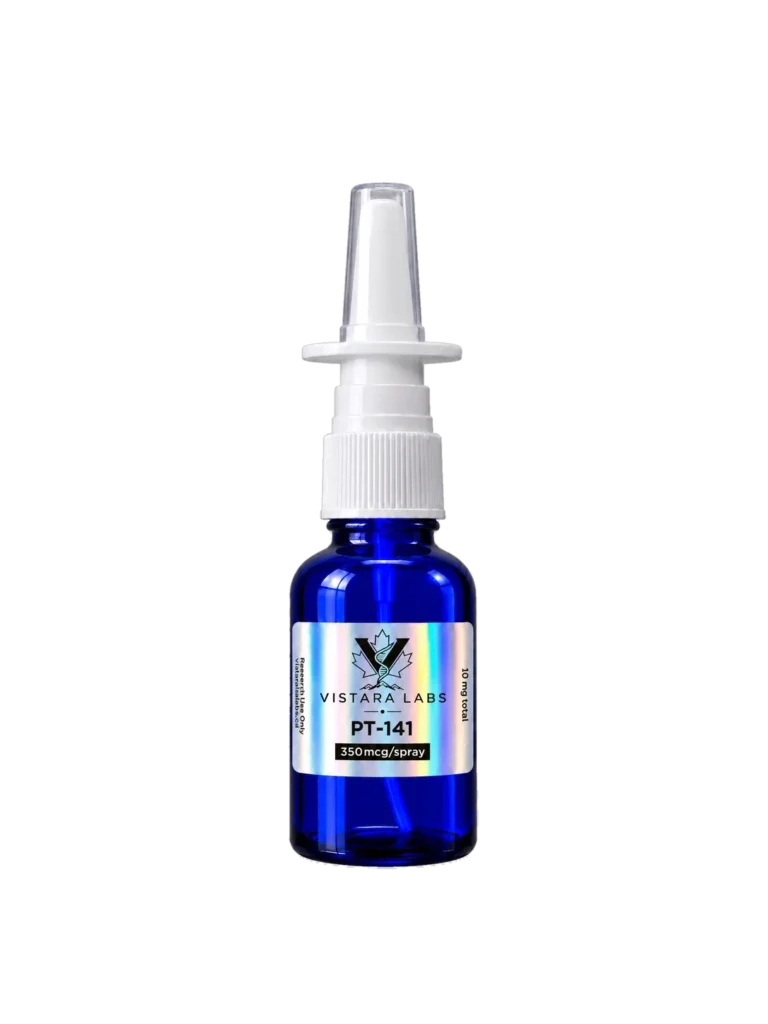 View product →
Findings
- Two phase 3 trials in Obstetrics & Gynecology (2019) randomised 1,267 premenopausal women with hypoactive sexual desire disorder. Compared with placebo, PT-141 raised desire scores by 0.35 points and cut distress by 0.33 points (pooled, P<.001 for both).
- 684 women continued into a 52-week open-label extension, where the improvements held and no new safety signals appeared.
- The early PT-141 research included nasal spray studies: in 18 women, more reported moderate or high desire after a single nasal administration than after placebo (P = 0.0114).
- Blood oxytocin rises during sexual arousal and is significantly higher at orgasm in men and women (1987), and in 29 couples, intranasal oxytocin increased orgasm intensity and contentment after sex (2014).
- In 20 men with erectile dysfunction, Melanotan II produced erections in 17, and increased sexual desire was reported after 68% of administrations against 19% for placebo (P<0.01).
Which peptides have been studied for libido?
Three peptides carry the human research. PT-141 and Melanotan II are synthetic melanocortins, built on alpha-melanocyte-stimulating hormone, and act on melanocortin receptors, which are involved in sexual function. Oxytocin is the body’s own nine-amino-acid hormone, best known for labour and breastfeeding, and its research covers orgasm, sexual contentment and bonding between partners.
| Peptide | Study | Result |
|---|---|---|
| PT-141 | 1,267 women, two phase 3 trials (2019) | Desire up, distress down vs placebo |
| PT-141 | 684 women, 52-week extension (2019) | Gains held, no new safety signals |
| PT-141 nasal | 18 women, single administration (2006) | More moderate or high desire |
| PT-141 nasal | 19 men with ED, with sildenafil (2005) | Stronger response than sildenafil alone |
| Oxytocin nasal | 29 couples (2014) | Stronger orgasm, more contentment |
| Oxytocin nasal | 47 couples (2009) | More positive communication |
| Melanotan II | 20 men with ED (2000) | More desire: 68% vs 19% |
What has PT-141 research shown for libido?
PT-141 is a synthetic melanocortin analogue that activates the MC3 and MC4 receptors (Diamond et al., J Sex Med, 2006).
The phase 3 trials, 2019. Two identical randomised, double-blind trials published together in Obstetrics & Gynecology enrolled 1,267 premenopausal women with hypoactive sexual desire disorder (low desire that causes distress), mean age 39, who used PT-141 or placebo subcutaneously as needed for 24 weeks. Against placebo, desire scores rose by 0.30 and 0.42 points in the two trials (0.35 pooled, P<.001), and distress about low desire fell by 0.37 and 0.29 points (0.33 pooled, P<.001). Nausea, flushing and headache were the most common side effects, mostly mild or moderate (Kingsberg et al.).
The 52-week extension. Of 856 eligible women who completed the core trials, 684 continued into an open-label extension. Those on PT-141 from the start improved on desire by 1.25 to 1.30 points from baseline and on distress by 1.4 to 1.7 points, with no new safety signals (Simon et al., Obstet Gynecol, 2019).
The 12-week trial, 2016. In 327 premenopausal women with sexual dysfunction, the two higher strengths tested, pooled, raised satisfying sexual events by 0.7 a month against 0.2 on placebo (p = 0.0180) and the Female Sexual Function Index by 3.6 points against 1.9 (p = 0.0017) (Clayton et al., Womens Health).
The nasal spray studies. In healthy men and men with mild to moderate erectile dysfunction, intranasal PT-141 produced erectile responses significantly greater than placebo at the higher amounts tested, with the first erection at about 30 minutes (Diamond et al., Int J Impot Res, 2004). In 19 men with erectile dysfunction, low amounts of nasal PT-141 with low-strength sildenafil produced a significantly greater response than sildenafil alone (Diamond et al., Urology, 2005). In 18 premenopausal women with sexual arousal disorder, more reported moderate or high desire after a single nasal administration than after placebo (P = 0.0114), and among those who had intercourse within 24 hours, more were satisfied with their arousal (P = 0.0256) (Diamond et al., 2006). The full trial history is in PT-141 human studies.
What has oxytocin research shown for sexual function and bonding?
Oxytocin is released during sex. In a 1987 study of 9 men and 13 women, blood oxytocin rose during sexual arousal in both sexes and was significantly higher at orgasm than at baseline (Carmichael et al., J Clin Endocrinol Metab). In 13 men measured the same year, it rose from 1.4 to 7.3 pmol/L at ejaculation and returned to baseline within 30 minutes (Murphy et al., J Clin Endocrinol Metab).
Couples, 2014. In a naturalistic study of 29 heterosexual couples (58 people), intranasal oxytocin increased the intensity of orgasm and contentment after intercourse compared with placebo, effects that were stronger in men, who also reported greater sexual satiety. Women felt more relaxed, and some reported being better able to share sexual desires, while drive and arousal themselves were unchanged (Behnia et al., Horm Behav).
Pair bonding. In 47 couples given oxytocin or placebo intranasally before a staged conflict discussion, oxytocin increased positive communication relative to negative behaviour and lowered salivary cortisol afterwards (Ditzen et al., Biol Psychiatry, 2009). In two imaging experiments, each with 20 men in romantic relationships, oxytocin made their partner’s face look more attractive than unfamiliar women’s faces and raised the response to it in brain reward regions, including the nucleus accumbens (Scheele et al., Proc Natl Acad Sci U S A, 2013).
Longer use has been tested too: in a 22-week crossover trial in 30 women with sexual dysfunction, sexual function scores rose 26% over eight weeks of oxytocin, with a comparable rise on placebo (Muin et al., Fertil Steril, 2015). Our article on oxytocin nasal spray research covers its wider human record.
How did Melanotan II lead to PT-141?
Melanotan II is a cyclic analogue of alpha-melanocyte-stimulating hormone first studied for skin tanning. In a 1996 pilot study in three men, it increased skin pigmentation in two, and the researchers also recorded spontaneous erections (Dorr et al., Life Sci). Its effects on sexual function were discovered by accident during that pigmentation work, and a 2005 account documented erectile activity in men and increased desire and genital arousal in women (Hadley, Peptides).
Controlled studies followed. In 10 men with psychogenic erectile dysfunction, Melanotan II produced clinically apparent erections in 8, with a mean 38.0 minutes at more than 80% rigidity against 3.0 on placebo (p = 0.0045) (Wessells et al., J Urol, 1998). Across 20 men with psychogenic or organic erectile dysfunction, it produced erections in 17, and increased sexual desire was reported after 68% of administrations against 19% for placebo (P<0.01); nausea and yawning were the common side effects (Wessells et al., Int J Impot Res, 2000).
PT-141 is a newer Melanotan II analogue. By 2006 it had been through initial phase 1 and 2 trials and was scheduled to enter phase 3, with potential in both men and women (Hadley and Dorr, Peptides, 2006). Melanotan II: the clinical history and the PT-141 connection covers that path in more detail.
Why are PT-141 and oxytocin paired?
The two peptides work on different systems. PT-141 acts through melanocortin receptors, and its trials measured desire and distress about low desire. Oxytocin is released at orgasm, and its studies measured orgasm, contentment, communication and attraction to a partner. Pairing them gives a study two distinguishable variables; no published trial has tested the combination itself.
Which sprays and vials match the libido research?
Libido Spray Stack
The Libido Spray Stack combines the PT-141 Nasal Spray and the Oxytocin Nasal Spray, both ready-mixed in sterile saline in metered atomisers: no reconstitution and no bacteriostatic water. Shop the Libido Spray Stack
PT-141 and oxytocin on their own
PT-141 comes as a 10 mg lyophilised vial or a 10 mg or 20 mg spray, and oxytocin as a 2 mg vial or a 2 mg or 4 mg spray. The PT-141 reconstitution guide and the peptide calculator cover the vials. Melanotan II is also available as a vial and a Melanotan II Nasal Spray. For ordering and shipping, see Buy PT-141 in Canada.
PT-141, oxytocin and Melanotan II are supplied for laboratory research use only; the studies above were conducted under medical supervision. Orders ship from within Canada by Canada Post Xpresspost, and certificates of analysis are on the lab reports page.
Frequently asked questions
Which peptides have been studied for libido?
PT-141 (bremelanotide) has the most research, including two 2019 phase 3 trials in 1,267 premenopausal women with low sexual desire. Oxytocin has intranasal studies on orgasm, sexual contentment and pair bonding, and Melanotan II, the compound PT-141 was developed from, was studied in men with erectile dysfunction.
What has PT-141 research shown in women?
In two 2019 phase 3 trials, PT-141 raised desire scores by 0.35 points and lowered distress about low desire by 0.33 points more than placebo over 24 weeks, both statistically significant. Of the women who finished, 684 entered a 52-week open-label extension, where the improvements held with no new safety signals.
What has PT-141 research shown in men?
In 2004 studies, intranasal PT-141 at the higher amounts tested produced erectile responses significantly greater than placebo in healthy men and men with mild to moderate erectile dysfunction, starting at about 30 minutes. In 2005, in 19 men, low amounts of nasal PT-141 with low-strength sildenafil outperformed sildenafil alone.
What has oxytocin research shown for sexual function?
Blood oxytocin rises during sexual arousal and is significantly higher at orgasm in men and women. In 29 couples, intranasal oxytocin increased orgasm intensity and contentment after intercourse, and in 47 couples it increased positive communication and lowered cortisol during a conflict discussion.
What did Melanotan II research show?
In 20 men with erectile dysfunction, Melanotan II produced erections in 17, and increased sexual desire was reported after 68% of administrations against 19% for placebo. That research led to PT-141, a newer Melanotan II analogue.
Where can I buy PT-141 and oxytocin in Canada?
Vistara Labs supplies PT-141 and oxytocin as lyophilised vials and ready-mixed nasal sprays, together in the Libido Spray Stack, and Melanotan II as a vial and a spray, all shipped from within Canada.
Product details from vistaralabs.ca, October 2026. Sources: Kingsberg SA et al. Bremelanotide for the treatment of hypoactive sexual desire disorder: two randomized phase 3 trials. Obstet Gynecol. 2019. PMID 31599840. Simon JA et al. Long-term safety and efficacy of bremelanotide for hypoactive sexual desire disorder. Obstet Gynecol. 2019. PMID 31599847. Clayton AH et al. Bremelanotide for female sexual dysfunctions in premenopausal women: a randomized, placebo-controlled dose-finding trial. Womens Health (Lond). 2016. PMID 27181790. Diamond LE et al. Double-blind, placebo-controlled evaluation of the safety, pharmacokinetic properties and pharmacodynamic effects of intranasal PT-141, a melanocortin receptor agonist, in healthy males and patients with mild-to-moderate erectile dysfunction. Int J Impot Res. 2004. PMID 14963471. Diamond LE et al. Co-administration of low doses of intranasal PT-141, a melanocortin receptor agonist, and sildenafil to men with erectile dysfunction results in an enhanced erectile response. Urology. 2005. PMID 15833522. Diamond LE et al. An effect on the subjective sexual response in premenopausal women with sexual arousal disorder by bremelanotide (PT-141), a melanocortin receptor agonist. J Sex Med. 2006. PMID 16839319. Carmichael MS et al. Plasma oxytocin increases in the human sexual response. J Clin Endocrinol Metab. 1987. PMID 3782434. Murphy MR et al. Changes in oxytocin and vasopressin secretion during sexual activity in men. J Clin Endocrinol Metab. 1987. PMID 3654918. Behnia B et al. Differential effects of intranasal oxytocin on sexual experiences and partner interactions in couples. Horm Behav. 2014. PMID 24503174. Ditzen B et al. Intranasal oxytocin increases positive communication and reduces cortisol levels during couple conflict. Biol Psychiatry. 2009. PMID 19027101. Scheele D et al. Oxytocin enhances brain reward system responses in men viewing the face of their female partner. Proc Natl Acad Sci U S A. 2013. PMID 24277856. Muin DA et al. Effect of long-term intranasal oxytocin on sexual dysfunction in premenopausal and postmenopausal women: a randomized trial. Fertil Steril. 2015. PMID 26151620. Dorr RT et al. Evaluation of melanotan-II, a superpotent cyclic melanotropic peptide in a pilot phase-I clinical study. Life Sci. 1996. PMID 8637402. Hadley ME. Discovery that a melanocortin regulates sexual functions in male and female humans. Peptides. 2005. PMID 15996790. Wessells H et al. Synthetic melanotropic peptide initiates erections in men with psychogenic erectile dysfunction: double-blind, placebo controlled crossover study. J Urol. 1998. PMID 9679884. Wessells H et al. Melanocortin receptor agonists, penile erection, and sexual motivation: human studies with Melanotan II. Int J Impot Res. 2000. PMID 11035391. Hadley ME, Dorr RT. Melanocortin peptide therapeutics: historical milestones, clinical studies and commercialization. Peptides. 2006. PMID 16412534.
More on this: PT-141 vs Oxytocin: How They Differ.
All products supplied by Vistara Labs are intended for laboratory research use only. They are not drugs, are not approved for human or veterinary use, and are not intended to diagnose, treat, cure or prevent any condition. Nothing on this page constitutes medical advice or guidance for use in humans.