Skin Peptide Nasal Sprays in Canada: GHK-Cu, GLOW, KLOW and Melanotan II
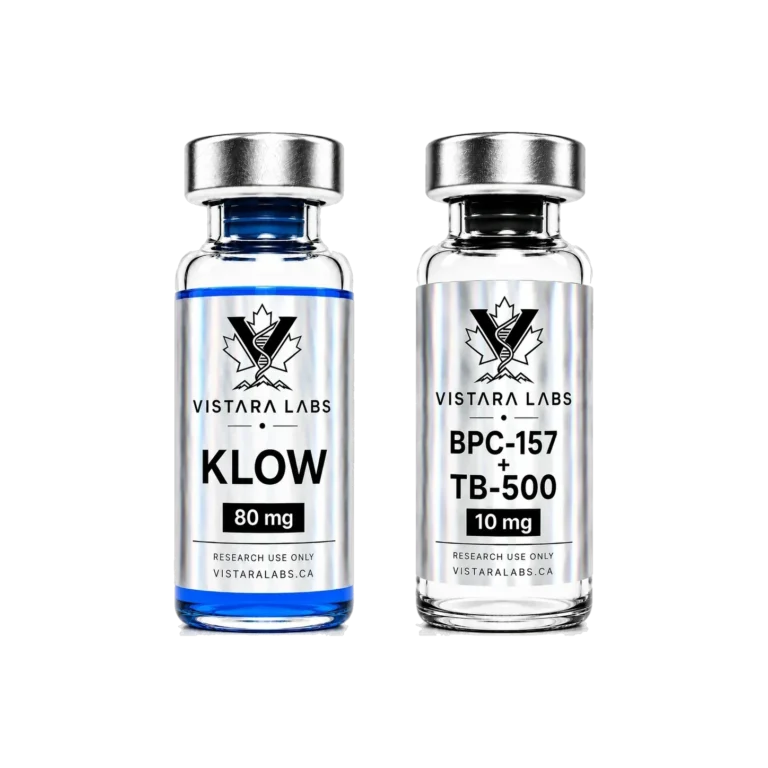
The skin peptide nasal sprays available in Canada from Vistara Labs are the GHK-Cu Nasal Spray, the GLOW Nasal Spray (GHK-Cu, BPC-157 and TB-500), the KLOW Nasal Spray (GLOW plus KPV) and the Melanotan II Nasal Spray for pigmentation research. All arrive ready-mixed in a sealed metered pump (0.175 mL per press), from 350 mcg per spray for Melanotan II to 1.75 mg per spray for GHK-Cu.
At a glance: a 100 mg GHK-Cu spray, a 70 mg GLOW spray and an 80 mg KLOW spray (about 57 sprays each) and a 10 mg Melanotan II spray (about 28 sprays), all with certificates of analysis on our Lab Reports page, shipped from within Canada by Canada Post Xpresspost, with same-business-day dispatch on orders placed before 3 pm Pacific, Monday to Friday.
Findings
- In cosmetic products, GHK-Cu has been found to tighten loose skin, improve elasticity, skin density and firmness, and reduce fine lines and wrinkles (Pickart, Biomed Res Int, 2015).
- GHK increases collagen, elastin and glycosaminoglycan synthesis and supports the function of dermal fibroblasts (Pickart, Int J Mol Sci, 2018).
- In a pilot phase I study in healthy men, Melanotan II increased pigmentation in the face and upper body, measured by quantitative reflectance a week after the last administration (Dorr, Life Sci, 1996).
- In two phase 2 trials in stasis and pressure ulcers, thymosin beta-4, the parent of TB-500, accelerated healing by almost a month in the patients who healed (Treadwell, Ann N Y Acad Sci, 2012).
Which skin peptide nasal sprays can you buy in Canada?
| Spray | In the bottle | Sprays and amount per spray |
|---|---|---|
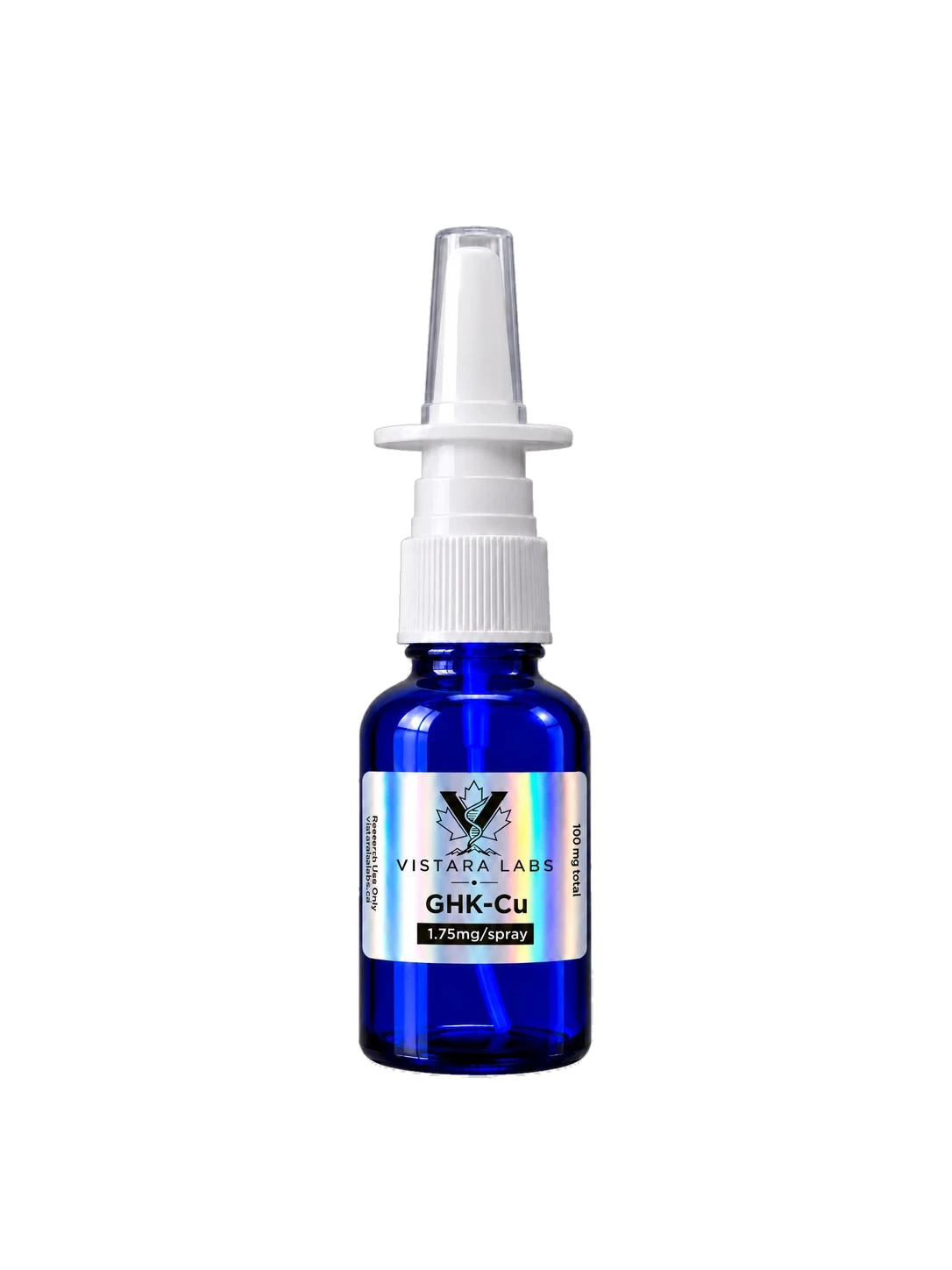
| GHK-Cu Nasal Spray, 100 mg | 100 mg in 10 mL | About 57, 1.75 mg each |
| GLOW Nasal Spray, 70 mg | 50 mg GHK-Cu, 10 mg BPC-157 and 10 mg TB-500 in 10 mL | About 57, about 1.23 mg each |
| KLOW Nasal Spray, 80 mg | 50 mg GHK-Cu and 10 mg each of BPC-157, TB-500 and KPV in 10 mL | About 57, 1.4 mg each (875 mcg GHK-Cu, 175 mcg of each other peptide) |
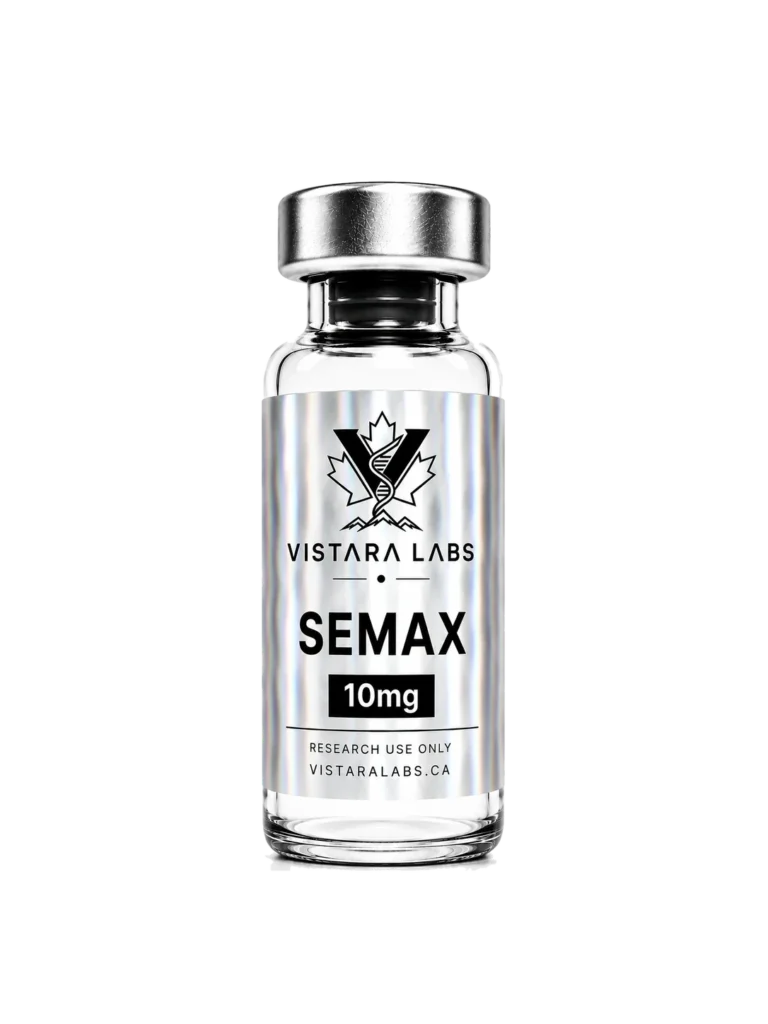
| Melanotan II Nasal Spray, 10 mg | 10 mg | About 28, 350 mcg each |
Every bottle arrives pre-mixed in sterile saline in a sealed metered atomiser, so there is nothing to reconstitute and no bacteriostatic water to buy. Our page on sprays per bottle shows how each figure is worked out.
What is GHK-Cu nasal spray studied for?
GHK-Cu is a copper peptide (glycyl-histidyl-lysine bound to copper) found naturally in human plasma, saliva and urine, with levels that decline with age (Pickart, 2015). It is one of the most studied peptides in skin research. Work centres on collagen and elastin production, skin firmness and elasticity, fine lines, wound healing, hair growth and scalp health, and antioxidant and anti-inflammatory activity.
The same 2015 review describes GHK stimulating collagen, dermatan sulfate, chondroitin sulfate and the small proteoglycan decorin, and attracting immune and endothelial cells to sites of injury. It also restores replicative vitality to fibroblasts after radiation therapy and accelerates healing of skin and hair follicles. Gene data add a wider view: GHK can up- and downregulate at least 4,000 human genes (Pickart, 2015), and it modulates multiple biochemical pathways linked to tissue repair and protection (Pickart, 2018). More: Buy GHK-Cu Nasal Spray in Canada and How Long Does GHK-Cu Last?
What do the GLOW and KLOW blends add?
GLOW adds two repair peptides to GHK-Cu. BPC-157 brings its tendon, ligament and gut-lining research, and TB-500 brings the thymosin beta-4 literature on cell migration and wound closure, where Tβ4 is thought to act by promoting cell migration and stem cell mobilisation and by inhibiting inflammation (Treadwell, 2012).
KLOW adds KPV, the three-amino-acid fragment of alpha-MSH studied for inflammation. In human intestinal epithelial and immune cells, nanomolar KPV inhibited NF-kB inflammatory signalling and reduced pro-inflammatory cytokine secretion (Dalmasso, Gastroenterology, 2008). Choose GHK-Cu alone for single-peptide skin work, GLOW for skin and repair, and KLOW for skin, repair and inflammation together.
More: Buy GLOW Nasal Spray in Canada, Buy KLOW Nasal Spray in Canada, GHK-Cu vs GLOW Blend and KLOW vs GLOW: Which Blend to Buy.
What is Melanotan II nasal spray studied for?
Melanotan II is a stable, lab-made cyclic analogue of alpha-MSH, the hormone behind skin pigmentation. Research centres on melanin production, the tanning response and pigmentation, plus appetite and libido pathways. In the 1996 pilot study, two of the three volunteers showed increased pigmentation after only five low administrations given every other day, which the authors described as tanning activity in humans (Dorr, 1996). The same study recorded spontaneous erections for 1 to 5 hours after administration, which is why libido pathways sit in the Melanotan II research profile alongside pigmentation.
Its melanocortin activity links it to PT-141, which was derived from it; see PT-141 vs Melanotan II: How They Differ and, for desire research, our libido peptide nasal sprays. More: Buy Melanotan II Nasal Spray in Canada.
Why use ready-mixed sprays for skin research?
The metered pump delivers 0.175 mL with every press, so each skin spray carries a fixed amount: 1.75 mg of GHK-Cu, about 1.23 mg of GLOW, 1.4 mg of KLOW or 350 mcg of Melanotan II. In the blends, the peptides stay at the same ratio in every press for the whole bottle. Nothing is reconstituted, and the three GHK-Cu sprays each hold about 57 sprays, which makes side-by-side designs simple to run.
Which skin spray fits which research question?
- Collagen, elasticity and fine lines: the GHK-Cu Nasal Spray, at the highest GHK-Cu amount per spray in the range.
- Skin quality alongside tissue repair: the GLOW Nasal Spray.
- Skin, repair and inflammatory signalling: the KLOW Nasal Spray.
- Melanin and pigmentation: the Melanotan II Nasal Spray.
GLOW and KLOW already combine several peptides in one bottle, so they work as a ready-made skin pairing. Our five spray stacks cover libido, sleep, cognition and repair; they are listed in the peptide nasal spray stacks guide.
Where to buy skin peptide nasal sprays in Canada
- No customs step. Every order ships from within Canada, so the spray travels as an ordinary domestic parcel.
- Same-day dispatch. Orders placed before 3 pm Pacific, Monday to Friday, leave the same business day by tracked Canada Post Xpresspost.
- Keep it cold. Like any peptide in solution, the spray is kept refrigerated once it arrives; see How to Store a Peptide Nasal Spray.
- Prefer powder? The lyophilised GHK-Cu 100 mg vial, GLOW Blend, KLOW Blend and Melanotan II 10 mg vial are also available.
- The full range. Our guide to peptide nasal sprays in Canada lists every spray we carry; see also the best peptide nasal sprays in Canada and, for focus and calm, the nootropic peptide nasal sprays.
GHK-Cu, GLOW, KLOW and Melanotan II are supplied for laboratory research use only. The human studies above were clinical research using pharmaceutical preparations under medical supervision.
Frequently asked questions
Which skin peptide nasal sprays does Vistara Labs sell?
The GHK-Cu Nasal Spray (100 mg), the GLOW Nasal Spray (70 mg), the KLOW Nasal Spray (80 mg) and the Melanotan II Nasal Spray (10 mg).
How much is in each skin spray?
GHK-Cu delivers 1.75 mg per spray, GLOW about 1.23 mg, KLOW 1.4 mg (875 mcg of GHK-Cu and 175 mcg each of BPC-157, TB-500 and KPV) and Melanotan II 350 mcg.
What is the difference between GLOW and KLOW?
GLOW combines GHK-Cu, BPC-157 and TB-500. KLOW contains the same three plus KPV, a fragment of alpha-MSH studied for inflammatory signalling.
What is Melanotan II studied for?
Melanotan II is a stable analogue of alpha-MSH studied for melanin production, the tanning response and pigmentation, plus appetite and libido pathways.
Do the skin nasal sprays need mixing?
No. Every spray arrives ready-mixed in sterile saline in a sealed metered pump that delivers 0.175 mL per press, so there is nothing to reconstitute.
Where can I buy skin peptide nasal sprays in Canada?
Vistara Labs ships the GHK-Cu, GLOW, KLOW and Melanotan II nasal sprays from within Canada by Canada Post Xpresspost, with same-business-day dispatch on orders placed before 3 pm Pacific, Monday to Friday.
Product details from vistaralabs.ca, October 2026. Sources: Pickart L et al. GHK Peptide as a Natural Modulator of Multiple Cellular Pathways in Skin Regeneration. Biomed Res Int. 2015. PMID 26236730. Pickart L et al. Regenerative and Protective Actions of the GHK-Cu Peptide in the Light of the New Gene Data. Int J Mol Sci. 2018. PMID 29986520. Dorr RT et al. Evaluation of melanotan-II, a superpotent cyclic melanotropic peptide in a pilot phase-I clinical study. Life Sci. 1996. PMID 8637402. Treadwell T et al. The regenerative peptide thymosin β4 accelerates the rate of dermal healing in preclinical animal models and in patients. Ann N Y Acad Sci. 2012. PMID 23050815. Dalmasso G et al. PepT1-mediated tripeptide KPV uptake reduces intestinal inflammation. Gastroenterology. 2008. PMID 18061177.
More on this: GHK-Cu vs KLOW Blend: What the Other Three Add and KPV vs GHK-Cu: Two Tripeptides Compared.
All products supplied by Vistara Labs are intended for laboratory research use only. They are not drugs, are not approved for human or veterinary use, and are not intended to diagnose, treat, cure or prevent any condition. Nothing on this page constitutes medical advice or guidance for use in humans.