NAD+ myths: what the research does not show
Cellular Energy & Mitochondrial Research
NAD+ is a coenzyme every cell uses, and most human research on “boosting” it tested oral precursor supplements, not NAD+ itself, with clear rises in blood markers but mixed or null effects on health outcomes. This page goes through what is commonly said about NAD+ and shows which molecule and which study each claim actually traces back to.
Findings
- In human skin samples from 49 people, NAD+ levels fell with age in both men and women (PLoS One, 2012).
- A 10-week randomized trial found the precursor NMN increased muscle insulin sensitivity in women with prediabetes (Science, 2021).
- A 2026 systematic review counted 33 human intervention studies: oral precursors reliably raised NAD-related markers, while health outcomes were mixed and often null.
- The biggest gap: the same review found no outcome trials of intravenous or intramuscular NAD+ itself for ageing or wellness.
 View product →
Myth: NAD+ reverses ageing
Not shown in people. The 2026 systematic review covered 113 studies, 80 of them in rodents. Rodent work often found metabolic and mitochondrial gains. In humans, precursors raised NAD-related markers and were well tolerated, but effects on function, metabolism and blood vessels were inconsistent. The reviewers called the evidence for anti-ageing effects inconclusive.
Myth: NAD+ levels fall with age, so topping up fixes ageing
The first part has support. In the 2012 study of skin samples, NAD+ showed a strong negative correlation with age in both sexes, alongside rising DNA damage. The second part is the leap. No published trial has raised NAD+ in people and then shown slower ageing. A falling marker is a reason to study a molecule, not proof that restoring it reverses anything.
Myth: precursor studies prove NAD+ itself works
They do not transfer directly. Most human trials used oral nicotinamide riboside (NR) or nicotinamide mononucleotide (NMN), which the body converts into NAD+. A 2018 crossover trial showed NR raised NAD+ metabolism in healthy middle-aged and older adults. NAD+ itself was studied in one small 2019 pilot of a six-hour infusion, which found NAD+ was removed from plasma so quickly that levels did not rise for at least two hours. That pilot measured what the body does with NAD+, not any health outcome. Direct NAD+ is not disproven; it is untested for outcomes.
Myth: NAD+ boosters fix blood sugar
Partly true, in one trial. The 2021 trial in postmenopausal women with prediabetes found NMN improved insulin-stimulated glucose uptake and muscle insulin signalling over 10 weeks. But a 12-week randomized trial of NR in 40 obese, insulin-resistant men (2018) found no improvement in insulin sensitivity, glucose metabolism or body composition. Results depend on the precursor, the people and the measure.
Myth: NAD+ boosters build muscle in older adults
Not supported. A 2025 meta-analysis of randomized trials in adults over 60 found NMN did not significantly change muscle mass, grip strength, gait speed or chair-stand times. NR gave a longer walking distance in people with peripheral artery disease, and worse scores on some tests in people with mild cognitive impairment. The authors concluded the evidence does not support either precursor for preserving muscle.
Myth: NAD+ products have no side effects
Mostly mild, not absent. A 2024 systematic review of 10 randomized trials with 489 participants found NADH and precursor supplements generally well tolerated, with no serious risks catalogued. It still recorded muscle pain, fatigue, sleep disturbance and headaches among reported side effects. “Well tolerated in short trials” is the accurate phrase.
What NAD+ cannot promise
The biology of NAD+ is real and well mapped. The human outcome data are thin, and most of them belong to other molecules.
- It cannot promise slower or reversed ageing; reviews call the evidence inconclusive.
- It cannot promise the results of precursor trials; those used NR or NMN.
- It cannot promise muscle gains in older adults; a meta-analysis found none.
- It cannot promise long-term safety data; the trials lasted weeks to months.
Where the evidence stands
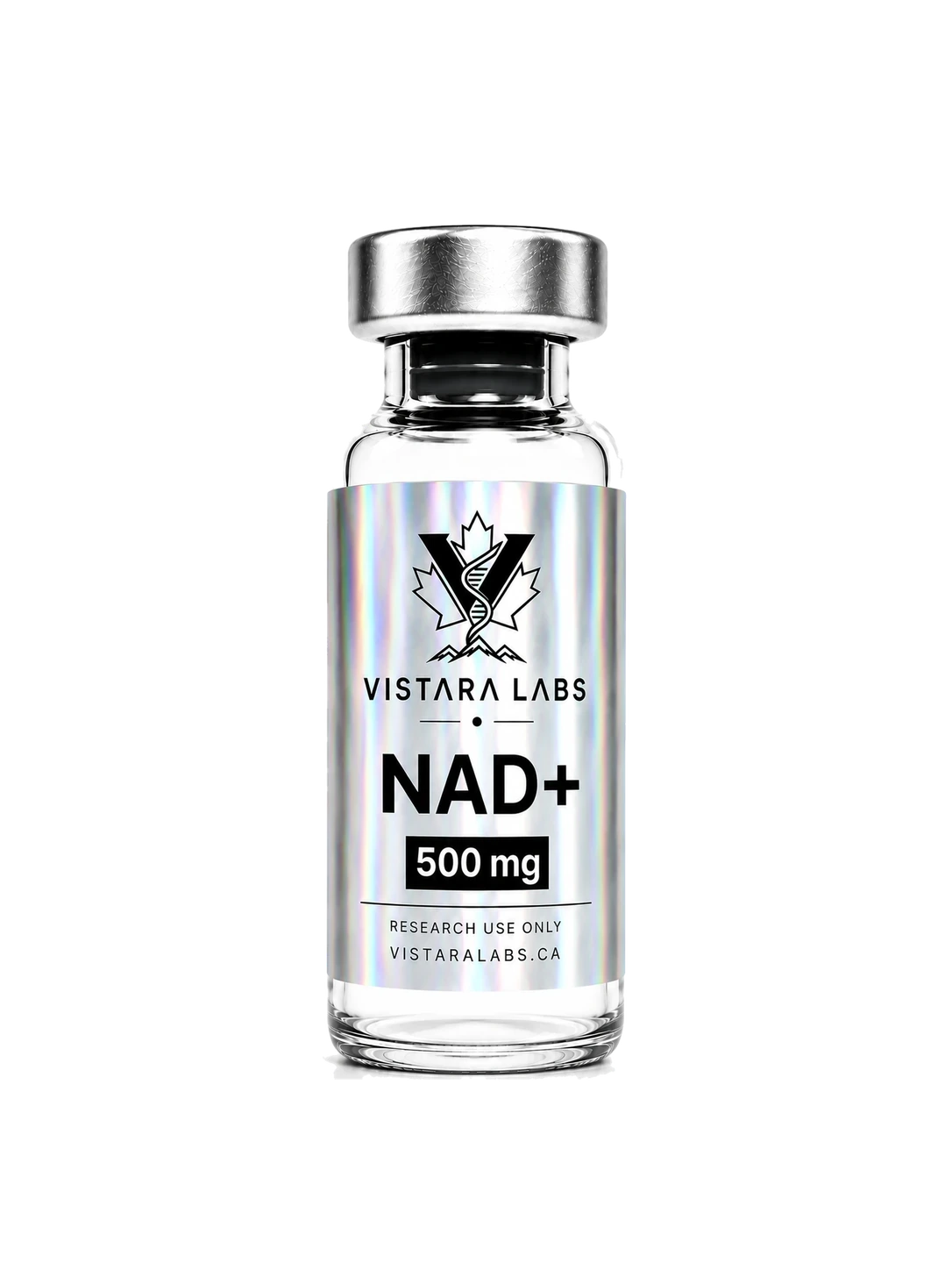
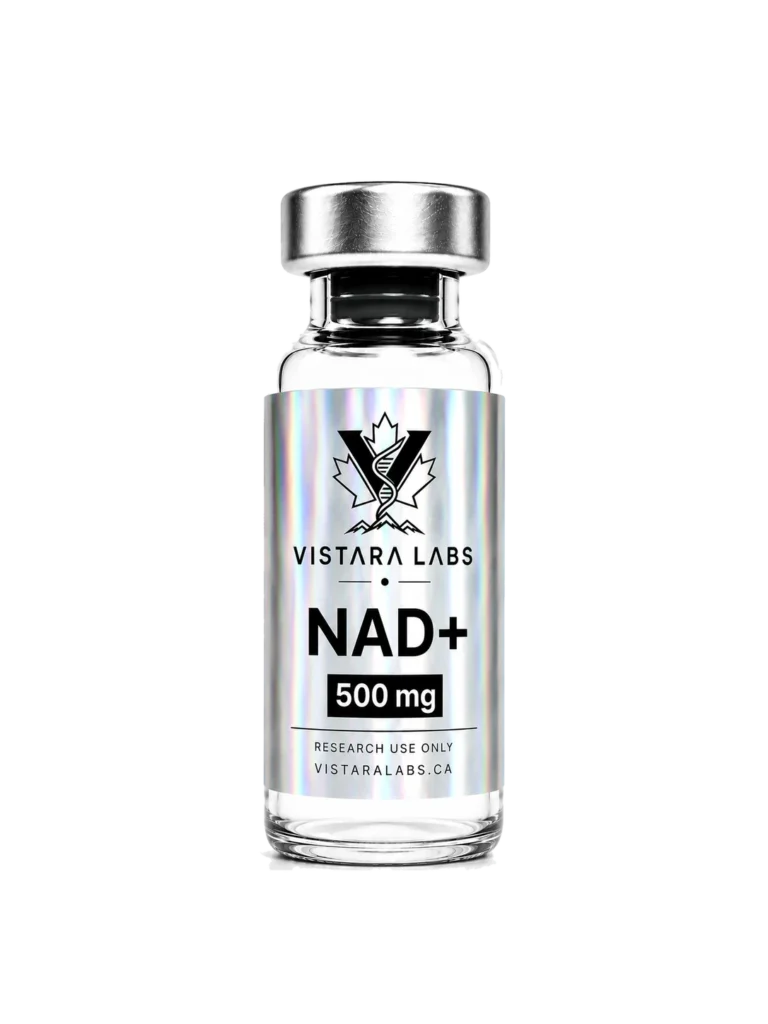
NAD+ is not an approved medicine in Canada for ageing, energy or metabolic uses. Oral precursors have dozens of small human trials; NAD+ given directly has pharmacokinetic data and no outcome trials. Research-grade NAD+ is supplied for laboratory research.
Vistara Labs supplies NAD+ as a laboratory research material. The page above is about the published research, not a claim about our product.
Frequently asked questions
Does NAD+ reverse ageing?
That has not been shown in people. A 2026 systematic review of 33 human studies found clear rises in NAD-related markers but called the evidence for anti-ageing effects inconclusive.
Has NAD+ itself been tested in human trials?
Only in a small 2019 pilot that tracked NAD+ in blood and urine during an infusion. Most human trials tested the precursors NR or NMN, not NAD+.
Do NAD+ levels really decline with age?
In a 2012 study of human skin samples from 49 people, NAD+ fell with age in both men and women. Whether restoring it changes ageing has not been tested.
Sources: Massudi H, Grant R, Braidy N, et al. Age-associated changes in oxidative stress and NAD+ metabolism in human tissue. PLoS One. 2012. PMID 22848760. Gallagher C, Emmanuel OO. NAD+ supplementation for anti-aging and wellness: a PRISMA-guided systematic review of preclinical and clinical evidence. Ageing Res Rev. 2026. PMID 41655607. Martens CR, Denman BA, Mazzo MR, et al. Chronic nicotinamide riboside supplementation is well-tolerated and elevates NAD+ in healthy middle-aged and older adults. Nat Commun. 2018. PMID 29599478. Grant R, Berg J, Mestayer R, et al. A pilot study investigating changes in the human plasma and urine NAD+ metabolome during a 6 hour intravenous infusion of NAD+. Front Aging Neurosci. 2019. PMID 31572171. Yoshino M, Yoshino J, Kayser BD, et al. Nicotinamide mononucleotide increases muscle insulin sensitivity in prediabetic women. Science. 2021. PMID 33888596. Dollerup OL, Christensen B, Svart M, et al. A randomized placebo-controlled clinical trial of nicotinamide riboside in obese men: safety, insulin-sensitivity, and lipid-mobilizing effects. Am J Clin Nutr. 2018. PMID 29992272. Prokopidis K, Moriarty F, Bahat G, et al. The effect of nicotinamide mononucleotide and riboside on skeletal muscle mass and function: a systematic review and meta-analysis. J Cachexia Sarcopenia Muscle. 2025. PMID 40275690. Gindri IM, Ferrari G, Pinto LPS, et al. Evaluation of safety and effectiveness of NAD in different clinical conditions: a systematic review. Am J Physiol Endocrinol Metab. 2024. PMID 37971292.
All products supplied by Vistara Labs are intended for laboratory research use only. They are not drugs, are not approved for human or veterinary use, and are not intended to diagnose, treat, cure or prevent any condition. Nothing on this page constitutes medical advice or guidance for use in humans.
References
Human NAD+ work is largely pharmacology and tolerability rather than clinical outcomes. A 2026 systematic review reports no eligible clinical-outcome trial of intravenous or intramuscular NAD+ itself for anti-ageing or wellness.
- NAD⁺ supplementation for anti-aging and wellness: A PRISMA-guided systematic review of preclinical and clinical evidencePRISMA systematic review; 113 intervention studies including 33 human studies. Reports no eligible clinical-outcome trial of intravenous or intramuscular NAD+ itself for anti-ageing or wellness.
- A Pilot Study Investigating Changes in the Human Plasma and Urine NAD+ Metabolome During a 6 Hour Intravenous Infusion of NADHuman pilot pharmacology study; plasma and urine NAD+ metabolome during a 6-hour intravenous infusion. Not an efficacy trial.
- Intravenous infusion of nicotinamide adenine dinucleotide (NAD(+)) versus nicotinamide riboside (NR): a retrospective tolerability pilot study in a real-world settingRetrospective tolerability pilot comparing four days of intravenous NAD+ with intravenous nicotinamide riboside in a real-world setting.
- Oral LNAD+ rapidly elevates whole blood intracellular NAD and metabolic flux without elevating plasma NAD: evidence from a randomized controlled trialRandomised controlled trial of a specific modified ORAL NAD+ formulation; clinical outcomes exploratory and formulation-specific.
Links open the study record on PubMed so the source can be checked directly. Listing a study is not a claim that its findings apply to any other use, product or route of administration. Research use only.