Peptides for Sleep: What the Research Shows
Cognitive & Nootropic Research
Peptides for sleep research centre on DSIP (delta sleep-inducing peptide), the one peptide named for sleep: in a 1981 double-blind crossover study, total sleep rose 59% within about two hours of DSIP compared with placebo, and in a 1987 placebo-controlled study of 14 people with chronic insomnia, sleep efficiency reached the level of normal sleepers. Three more research lines sit around it: Selank in anxiety, Epitalon in night-time melatonin, and oxytocin in sleep quality and sleep apnea. Here is what each found, and how the Sleep & Calm Spray Stack brings DSIP and Selank together.
 View product →
Findings
- DSIP is a nine-amino-acid peptide first isolated in 1977 and studied in sleep laboratories through the 1980s.
- In six volunteers, total sleep rose 59% within 130 minutes of DSIP compared with placebo, and the next night brought shorter sleep onset and better sleep efficiency, without classic sedation (1981).
- In 14 middle-aged people with chronic insomnia, seven nights of DSIP under double-blind, placebo-controlled conditions brought sleep efficiency up to the level of normal controls, with significant gains in daytime alertness and performance (Eur Neurol, 1987).
- In a 2022 placebo-controlled study of 160 adults, those using intranasal oxytocin for five days reported higher sleep quality than those on placebo (p = .023).
- Epitalon and the pineal extract it was modelled on restored night-time melatonin release in older people with low pineal function (Adv Gerontol, 2007).
Which peptides have been studied for sleep?
| Peptide | Study | Finding |
|---|---|---|
| DSIP | 6 volunteers, crossover (1981) | Sleep up 59% within 130 minutes |
| DSIP | 14 adults with insomnia (1987) | Sleep efficiency reached normal levels |
| Selank | 62 patients with anxiety (2008) | Anti-anxiety effect similar to medazepam |
| Epitalon | Older adults (2007) | Night-time melatonin restored |
| Oxytocin | 160 adults, 5 days (2022) | Higher self-rated sleep quality |
What is DSIP, and what did the human sleep studies find?
DSIP is a nonapeptide, a chain of nine amino acids, isolated in 1977 by a research group in Basel. Unusually for a charged peptide, it crosses the blood-brain barrier by passive diffusion (Biochemistry, 1994). The main human studies, most of them from Dietrich Schneider-Helmert and colleagues:
- 1981, volunteers. Six normal volunteers received DSIP or placebo in a double-blind crossover. They reported sleep pressure straight away, and total sleep rose 59% within 130 minutes. The next night brought shorter sleep onset, less light stage 1 sleep and better sleep efficiency. Behavioural and EEG tests found no sedation in the classic drug sense, and no side effects appeared.
- 1984, open study. Seven patients with severe insomnia received a series of ten administrations. Sleep normalised in all but one, over follow-up periods of three to seven months, and daytime mood and performance improved too.
- 1986, by age. In 18 people with chronic insomnia, the middle-aged group (29 to 59) reached normal sleep values within a week and kept them through follow-up. The older group (60 to 83), whose sleep was twice as disturbed at the start, reached normal sleep by the end of follow-up.
- 1987, placebo-controlled. Fourteen middle-aged people with chronic insomnia received DSIP under double-blind, placebo-controlled conditions for seven nights. Sleep improved from the first night and further with repetition, the gain held into the placebo night that followed, sleep efficiency reached the level of normal controls, and daytime alertness and performance rose significantly.
Single-patient reports describe fewer daytime sleep attacks in narcolepsy (1984) and a five-hour advance of the main sleep period in delayed sleep phase insomnia (1987). A 1992 Amsterdam study of 16 people with insomnia also measured higher sleep efficiency and shorter time to fall asleep on DSIP than on placebo, effects its authors described as weak. In early-stage laboratory research, DSIP stimulated melatonin release from the pineal gland (1992), a link it shares with Epitalon. Ordering details are in Buy DSIP in Canada.
Sources: Kovalzon VM, Strekalova TV. J Neurochem. 2006. PMID 16539679. Gray RA et al. Biochemistry. 1994. PMID 8312250. Schneider-Helmert D et al. Int J Clin Pharmacol Ther Toxicol. 1981. PMID 6895513. Kaeser HE. Eur Neurol. 1984. PMID 6391926. Schneider-Helmert D. Eur Neurol. 1986. PMID 3792404. Schneider-Helmert D. Eur Neurol. 1987. PMID 3622582. Schneider-Helmert D. Eur Neurol. 1984. PMID 6548968. Schneider-Helmert D et al. Dtsch Med Wochenschr. 1987. PMID 3582201. Bes F et al. Neuropsychobiology. 1992. PMID 1299794. Ouichou A et al. Biol Signals. 1992. PMID 1339175.
Why is Selank paired with DSIP?
Selank is a seven-amino-acid analogue of the natural peptide tuftsin, studied mainly by Russian research groups for anxiety. In early-stage laboratory research it acted as a positive allosteric modulator of GABA binding, the receptor system most prescription anti-anxiety drugs target (2018). Its clinical studies:
- 2008, 62 patients. In generalised anxiety disorder and neurasthenia, Selank and the benzodiazepine medazepam had similar anti-anxiety effects, and Selank added an anti-fatigue effect.
- 2014, 60 patients. Selank showed a pronounced anti-anxiety effect that lasted a week after the last administration, and quality of life improved.
- 2015, 70 patients. Added to the benzodiazepine phenazepam, Selank brought the response on sooner and reduced that drug’s side effects, including sedation and memory problems.
Selank’s place in a sleep stack comes from this anxiety and stress research rather than a sleep trial of its own. More in Selank and anxiety: the research.
Sources: Vyunova TV et al. Protein Pept Lett. 2018. PMID 30255741. Konstantinopolsky MA et al. Bull Exp Biol Med. 2022. PMID 36322304. Zozulia AA et al. Zh Nevrol Psikhiatr Im S S Korsakova. 2008. PMID 18454096. Medvedev VE et al. Zh Nevrol Psikhiatr Im S S Korsakova. 2014. PMID 25176261. Medvedev VE et al. Zh Nevrol Psikhiatr Im S S Korsakova. 2015. PMID 26356395.
What has Epitalon research shown about melatonin?
Melatonin is the pineal gland’s night-time hormone, and a 2007 study found that ageing lowers it and flattens its daily rhythm. Epitalon, a synthetic four-amino-acid peptide (Ala-Glu-Asp-Gly), and Epithalamin, the pineal peptide extract it was modelled on, restored night-time melatonin release and normalised the rhythm in older people with low pineal function, with no side effects reported (Adv Gerontol). An earlier Epithalamin study found the effect tracked the starting point: night melatonin rose in older people with low pineal activity and tended to fall in those with normal function (2004).
In early-stage laboratory research, Epitalon raised melatonin output from pineal cells along with AANAT, the enzyme that drives its production (2012). Its wider record is in Epitalon (Epithalon): what the research actually shows.
Sources: Korkushko OV et al. Adv Gerontol. 2007. PMID 17969590. Korkushko OV et al. Bull Exp Biol Med. 2004. PMID 15452611. Khavinson VKh et al. Bull Exp Biol Med. 2012. PMID 22816096. Araj SK et al. Int J Mol Sci. 2025. PMID 40141333.
What has oxytocin research shown about sleep?
- 2022, 160 adults. In a placebo-controlled study, 80 couples used intranasal oxytocin or placebo for five days. Those on oxytocin reported higher sleep quality (p = .023), with the effects most pronounced in women (Psychosom Med).
- 2017, sleep apnea. In eight patients with obstructive sleep apnea, night-time intranasal oxytocin increased total sleep time and self-reported sleep satisfaction, cut the frequency of hypopneas (partial breathing pauses) and shortened both full and partial pauses.
- 2020, randomised and double-blind. In patients with sleep apnea, oxytocin shortened obstructive events and reduced the oxygen drops that came with them, with no adverse effects reported (Sleep Med).
The Oxytocin Nasal Spray comes ready-mixed in 2 mg and 4 mg bottles, and its wider human record is in Oxytocin nasal spray: what the human research shows.
Sources: Doerr JM et al. Psychosom Med. 2022. PMID 35472193. Jain V et al. Am J Physiol Lung Cell Mol Physiol. 2017. PMID 28798255. Jain V et al. Sleep Med. 2020. PMID 32862007.
What did the tirzepatide sleep apnea trials find?
Obstructive sleep apnea also has large peptide trials. Two phase 3 trials of tirzepatide (N Engl J Med, 2024) enrolled 469 adults with obesity and moderate-to-severe sleep apnea. Over 52 weeks, the apnea-hypopnea index fell by 25.3 and 29.3 events an hour on tirzepatide, against 5.3 and 5.5 on placebo. The full record is in Tirzepatide and sleep apnea.
Source: Malhotra A et al. N Engl J Med. 2024. PMID 38912654.
The Sleep & Calm Spray Stack, sprays and vials
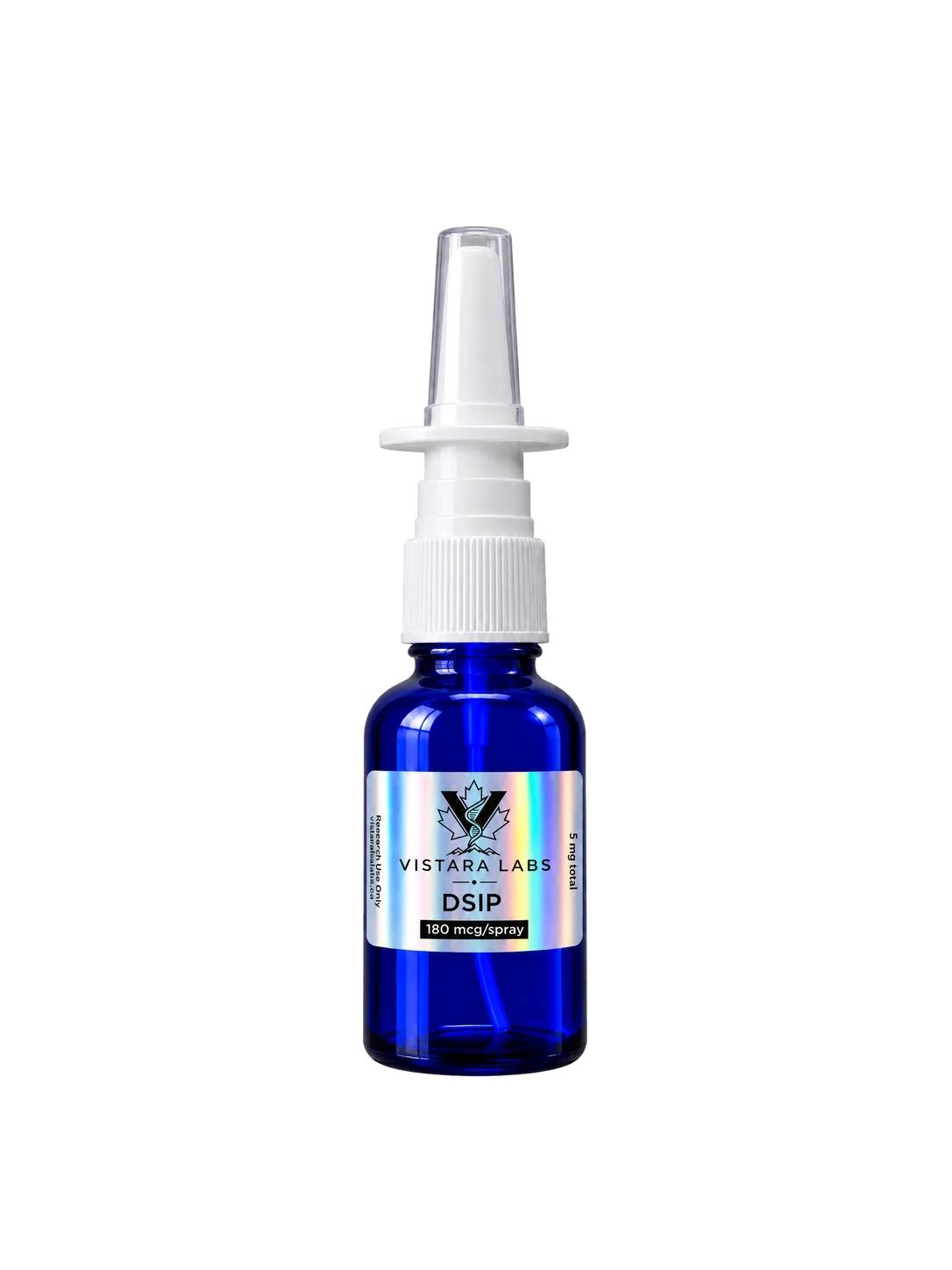
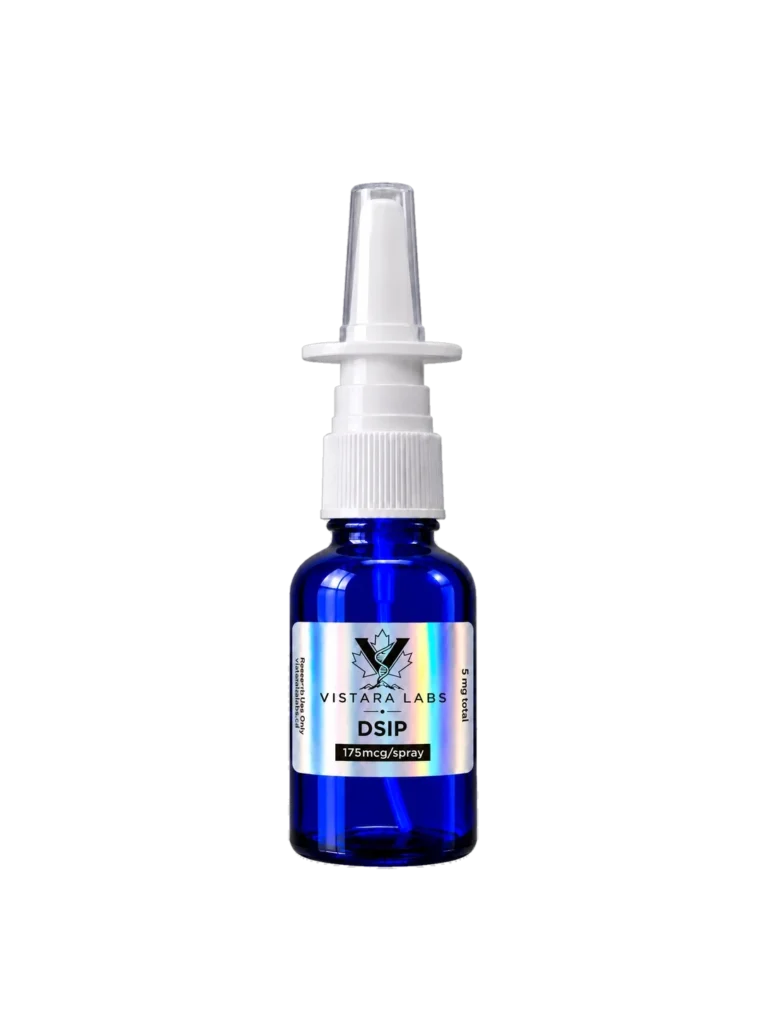
The Sleep & Calm Spray Stack pairs a DSIP Nasal Spray (5 mg in 5 mL) with a Selank Nasal Spray (10 mg in 5 mL), each ready-mixed in sterile saline in a metered pump bottle. As lyophilised vials, DSIP (5 mg), Selank (10 mg) and Epitalon (10 mg) are reconstituted with bacteriostatic water (the peptide calculator does the arithmetic). Orders ship from within Canada by Canada Post Xpresspost, with certificates of analysis on the lab reports page.
DSIP, Selank, Epitalon and oxytocin are supplied for laboratory research use only. More cognitive and sleep research is collected in our research notes.
Frequently asked questions
What has DSIP research shown?
In six volunteers, total sleep rose 59% within 130 minutes of DSIP compared with placebo (1981). In 14 people with chronic insomnia, seven nights of DSIP brought sleep efficiency up to the level of normal controls, with better daytime alertness and performance (1987), and in 18 people with chronic insomnia, sleep reached normal values in both middle-aged and older groups (1986).
What has Selank research shown?
In 62 patients with anxiety, Selank matched the anti-anxiety effect of the benzodiazepine medazepam and added an anti-fatigue effect (2008). In 60 patients, its anti-anxiety effect lasted a week after the last administration (2014).
What has Epitalon research shown about melatonin?
In a 2007 study, Epitalon and Epithalamin, the pineal extract it was modelled on, restored night-time melatonin release and normalised its daily rhythm in older people with low pineal function, with no side effects reported.
What has oxytocin research shown about sleep?
In a 2022 placebo-controlled study of 160 adults, intranasal oxytocin for five days raised self-rated sleep quality (p = .023). In sleep apnea, it increased total sleep time in eight patients (2017) and shortened obstructive events in a randomised, double-blind study (2020).
Where can I buy DSIP and the Sleep & Calm Spray Stack in Canada?
Vistara Labs supplies DSIP as a 5 mg vial and a ready-mixed nasal spray, plus Selank, Epitalon, oxytocin and the Sleep & Calm Spray Stack, shipped from within Canada by Canada Post Xpresspost.
More on this: DSIP vs Selank: How They Differ and Peptides for Focus and Anxiety: What the Research Shows.
All products supplied by Vistara Labs are intended for laboratory research use only. They are not drugs, are not approved for human or veterinary use, and are not intended to diagnose, treat, cure or prevent any condition. Nothing on this page constitutes medical advice or guidance for use in humans.