KLOW vs Wolverine Stack: What GHK-Cu and KPV Add
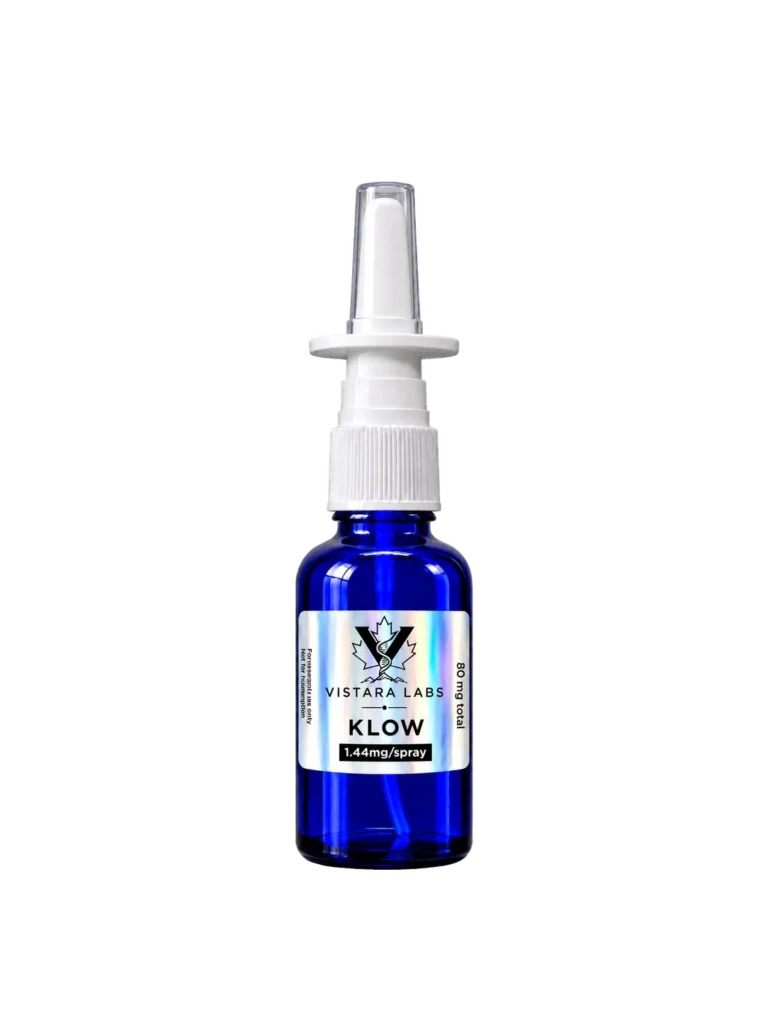
The Wolverine stack is BPC-157 + TB-500, two peptides studied for soft-tissue repair; the KLOW Blend contains that same pair plus GHK-Cu and KPV. An 80 mg KLOW vial holds 10 mg BPC-157 and 10 mg TB-500, exactly what is in a 20 mg BPC-157 + TB-500 vial, with 50 mg GHK-Cu and 10 mg KPV added. So the question is whether the research needs the copper peptide’s collagen and skin literature and KPV’s anti-inflammatory data on top of the tendon, ligament and wound work behind the Wolverine pair.
Findings
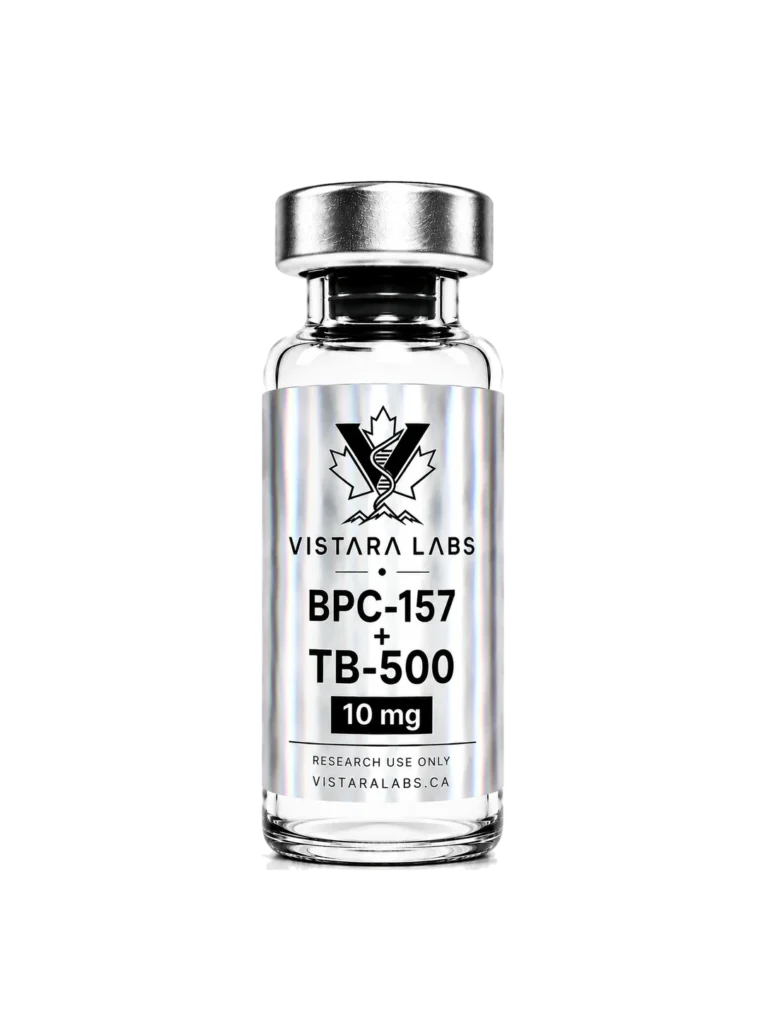
- KLOW contains the full Wolverine pair at 10 mg each, the same as the 20 mg BPC-157 + TB-500 vial; the 10 mg Wolverine vial holds 5 mg of each.
- BPC-157 accelerated tendon fibroblast outgrowth, survival under stress and migration in culture (2011), and improved outcomes in muscle, tendon, ligament and bone injury models across a 2025 systematic review.
- Thymosin beta-4 raised wound re-epithelialisation by up to 61% at day 7 in rats (1999); its seven-amino-acid actin-binding motif drives its effect on new blood vessel growth (2003).
- In a 2021 clinic chart review, 3 of 4 patients given BPC-157 with thymosin beta-4 reported knee-pain relief, the only published human report of the pairing, without controls.
- KLOW’s additions bring collagen synthesis and a controlled human wound trial (GHK-Cu) and colitis model data (KPV). No study of KLOW as a formulation was identified.
What is in each vial?
| Component | Wolverine 10 mg | Wolverine 20 mg | KLOW 80 mg |
|---|---|---|---|
| BPC-157 | 5 mg | 10 mg | 10 mg |
| TB-500 | 5 mg | 10 mg | 10 mg |
| GHK-Cu | None | None | 50 mg |
| KPV | None | None | 10 mg |
“Wolverine” is a nickname the research community gave the BPC-157 and TB-500 pairing, not a formulation, and other vendors may use it for different mixtures (The Wolverine Stack: BPC-157 + TB-500). KLOW’s makeup is covered in What Is KLOW? Because GHK-Cu is blue, KLOW solution is blue; the Wolverine pair is clear.
What does the Wolverine pair cover?
BPC-157
BPC-157 is a 15-amino-acid partial sequence of a protein isolated from human gastric juice. In rat Achilles tendon explants it significantly sped fibroblast outgrowth, improved survival under hydrogen peroxide stress and raised fibroblast migration in a dose-dependent way, through activation of the FAK-paxillin pathway (Chang et al., J Appl Physiol, 2011). Its research group also describes protection of vessel lining and recruitment of collateral vessels after obstruction (Sikiric et al., Curr Pharm Des, 2018). A 2025 systematic review of 36 studies, 35 preclinical, found improved functional, structural and biomechanical outcomes in muscle, tendon, ligament and bone injury models, and reported a half-life under 30 minutes (Vasireddi et al., HSS J, 2025).
TB-500
TB-500 is built on thymosin beta-4, a 43-amino-acid peptide that is the main actin-sequestering molecule in mammalian tissue. In a rat full-thickness wound model, thymosin beta-4 increased re-epithelialisation by 42% over saline at day 4 and by up to 61% at day 7, and treated wounds contracted at least 11% more by day 7 (Malinda et al., J Invest Dermatol, 1999). Its seven-amino-acid actin-binding motif matched the full peptide’s activity in endothelial migration and vessel-sprouting assays (Philp et al., FASEB J, 2003), and analysis of a product sold as TB-500 identified that region, Ac-LKKTETQ (Esposito et al., Drug Test Anal, 2012).
The pair together
The only human report of the combination is a retrospective chart review from one clinic. Of 16 patients reached by phone, 12 had received BPC-157 alone and 11 of them reported significant knee-pain improvement; 4 had received BPC-157 with thymosin beta-4, and 3 of those 4 reported improvement (Lee and Padgett, Altern Ther Health Med, 2021). There was no control group or validated outcome measure. The case for the pairing rests on the two peptides’ different mechanisms, covered in BPC-157 vs TB-500.
What do GHK-Cu and KPV add in KLOW?
GHK-Cu
GHK-Cu stimulated collagen synthesis in fibroblast cultures from 10-12 M, peaking at 10-9 M (Maquart et al., FEBS Lett, 1988), and modulates metalloproteinases and their inhibitors, decorin and glycosaminoglycans (Pickart et al., Biomed Res Int, 2015). It is the only KLOW component with a randomised, placebo-controlled human trial: topical GHK-Cu gel in diabetic foot ulcers gave 98.5% median closure against 60.8% for vehicle (Mulder et al., Wound Repair Regen, 1994).
KPV
KPV is residues 11 to 13 of alpha-MSH, carrying its anti-inflammatory effect without its pigmentary action (Brzoska et al., Endocr Rev, 2008). In two mouse colitis models it sped recovery and reduced inflammatory infiltrates (Kannengiesser et al., Inflamm Bowel Dis, 2008), and it enters cells through the PepT1 transporter to inhibit NF-kappaB signalling at nanomolar concentrations (Dalmasso et al., Gastroenterology, 2008).
How do KLOW and the Wolverine stack compare at a glance?
| Question | Wolverine (BPC-157 + TB-500) | KLOW Blend |
|---|---|---|
| What is it? | Two-peptide blend | Four-peptide blend, Wolverine pair included |
| Size | 10 mg or 20 mg vial | 80 mg vial |
| Main research area | Tendon, ligament, muscle and wound repair | Adds skin and collagen work and inflammation |
| Mechanism focus | FAK-paxillin signalling, actin binding, cell migration, vessel growth | Adds matrix synthesis and NF-kappaB inhibition |
| Human evidence | Uncontrolled clinic reports | Same, plus GHK-Cu’s topical ulcer trial; none for the blend |
| Colour in solution | Clear | Blue |
| Forms we supply | 10 mg and 20 mg vials, nasal spray | 80 mg vial, nasal spray |
Which one fits which research question?
- Musculoskeletal and soft-tissue models (tendon, ligament, muscle): the Wolverine pair, where most of the BPC-157 and thymosin beta-4 literature sits, without two extra variables.
- Repair designs that also measure skin, collagen or inflammation: KLOW, which adds GHK-Cu’s matrix data and KPV’s anti-inflammatory data.
- Skin and repair without the inflammation arm: the GLOW Blend, KLOW minus KPV.
- Different ratios or separate timing: single vials of BPC-157 and TB-500; see blend or separate vials.
How are KLOW and the Wolverine stack supplied?
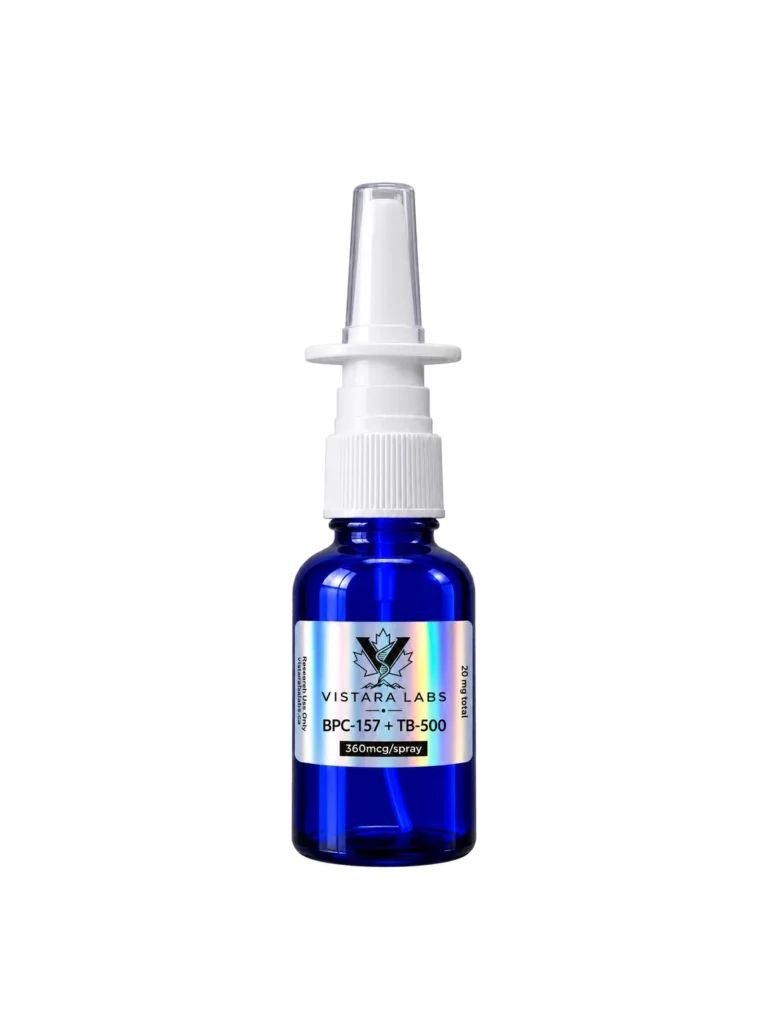
BPC-157 + TB-500 comes as 10 mg and 20 mg lyophilised vials and a ready-mixed BPC-157 + TB-500 Nasal Spray; KLOW as an 80 mg vial and a ready-mixed KLOW Nasal Spray. The sprays are metered at 0.175 mL per press. Vials are reconstituted with bacteriostatic water (see the KLOW reconstitution guide), and storage after mixing is covered in how long BPC-157 lasts. More on the pair is in Buy BPC-157 + TB-500 in Canada. Certificates of analysis are on the lab reports page, and every order ships from within Canada.
The BPC-157 + TB-500 blend and the KLOW Blend are supplied for laboratory research use only. The studies above used their own preparations of each individual peptide, not these blends.
Frequently asked questions
What is the difference between KLOW and the Wolverine stack?
The Wolverine stack is BPC-157 + TB-500. KLOW contains the same pair at 10 mg each, plus 50 mg GHK-Cu and 10 mg KPV, adding collagen and skin research and anti-inflammatory research to the soft-tissue pair.
Does KLOW contain BPC-157 and TB-500?
Yes. An 80 mg KLOW vial holds 10 mg BPC-157 and 10 mg TB-500, the same amounts as the 20 mg BPC-157 + TB-500 vial.
Is KLOW stronger than the Wolverine stack?
Not in BPC-157 or TB-500, which match the 20 mg Wolverine vial. KLOW adds two peptides with different research areas. No study has compared the two blends.
Why is KLOW blue and the Wolverine stack clear?
KLOW contains GHK-Cu, whose bound copper is blue. BPC-157 and TB-500 carry no metal, so their solution is clear.
Where can I buy KLOW and the Wolverine stack in Canada?
Vistara Labs supplies BPC-157 + TB-500 as 10 mg and 20 mg vials and a nasal spray, and KLOW as an 80 mg vial and a nasal spray, shipped from within Canada by Canada Post Xpresspost.
Product details from vistaralabs.ca, October 2026. Sources: Chang CH et al. The promoting effect of pentadecapeptide BPC 157 on tendon healing involves tendon outgrowth, cell survival, and cell migration. J Appl Physiol. 2011. PMID 21030672. Sikiric P et al. Novel cytoprotective mediator, stable gastric pentadecapeptide BPC 157. Vascular recruitment and gastrointestinal tract healing. Curr Pharm Des. 2018. PMID 29879879. Vasireddi N et al. Emerging use of BPC-157 in orthopaedic sports medicine: a systematic review. HSS J. 2025. PMID 40756949. Malinda KM et al. Thymosin beta4 accelerates wound healing. J Invest Dermatol. 1999. PMID 10469335. Philp D et al. The actin binding site on thymosin beta4 promotes angiogenesis. FASEB J. 2003. PMID 14500546. Esposito S et al. Synthesis and characterization of the N-terminal acetylated 17-23 fragment of thymosin beta 4 identified in TB-500, a product suspected to possess doping potential. Drug Test Anal. 2012. PMID 22962027. Lee E, Padgett B. Intra-articular injection of BPC 157 for multiple types of knee pain. Altern Ther Health Med. 2021. PMID 34324435. Maquart FX et al. Stimulation of collagen synthesis in fibroblast cultures by the tripeptide-copper complex glycyl-L-histidyl-L-lysine-Cu2+. FEBS Lett. 1988. PMID 3169264. Pickart L et al. GHK peptide as a natural modulator of multiple cellular pathways in skin regeneration. Biomed Res Int. 2015. PMID 26236730. Mulder GD et al. Enhanced healing of ulcers in patients with diabetes by topical treatment with glycyl-l-histidyl-l-lysine copper. Wound Repair Regen. 1994. PMID 17147644. Brzoska T et al. Alpha-melanocyte-stimulating hormone and related tripeptides. Endocr Rev. 2008. PMID 18612139. Kannengiesser K et al. Melanocortin-derived tripeptide KPV has anti-inflammatory potential in murine models of inflammatory bowel disease. Inflamm Bowel Dis. 2008. PMID 18092346. Dalmasso G et al. PepT1-mediated tripeptide KPV uptake reduces intestinal inflammation. Gastroenterology. 2008. PMID 18061177.
More on this: Peptides for Injury Recovery: What the Research Shows.
All products supplied by Vistara Labs are intended for laboratory research use only. They are not drugs, are not approved for human or veterinary use, and are not intended to diagnose, treat, cure or prevent any condition. Nothing on this page constitutes medical advice or guidance for use in humans.