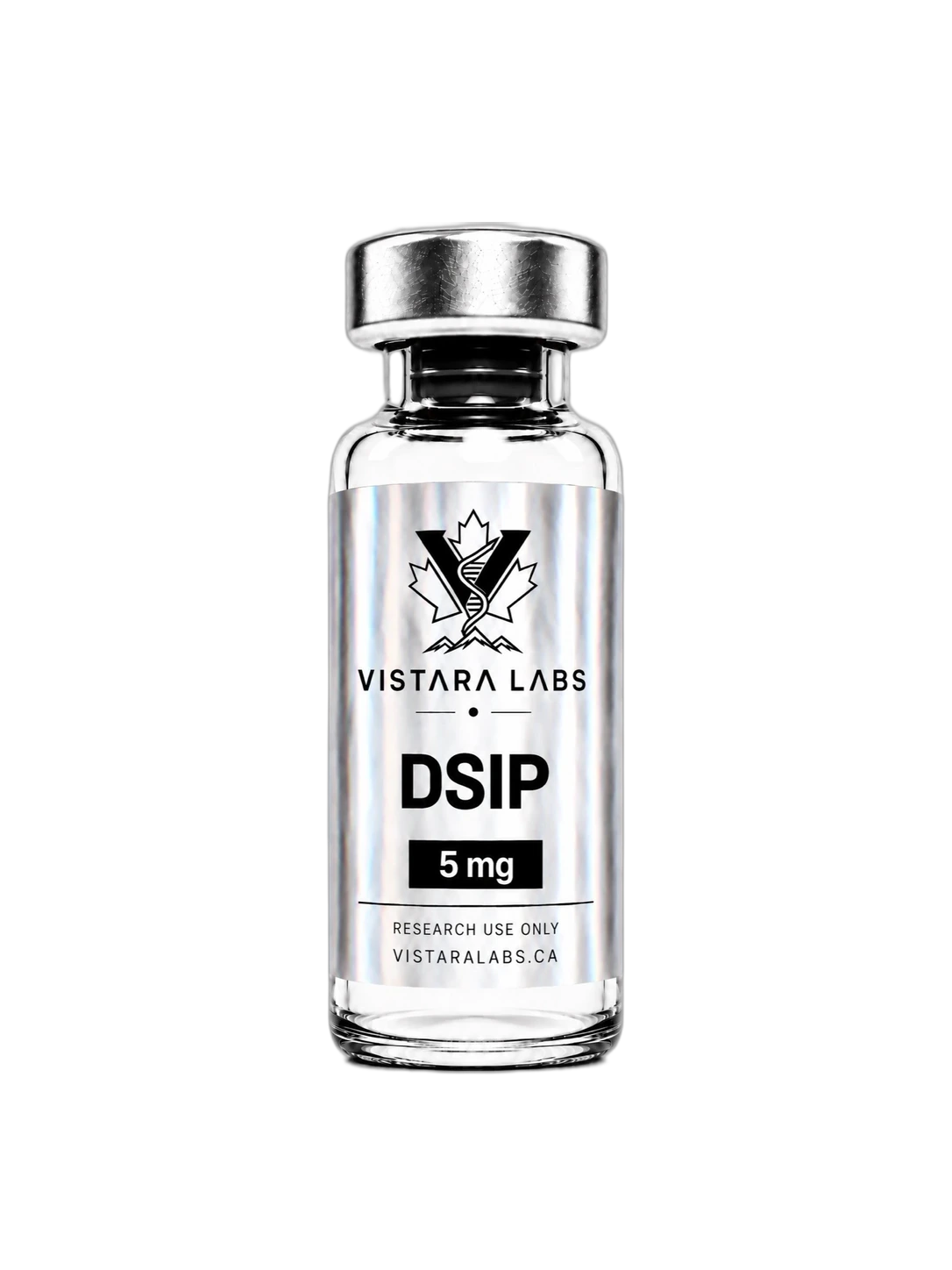
DSIP myths: what the research does not show
Cognitive & Nootropic Research
DSIP is a nine-amino-acid peptide found in rabbit blood in 1977 and named for a sleep effect that later research never fully pinned down, and its small human studies are 40 years old. Here is how the current claims stand against that record.
Findings
- In 14 adults with severe long-standing insomnia, 7 nights of DSIP improved sleep under placebo-controlled, double-blind conditions, and daytime alertness rose (Eur Neurol, 1987).
- In 18 adults aged 29 to 83 with insomnia, sleep reached normal values by the end of a week, and the whole sample had normal patterns by the end of a follow-up week (Eur Neurol, 1986).
- In 6 healthy volunteers, total sleep time rose 59% within 130 minutes compared with placebo, with no sedation of the classic kind (Int J Clin Pharmacol Ther Toxicol, 1981).
- The biggest gap: a 2006 review in J Neurochem reported that the DSIP gene, protein and receptor have never been identified, calling the sleep hypothesis weakly documented.
 View product →
Myth: DSIP is the body’s own sleep hormone
Unresolved, despite the name. DSIP-like material has been detected in brain and other organs by antibody methods. The 2006 review argued the signal may come from a different, unidentified peptide, and noted that DSIP-like material sits in brain areas not especially tied to sleep. Its authors called DSIP a still unresolved riddle. The name describes what a 1977 experiment appeared to show, not a confirmed role in human sleep.
Myth: DSIP is a proven insomnia remedy
Promising in small old studies, never confirmed. The positive results above come from one Swiss research group between 1981 and 1987, with 6 to 18 participants in each study. A 1997 review of neuropeptides and sleep placed DSIP among those whose effect on human sleep was not yet clear. We found no modern replication and no trial of the size expected today. These are encouraging early findings that the field did not follow up.
Myth: DSIP raises growth hormone
Shown in rats, not in women. A 1987 rat study found dose-related growth hormone release through the brain and the pituitary, with the rise fading at higher amounts. A 1993 controlled study in 8 healthy women found no effect on growth hormone or prolactin, in basal levels, in the daily rhythm, or in response to a stimulation test. The human result points the other way from the animal one.
Myth: DSIP levels explain sleep disorders
Not supported. A 1995 study measured DSIP-like material in the blood of 9 people with sleep apnea, 10 with narcolepsy and 11 controls, and found no significant differences between groups. Its authors wrote that the findings did not support a role as a marker of disease activity. So blood levels of this peptide do not track common sleep disorders.
Myth: DSIP cures withdrawal and chronic pain
Overstated, from uncontrolled reports. In a 1984 report of 107 inpatients in alcohol or opiate withdrawal, symptoms cleared or improved markedly in most of those assessed, judged clinically with no placebo group. A 1984 pilot in 7 people with long-standing pain found pain levels significantly lower in 6 of them. Small, unblinded studies of this kind cannot separate a real effect from recovery over time and expectation.
Myth: DSIP is a sedative
False, and that is one of the more interesting findings. In the 1981 volunteer study, detailed behaviour and EEG analysis showed no sedation in the classic sense, while sleep still increased. A 1981 study in 6 adults with insomnia recorded a slight arousing effect in the first hour, before sleep improved in the second. The researchers described the pattern as supporting natural sleep rather than suppressing wakefulness.
What DSIP cannot promise
DSIP’s human record is small, old and uncontradicted rather than confirmed, and the basic biology is unsettled.
- It cannot promise better sleep; the studies are tiny and 40 years old.
- It cannot promise more growth hormone; a controlled human study found none.
- It cannot promise anything through a known receptor, because none has been identified.
- It cannot promise relief in withdrawal or pain; those reports had no placebo group.
Where the evidence stands
DSIP is not an approved medicine in Canada for sleep or any other use. Its human studies were published in the 1980s and 1990s, and the field moved on without settling what the peptide does. Recent work is mostly in rats, including a 2021 stroke recovery study. DSIP is supplied strictly as a laboratory research material.
Vistara Labs supplies DSIP as a laboratory research material. The page above is about the published research, not a claim about our product.
Frequently asked questions
Does DSIP actually help people sleep?
Small placebo-controlled studies in the 1980s reported better sleep in adults with insomnia, with 6 to 18 people each. No larger modern trial has confirmed it, and a 1997 review called its effect on human sleep unclear.
Is DSIP a natural hormone?
DSIP-like material has been found in the body, but a 2006 review reported that its gene, protein and receptor were never identified, and suggested a different peptide may explain the signal.
Does DSIP increase growth hormone?
A rat study found a rise. A controlled study in healthy women found no change in growth hormone or prolactin, so the human evidence does not support it.
Sources: Schneider-Helmert D. Effects of delta-sleep-inducing peptide on 24-hour sleep-wake behaviour in severe chronic insomnia. Eur Neurol. 1987. PMID 3622582. Schneider-Helmert D. Efficacy of DSIP to normalize sleep in middle-aged and elderly chronic insomniacs. Eur Neurol. 1986. PMID 3792404. Schneider-Helmert D, Gnirss F, Monnier M, et al. Acute and delayed effects of DSIP (delta sleep-inducing peptide) on human sleep behavior. Int J Clin Pharmacol Ther Toxicol. 1981. PMID 6895513. Kovalzon VM, Strekalova TV. Delta sleep-inducing peptide (DSIP): a still unresolved riddle. J Neurochem. 2006. PMID 16539679. Steiger A, Holsboer F. Neuropeptides and human sleep. Sleep. 1997. PMID 9456470. Iyer KS, McCann SM. Delta sleep-inducing peptide (DSIP) stimulates growth hormone (GH) release in the rat by hypothalamic and pituitary actions. Peptides. 1987. PMID 3575154. Giusti M, Carraro A, Porcella E, et al. Delta sleep-inducing peptide administration does not influence growth hormone and prolactin secretion in normal women. Psychoneuroendocrinology. 1993. PMID 8475226. Vgontzas AN, Friedman TC, Chrousos GP, et al. Delta sleep-inducing peptide in normal humans and in patients with sleep apnea and narcolepsy. Peptides. 1995. PMID 8532601. Dick P, Costa C, Fayolle K, et al. DSIP in the treatment of withdrawal syndromes from alcohol and opiates. Eur Neurol. 1984. PMID 6548969. Larbig W, Gerber WD, Kluck M, et al. Therapeutic effects of delta-sleep-inducing peptide (DSIP) in patients with chronic, pronounced pain episodes. A clinical pilot study. Eur Neurol. 1984. PMID 6548970. Schneider-Helmert D, Schoenenberger GA. The influence of synthetic DSIP (delta-sleep-inducing-peptide) on disturbed human sleep. Experientia. 1981. PMID 7028502. Graf MV, Kastin AJ. Delta-sleep-inducing peptide (DSIP): a review. Neurosci Biobehav Rev. 1984. PMID 6145137. Tukhovskaya EA, Ismailova AM, Shaykhutdinova ER, et al. Delta Sleep-Inducing Peptide Recovers Motor Function in SD Rats after Focal Stroke. Molecules. 2021. PMID 34500605.
All products supplied by Vistara Labs are intended for laboratory research use only. They are not drugs, are not approved for human or veterinary use, and are not intended to diagnose, treat, cure or prevent any condition. Nothing on this page constitutes medical advice or guidance for use in humans.