Epitalon vs NAD+
Epitalon is a four-amino-acid peptide studied for telomeres and the pineal gland’s melatonin rhythm, while NAD+ is not a peptide at all: it is a coenzyme, nicotinamide adenine dinucleotide, that carries electrons in mitochondria and fuels the PARP and sirtuin enzymes. Both turn up in ageing research, but they approach it from different ends. Epitalon is studied as a signal to the cell’s telomere and hormone machinery; NAD+ is studied as a raw material whose levels fall with age. Here is how they compare, what the human research covers, and which questions each one fits.
Findings
- Epitalon is the tetrapeptide Ala-Glu-Asp-Gly, a synthetic analogue of the pineal preparation epithalamin. It induced telomerase and lengthened telomeres in human fibroblasts (2003).
- In old rhesus monkeys, Epitalon raised night-time melatonin and lowered basal glucose and insulin (2005).
- NAD+ fell with age in human skin tissue from 49 people aged newborn to 77, in both sexes, while PARP activity rose with age in men (2012).
- In a randomised, placebo-controlled crossover trial in healthy middle-aged and older adults, the NAD+ precursor nicotinamide riboside raised NAD+ in blood immune cells by about 60% (2018).
What is Epitalon?
Epitalon, also spelled Epithalon, is a synthetic peptide of four amino acids, Ala-Glu-Asp-Gly (Khavinson et al., Molecules, 2020), designed as an analogue of epithalamin, a peptide extract of the pineal gland (Goncharova et al., Exp Gerontol, 2005). The literature is reviewed in Epitalon: what the research actually shows.
The telomere research
Added to human fetal fibroblasts that do not normally express telomerase, Epitalon induced the enzyme’s catalytic subunit, telomerase activity and telomere elongation (Khavinson et al., Bull Exp Biol Med, 2003). A group at Brunel University London reported dose-dependent telomere lengthening in normal human epithelial cells and fibroblasts through higher hTERT expression and telomerase activity (Al-Dulaimi et al., Biogerontology, 2025).
The melatonin and life-span research
Old rhesus monkeys had lower night-time melatonin and higher basal glucose and insulin than young ones. Epitalon raised the old animals’ night melatonin, lowered their glucose and insulin and normalised the insulin response to a glucose load, with no effect in young animals (Goncharova et al., Exp Gerontol, 2005). The same researchers reported that the pineal peptides raised night melatonin in elderly people with reduced pineal function (Korkushko et al., Adv Gerontol, 2007). In a lifelong study of 54 female mice per group, Epitalon lengthened the life span of the last 10% of survivors by 13.3% and maximum life span by 12.3%, with mean life span unchanged (Anisimov et al., Biogerontology, 2003).
What is NAD+?
NAD+ is a dinucleotide: two nucleotides joined through their phosphate groups. It is an essential electron carrier in mitochondrial respiration, and it is also consumed as a substrate by the DNA-repair enzyme PARP and by the sirtuin family of enzymes (Massudi et al., PLoS One, 2012). Why it is sold alongside peptides, though it is not one, is explained in NAD+ is not a peptide.
NAD+ and age
In pelvic skin samples from 49 people aged from newborn to 77, NAD+ levels fell with age in both men and women. In men, PARP activity rose with age and tracked inversely with NAD+, and DNA damage climbed with age in both sexes, supporting the idea that accumulating oxidative damage drives PARP to consume more NAD+ (Massudi et al., PLoS One, 2012).
The human research
Most human work raises NAD+ through its precursors. In a 2 by 6-week randomised, double-blind, placebo-controlled crossover trial, 30 healthy middle-aged and older adults were randomised and 24 completed; nicotinamide riboside was well tolerated and raised NAD+ in peripheral blood mononuclear cells by about 60% compared with placebo (Martens et al., Nat Commun, 2018). In a 10-week randomised, placebo-controlled trial of 25 postmenopausal women with prediabetes and overweight or obesity, nicotinamide mononucleotide raised insulin-stimulated glucose disposal in muscle by 25% and increased muscle insulin signalling (Yoshino et al., Science, 2021).
Direct NAD+ has been measured in people too. In a pilot study of 11 men aged 30 to 55 (8 receiving NAD+, 3 saline), NAD+ infused intravenously over 6 hours was removed from the plasma so quickly that plasma NAD+ and its metabolites did not change for the first 2 hours; the breakdown products pointed to enzymes that cleave NAD+, and NAD+ itself appeared in the urine by 6 hours (Grant et al., Front Aging Neurosci, 2019). More is in NAD+ restoration: what the research shows.
How do Epitalon and NAD+ compare side by side?
| Question | Epitalon | NAD+ |
|---|---|---|
| What is it? | Synthetic analogue of a pineal peptide preparation | Coenzyme (nicotinamide adenine dinucleotide), not a peptide |
| Size | 4 amino acids (Ala-Glu-Asp-Gly) | No amino acids; two linked nucleotides |
| Main research area | Telomeres, melatonin rhythm, life span | Cellular energy, DNA repair, metabolic ageing |
| Mechanism | Telomerase induction, pineal and endocrine regulation | Electron carrier; substrate for PARP and sirtuins |
| Human evidence | Small studies of melatonin in elderly people | Randomised precursor trials; a small intravenous pilot |
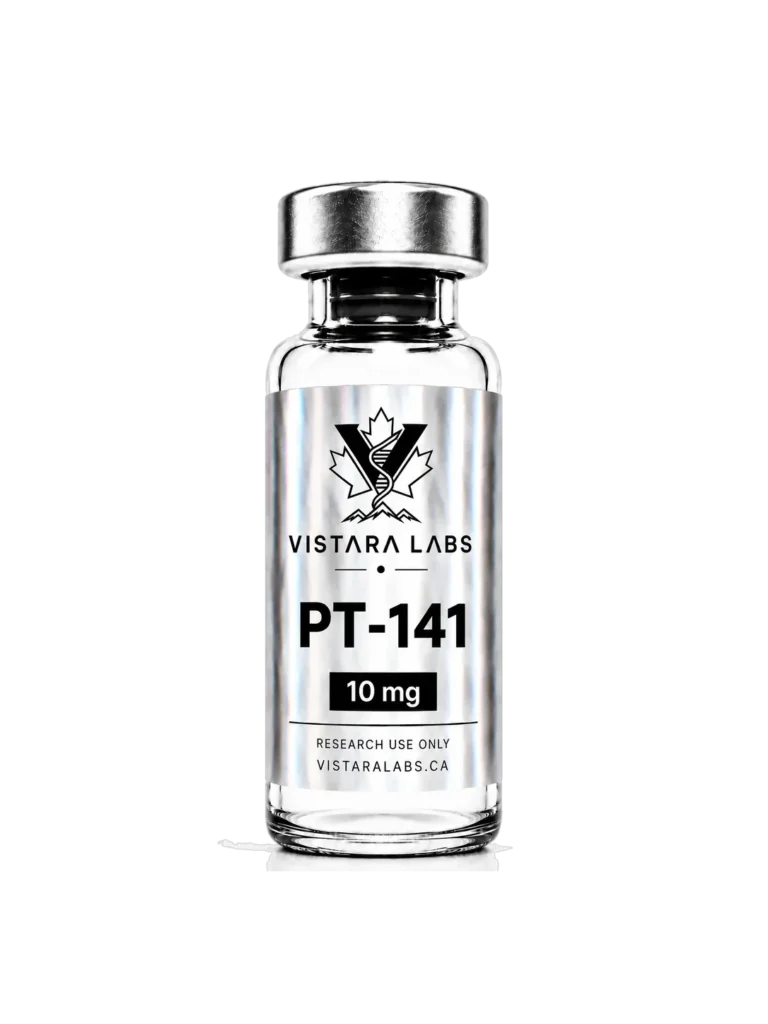
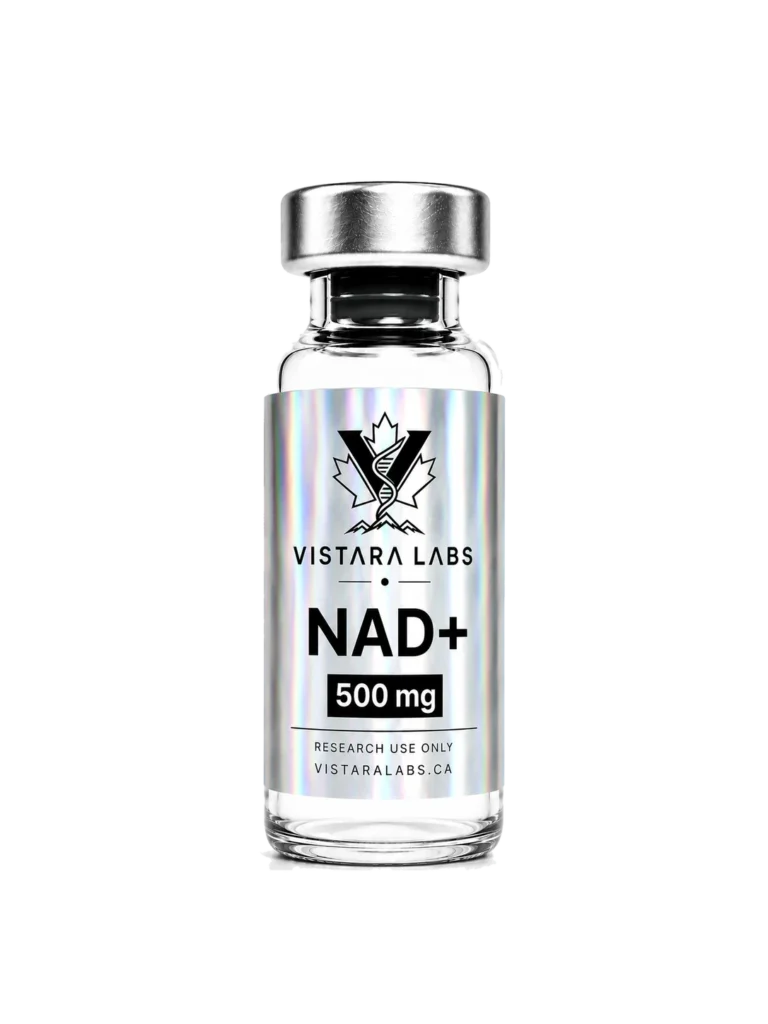
| Forms we supply | 10 mg vial | 500 mg vial, nasal spray |
Which one fits which research question?
- Telomere length and telomerase activity: Epitalon, which has the human cell telomere studies.
- Melatonin and the daily hormone rhythm in older subjects: Epitalon.
- Cellular energy, PARP activity and sirtuin-dependent pathways: NAD+, since it is the molecule those enzymes consume.
- Metabolic measures such as insulin sensitivity: NAD+ and its precursors, which have the randomised human data. Epitalon’s glucose and insulin findings come from old monkeys.
Can Epitalon and NAD+ be studied together?
No published study has tested them as a pair. They work through separate systems, telomere and pineal signalling for Epitalon and the NAD+ pool for NAD+, so a design using both keeps two distinguishable variables, provided each has its own arm. For NAD+ compared with other compounds, see NAD+ vs MOTS-c and NAD+ vs glutathione; for Epitalon against a mitochondrial peptide, see SS-31 vs Epitalon.
How are Epitalon and NAD+ supplied?
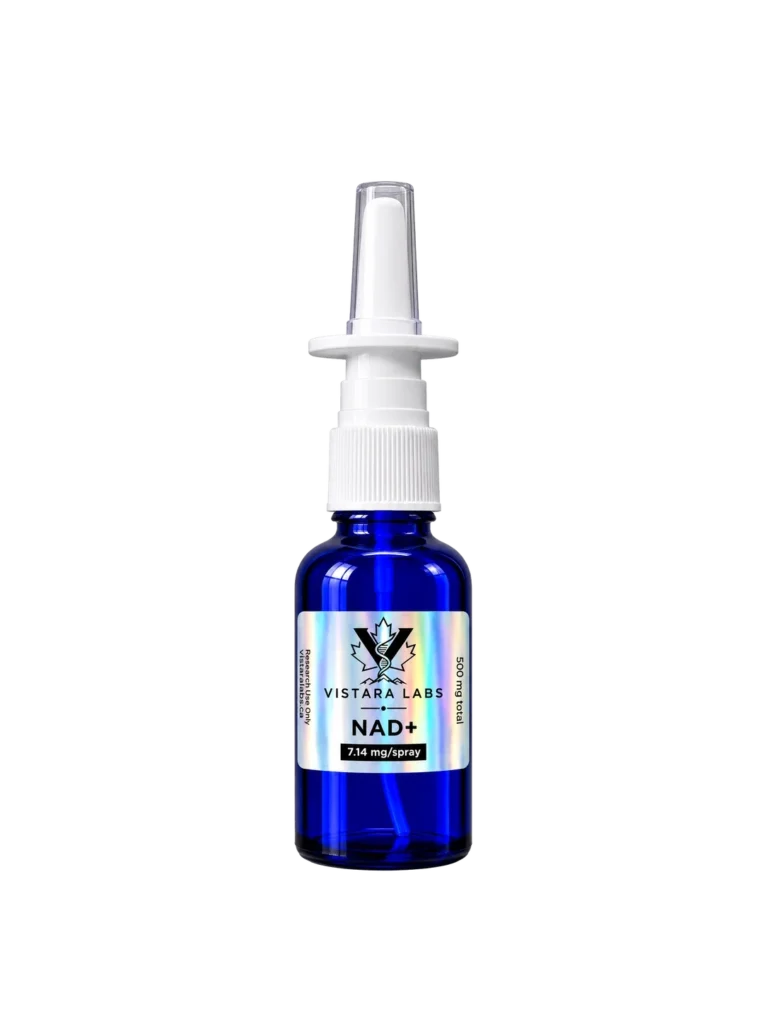
Epitalon comes as a 10 mg lyophilised vial. NAD+ comes as a 500 mg lyophilised vial and as a ready-mixed NAD+ Nasal Spray (0.175 mL per press) in two bottle sizes, which is also part of the Cognitive Clarity Spray Stack. Vials are reconstituted with bacteriostatic water: see the Epitalon reconstitution guide, the NAD+ reconstitution guide and how long NAD+ lasts. Buying guides: Epitalon and NAD+. Certificates of analysis are on the lab reports page, and every order ships from within Canada by Canada Post Xpresspost.
Epitalon and NAD+ are supplied for laboratory research use only. The human studies above were clinical research, most of them using NAD+ precursors rather than NAD+ itself.
Frequently asked questions
What is the difference between Epitalon and NAD+?
Epitalon is a four-amino-acid peptide studied for telomerase, telomere length and the pineal melatonin rhythm. NAD+ is a coenzyme, not a peptide: it carries electrons in mitochondria and is consumed by the PARP and sirtuin enzymes.
Is NAD+ a peptide?
No. NAD+ is nicotinamide adenine dinucleotide, two linked nucleotides with no amino acids. It is often sold alongside peptides and handled the same way, as a lyophilised vial or a ready-mixed nasal spray.
Is Epitalon or NAD+ better for longevity research?
They answer different questions. Epitalon’s research covers telomeres, melatonin and life span in mice. NAD+ research covers the age-related fall in NAD+ and what raising it does, with randomised human trials of its precursors.
Can Epitalon and NAD+ be studied together?
No published study has tested them as a pair. Because they act through separate systems, a design with separate arms can attribute each change to one compound.
Where can I buy Epitalon and NAD+ in Canada?
Vistara Labs supplies Epitalon as a 10 mg vial and NAD+ as a 500 mg vial and a ready-mixed nasal spray, shipped from within Canada by Canada Post Xpresspost with certificates of analysis on the lab reports page.
Product details from vistaralabs.ca, October 2026. Sources: Khavinson V et al. AEDG peptide (Epitalon) stimulates gene expression and protein synthesis during neurogenesis: possible epigenetic mechanism. Molecules. 2020. PMID 32019204. Goncharova ND et al. Pineal peptides restore the age-related disturbances in hormonal functions of the pineal gland and the pancreas. Exp Gerontol. 2005. PMID 15664732. Korkushko OV et al. Normalizing effect of the pineal gland peptides on the daily melatonin rhythm in old monkeys and elderly people. Adv Gerontol. 2007. PMID 17969590. Khavinson VKh, Bondarev IE, Butyugov AA. Epithalon peptide induces telomerase activity and telomere elongation in human somatic cells. Bull Exp Biol Med. 2003. PMID 12937682. Al-Dulaimi S et al. Epitalon increases telomere length in human cell lines through telomerase upregulation or ALT activity. Biogerontology. 2025. PMID 40908429. Anisimov VN et al. Effect of Epitalon on biomarkers of aging, life span and spontaneous tumor incidence in female Swiss-derived SHR mice. Biogerontology. 2003. PMID 14501183. Massudi H et al. Age-associated changes in oxidative stress and NAD+ metabolism in human tissue. PLoS One. 2012. PMID 22848760. Martens CR et al. Chronic nicotinamide riboside supplementation is well-tolerated and elevates NAD+ in healthy middle-aged and older adults. Nat Commun. 2018. PMID 29599478. Yoshino M et al. Nicotinamide mononucleotide increases muscle insulin sensitivity in prediabetic women. Science. 2021. PMID 33888596. Grant R et al. A pilot study investigating changes in the human plasma and urine NAD+ metabolome during a 6 hour intravenous infusion of NAD. Front Aging Neurosci. 2019. PMID 31572171.
More on this: NAD+ Is Not a Peptide. Here Is What It Is.
All products supplied by Vistara Labs are intended for laboratory research use only. They are not drugs, are not approved for human or veterinary use, and are not intended to diagnose, treat, cure or prevent any condition. Nothing on this page constitutes medical advice or guidance for use in humans.